CSO export figures on Aughinish alumina shipments to Russia are inaccurate, minister claims
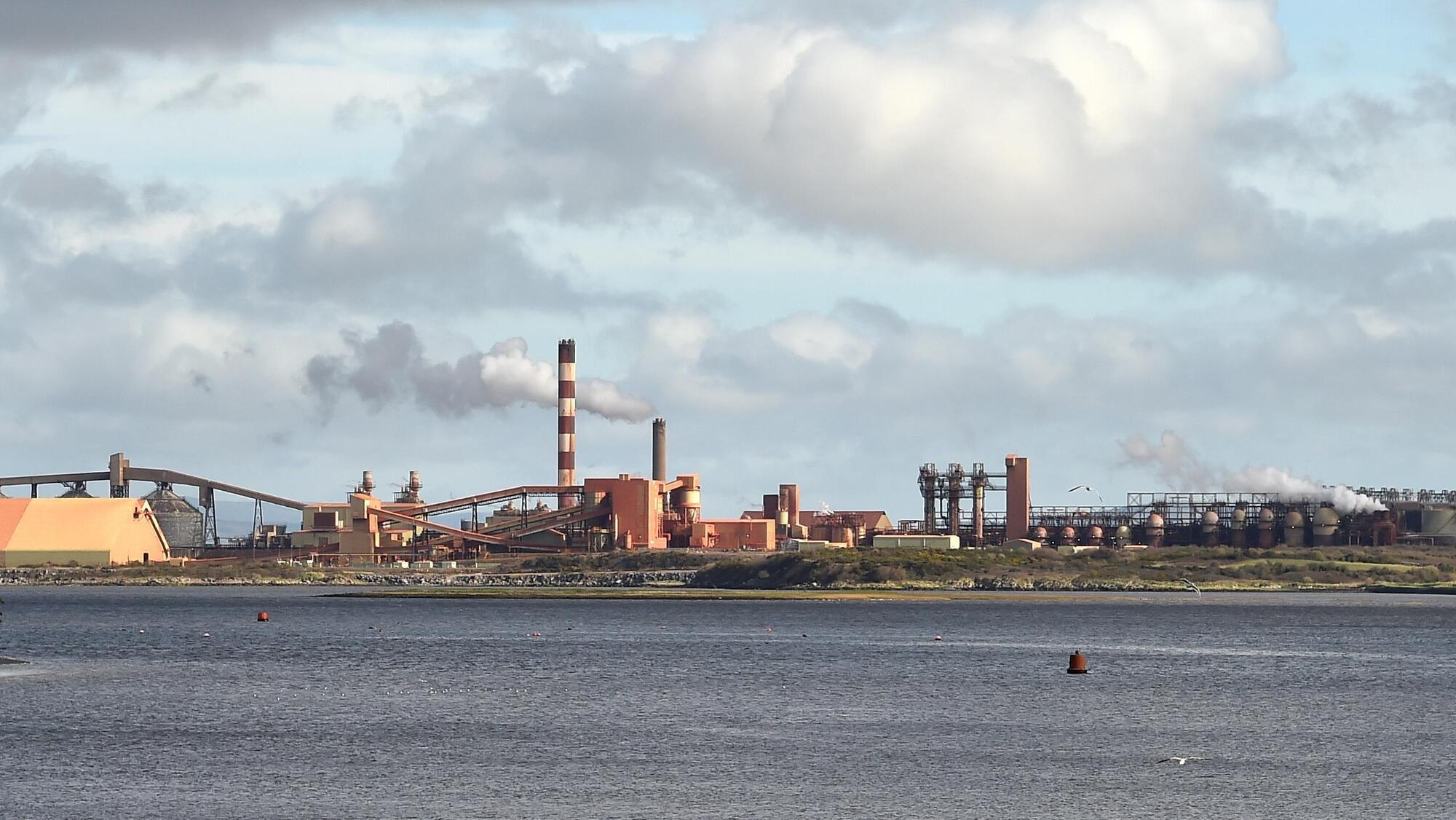
Aughinish Alumina on the Shannon Estuary, Co Limerick. Picture: Dan Linehan
Figures provided to the Central Statistics Office (CSO) on Aughinish Alumina’s exports to Russia are “inaccurate” and have overstated the volume of alumina exported to the country, according to enterprise minister Peter Burke.
In March, and the Organized Crime and Corruption Reporting Project published an investigation examining Aughinish’s alleged role in supporting Russia’s military industry.
The report highlighted claims that the Limerick alumina refinery exported large quantities of alumina to Russia, where it is smelted and used by manufacturers producing weapons deployed on the Ukrainian frontline.
Recent CSO figures appeared to show that 200,619 tonnes, or 83% of Aughinish’s total exports, were shipped to Russia during the first quarter of 2026.
Read More
However, on Tuesday, Mr Burke rold RTÉ's that only 45% of Aughinish’s exports went to Russia during the period, with a further 45% exported to EU member states.
“Inaccurate data was given to the CSO in terms of the tonnage that was being exported,” Mr Burke said.
He said the discrepancy emerged during an ongoing Department of Enterprise investigation into Aughinish’s alumina exports and that the CSO data was being corrected.
The minister said the investigation would provide further information on what Aughinish’s alumina “is doing and where it’s going”.
He said he did not have a timeline for the completion of the report but hoped it would be finalised “shortly”.
“We have responded substantively on a whole range of issues in respect of Ukraine, and we continue to support them,” he said.
Upon completion, the report is expected to be submitted to the European Commission.

The CSO said it had not received any notification of amendments to alumina export figures.
“CSO data on exports to non-EU countries is provided by the Customs Authority based on customs returns by traders,” the CSO said.
“The CSO is currently seeking to establish if there are revised figures for this category with the Customs Authority, which is the source of this data.”
In Cork, Taoiseach Micheál Martin told the he would have to examine the differing figures cited by the CSO and Mr Burke in relation to Aughinish.
The Taoiseach has previously argued that sanctions on Aughinish would be “self-defeating”.
“My understanding all along was that Aughinish was central to the European supply chain, in terms of the products it produces, particularly in terms of Sweden and France,” he said.
“It’s a critical material, and it’s needed in the European Union, and so the challenge is that you don’t close Aughinish, because if you do that, you damage Europe’s capacities as well, and create difficulties in respect to that material that those smelters need, and those plants need in Europe."
Mr Martin said the EU had imposed “probably the most severe set of sanctions against Russia ever, or against any state”, with up to 20 rounds of sanctions targeting a wide range of activities and individuals.
“And again, the Department of Enterprise is doing more work in this, is examining this in greater detail, but I was told originally that that was a very key role for this plant in terms of the wider European Union economy and supply chain, but obviously it’s also in respect of Russia,” he said.
“Any vital material, people pause in respect of whether to put sanctions or not, it’s like food and agricultural products, there has never been - correctly - sanctions in respect of that, for obvious reasons.”
According to the Government, Aughinish employs 475 workers and supports more than 1,000 jobs in the surrounding area.
A total of 39 MEPs from 12 countries have written to EU foreign policy chief Kaja Kallas and trade commissioner Maroš Šefčovič, calling for an end to alumina exports to Russia.
Alumina is not a sanctioned product, and Mr Burke said he has not lobbied the EU to prevent sanctions being imposed on Aughinish alumina.
The minister also said Aughinish cannot be sanctioned for its alleged role in supporting Russia’s invasion of Ukraine “when the evidence hasn’t been presented yet”.
“It’s not my job to tell a company where or when it can export to, that’s a European competence,” he said.

CONNECT WITH US TODAY



Be the first to know the latest news and updates