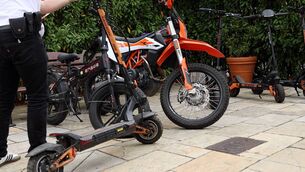
E-bike 'library' to let Cork residents see which suits their needs

A new e-bike library is to be brought to Cork in April, allowing people to test out different types of e-bikes at their homes for up to four months.
The scheme, already successfully piloted in Dublin, will give households the opportunity to test out what type of e-bike might best suit their needs.
Some 25 e-bikes, including e-long tail bikes or ‘cargo’ e-bikes, will be available for people to borrow from organisations in their local community like GAA clubs or community centres, with an even geographic spread aimed for across the different Cork city wards.
Cork City Council will run the e-bike library but the bikes are funded by the National Transport Authority (NTA) which will also pay for the fleet's maintenance and insurance.
E-bikes are a significant initial cost, with long-tail or cargo e-bikes costing approximately €5,000 and €8,000 to buy new.
So this scheme will allow people to try out this mode of transport and decide if they fit their lifestyle before purchasing one, according to local councillor Peter Horgan said.
Green Party councillor Oliver Moran said he has found an e-bike the most efficient form of transport for many journeys.
“You’re in and out quickly, you’re not worried about parking or congestion,” Mr Moran said.
The scheme will focus on providing alternative transport to “families and individuals in suburban and urban-edge communities”, Cork City Council said.
“The participants get first-hand experience of the benefits of e-bikes and understand, over the 3-4 months they are using the e-bikes, how these are effective in replacing many car trips,” the council said.
The e-bike library aims to reduce private car dependency, improve access to affordable mobility, support climate-action targets, strengthen community cohesion and promote health and wellbeing.
The standard lending period will be for three months.
A deposit of €50 will be charged and users must complete an induction and safety briefing.
The policy has been informed through Cork City Council’s participation in the Interreg Europe project Zero Carbon Infrastructure (ZCI) as well as a pilot scheme operated in Dublin.
CONNECT WITH US TODAY



Be the first to know the latest news and updates