Braving brutal cold, Waterford artist carves Irish first in Alaska ice championships
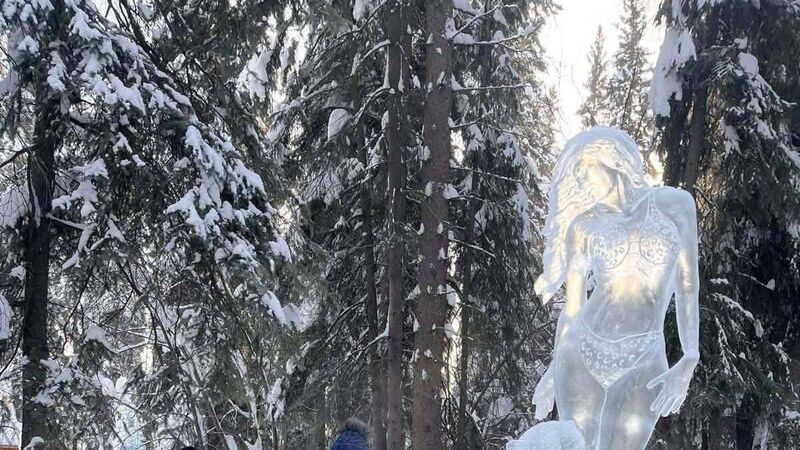
John Hayes flying the flag for Ireland at the World Ice Art Championships in Fairbanks, Alaska.
Despite braving sub-zero temperatures, Waterford dad of two John Hayes was feeling the heat as he battled to make history at the World Ice Art Championships in Alaska.
The craftsman made history as the first Irish man, among more than 100 participants from around the world, to compete in the World Ice Art Championships, which began in 1989 and are held annually in Alaska.
The contest sees teams tasked with carving ice into abstract or ultra-realistic works of art.
John’s passion was born out of a back-to-work scheme, which he participated in 12 years ago.
“I went off to be trained to use a chainsaw as part of a back-to-work scheme. We volunteered to build a playground and from the playground I got the opportunity to do a wood carving.
Read More
"I loved it so much that I opened up a business, Special Branch Cravers.”
John began woodcarving competitively in the US, which allowed him to transfer his skills to the ice. The training paid off, securing him and his team fourth place in the Multi Block Classic at the World Ice Art Championships.
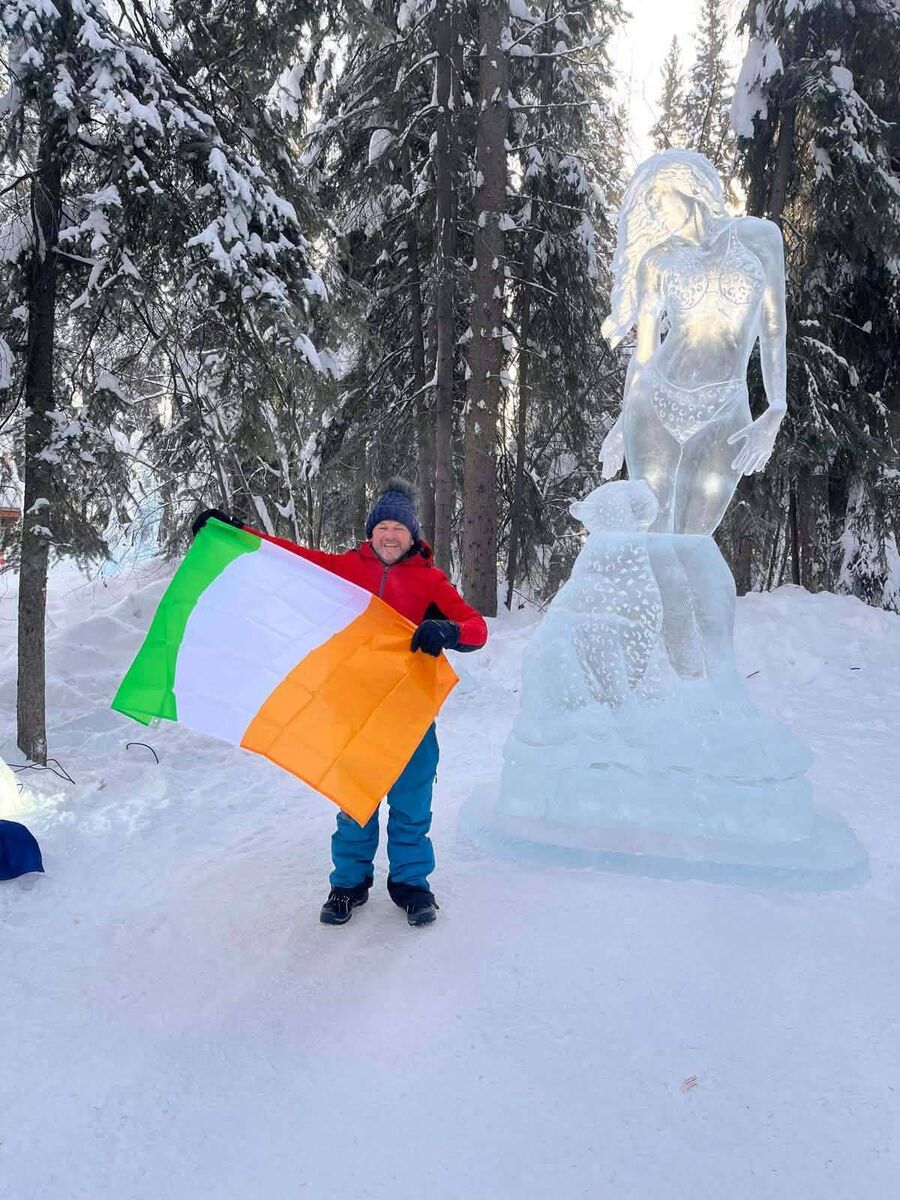
Known for its high-stakes nature, the category challenges teams to create ice sculptures over several days, using blocks of Arctic diamond ice.
“Our sculpture resembled some turtles and a lady. They judge you on anatomy and stuff like that. The blocks weigh about two tonnes each so it’s very intense work.
"That’s the main event. The second event is the Double Block Classic. We made a 12ft tall cat lady and had her in a bikini. We thought that would be funny, given how cold it was.
"There was a leopard next to her and they were both locking eyes with each other. It looked very elegant.”
He said the conditions could be challenging. “It is both beautiful and brutal at the same time. My eyelashes actually froze together at one point.
"We were lucky to finish on time. A lot of teams never made it because the temperatures were so low.
"When it came to fusing the ice together, they weren’t able to do it, simply because it was so cold.
"There were loads of pieces, when I went around to look, that were missing arms and legs because they just broke off in the cold.
"It was definitely one of the most challenging events I've ever done.
"It was so cold the last few days that we had to use completely new techniques to what we had planned.”
John said there was a sense of joy in working with Alaskan ice. “Even just surviving the temperatures is a huge test of endurance. The electrical equipment and chainsaws were freezing.
"We created a hot tent at the back of the sculpture where we did 10 minutes in and 10 minutes out, not just to protect ourselves but to protect our equipment too.
"It’s really nice to work with the Alaskan ice because it’s crystal clear. Even at 4ft thick, you could read a newspaper through it because it’s that crystal clear.
"The reason it’s so clear is because the blocks are cut come from a quarry that filtrates the dirt out of the water brought to Fairbanks.”
Meeting with talent from all over the world was a highlight for John. “You have people here who don’t just sculpt ice. They do metal sculptures, wooden sculptures, and even bronze sculptures.
"I’ve met people from Thailand, Japan, Mongolia, the Philippines, Australia, among other locations.
"Then, there is this Irish guy in the middle of them all who is competing for the first time. I was very proud to be the first Irish person ever to compete in the event.
"This time 12 years ago I was sitting on the couch unemployed. Now, I have my own successful business and I’m competing on an international level.”
The 53-year-old said he never thought he would be successful, having left school at 12 years old. His wife Sharon, daughter Molly May, and son Josh have been hugely supportive and believed in him early on.
“I didn’t learn to read until I was 33,” he told the . “It was my daughter Molly May who was just six at the time, who encouraged me to learn.
"At night time I still wanted to tell her stories so I would open the book and pretend to read from it.
"She copped that I couldn’t read because the stories were different to the ones she knew. She told me that it would be good for me to learn to read because she had and it was 'really good'.
"She went on to become a teacher which is funny because if it wasn’t for her I don’t think I’d be able to read today.
"There was a time where I used to think that a lot of other people were better than me but this has given me the confidence to know that I can achieve so much in life.
"I’ve ticked so much off my bucket list already.”


CONNECT WITH US TODAY



Be the first to know the latest news and updates