Wreck of US warship sent to protect Cork coast during First World War found off Cornwall
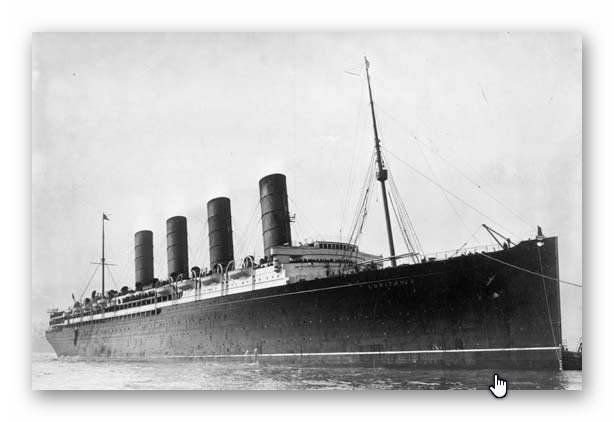
The RMS Lusitania was torpedoed by a German navy U-boat in May 1915, about 20km off the Old Head of Kinsale.
The wreck of the first American warship sent to protect shipping off the Co Cork coast following the sinking of the Lusitania has been discovered close to the Isles of Scilly near Cornwall.
It is hoped some artefacts from the destroyer, which later became the first US destroyer to be torpedoed by the Germans, may make their way back to Cobh to commemorate the protection the ship offered to merchant vessels and 66 men who lost their lives after it was sunk.
USS Jacob Jones was commissioned in February 1916 and after the sinking of the Lusitania — which resulted in America eventually entering the First World War — was sent to Cobh (then known as Queenstown) to defend Allied shipping from repeated attacks by German submarines. The submarines were ravaging commercial and military vessels on transatlantic crossings at that time, especially off the south coast.
The irony is that the American warship ended up having the same fate as the Lusitania. It was torpedoed on its way to Brest, France, on December 6, 1917, by German U-boat U-53.
Cobh-based county councillor Cathal Rasmussen, a director of the Cobh Museum, said he hoped to make contact with the divers who found the wreck of the USS Jacob Jones in the hope of getting one or two artefacts from it to display there.
"We already have a lot of memorabilia in the museum dedicated to the thousands of Americans and their ships which were stationed here during that time and we would be most grateful if we could add something from the USS Jacob Jones to highlight the important life-saving role its crew played while stationed here,” Mr Rasmussen said.
The Jacob Jones sank so quickly it was unable to get out a distress call. However, the U-boat captain rescued two badly injured sailors and radioed the US navy base in Cobh giving the destroyer’s coordinates.
The ship was found in 100m of water and quite a bit of it is still intact.
The diving team which discovered it is in talks with the US embassy in Britain over what will happen with it.