'Black & Tans murdered Cork Lord Mayor Tomás Mac Curtain,' claims historian
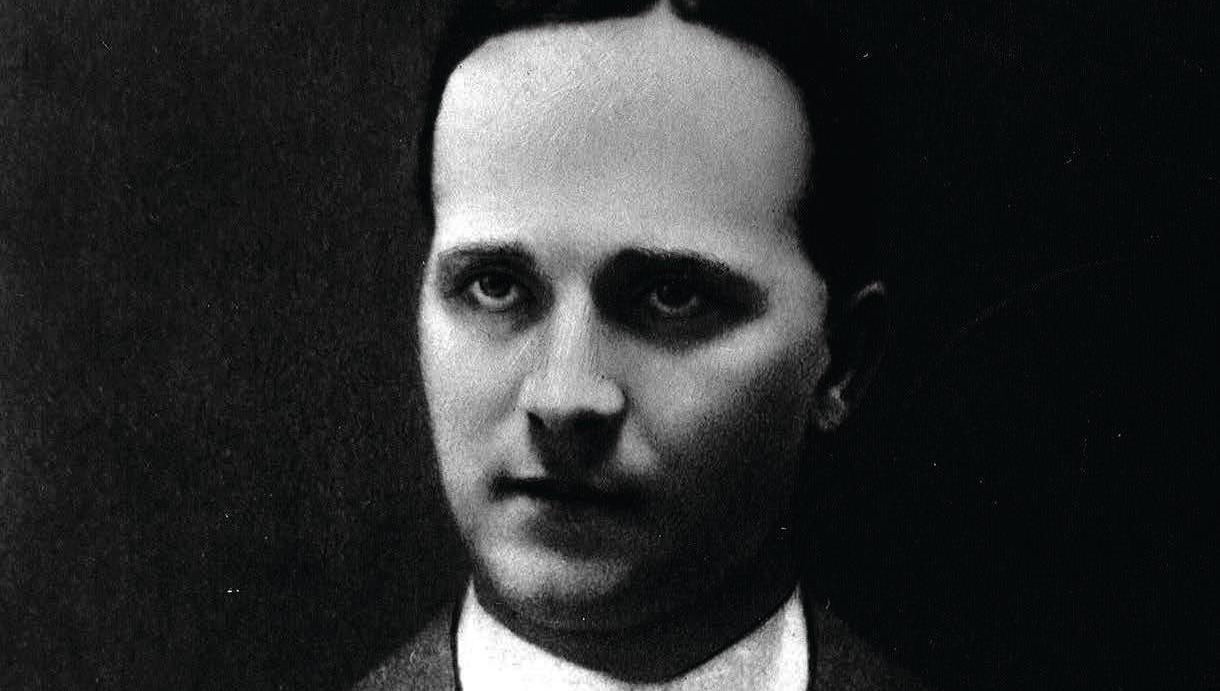
Historian belives he has identified key member of British forces who assasinated Cork's Lord Mayor in 1920
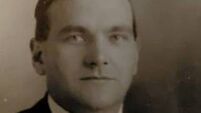
One of the official photos taken in January 1920 after the election of Tomás Mac Curtain as Cork's Lord Mayor. Three months later he lay dead in his home in Blackpool, having been shot by British forces. 

One of the official photos taken in January 1920 after the election of Tomás Mac Curtain as Cork's Lord Mayor. Three months later he lay dead in his home in Blackpool, having been shot by British forces. 

The Black and Tans assassinated the lord mayor of Cork Tomás MacCurtain, a historian has claimed, and he has named one of those he believes played a key role.

Jim Herlihy — who has written a book on the Black and Tans — believes there is compelling evidence that the Black and Tans murdered MacCurtain on his 36th birthday. MacCurtain was killed in front of his wife and children at their home in Blackpool.

Mr Herlihy was the first to identify the man who launched the infamous Burning of Cork in December 1920 by British forces. A former garda, he used his expertise and extensive knowledge of the period to piece together what he believes actually happened to MacCurtain.

Building the evidence

He says the first 'giveaway' was that they had English accents. A Royal Irish Constabulary (RIC) button from a cape was left at the scene, which Mr Herlihy believes was probably deliberate to throw investigators off the scent.

All 56 members of the RIC stationed in Cork City on the night of the murder were Irish.

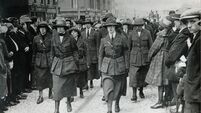
The funeral of Tomás Mac Curtain — shown here moving from St Patrick's St past Daunt's Square and into Grand Parade, Cork — was a turning point in the War of Independence. Picture: Irish Examiner Archive

Mr Herlihy examined service records of a number of Black & Tans which showed 15 of them were allocated to the city just prior to Tomás Mac Curtain's death.

Of them, three were Irish-born. The rest were English, including Constable Stephen Henry Chance, who was a man known not to take prisoners.

Constable Stephen Chance

Constable Chance was stationed in Shandon St police station, and had been in Cork City since February 14, 1920. This station would have covered Blackpool and he thus had extensive knowledge of the area and the people living in it.

“The regular RIC/British military were supposed to raid Mac Curtain's house that day and arrest him, but were informed before they got there that he was dead,” Mr Herlihy said: 

In many cases, the Tans felt they weren't answerable to the regular RIC.

Mr Herlihy believes the Black & Tans may have gotten wind of the RIC operation in advance and decided they were going to take out Mac Curtain first.

He said it is extraordinary, given the circumstances, that not one member of the Black & Tans gave evidence at the inquiry which followed Mac Curtain's killing, and it smacks of a “cover-up".

Another interesting fact is that a few months after the murder Chance was promoted to sergeant, for no apparent good reason.

“He was known for going around Cork in an armoured car and had two revolvers swinging from his hips. He was not a man who took prisoners.” Mr Herlihy said.

Kerry Pike incident

Mr Herlihy points to the evidence that Chance gave the military court of inquiry held in Cork into the deaths of six IRA men at Ballycannon, Kerry Pike, Cork, on March 23, 1921.

Chance was with a part of a unit that surrounded a farmhouse. When they entered it, they found William Deasy, Jeremiah Mullane, Thomas Dennehey, Daniel Murphy, Michael Sullivan, and Daniel Crowley asleep.

According to Chance, who was left in charge of the operation, they told the men to get up and dress.

“As they were dressing they made a run for the door and got away. We took cover so as not to get shot. After the firing was over I went out to the field and found six bodies,” Chance told the inquiry.

'No attempt to effect arrests'

He showed the court of inquiry the weapons and ammunition seized after the killings.

“It appears he made no attempt to effect arrests,” Mr Herlihy said.

Mr Herlihy said the general officer commanding of British forces in Ireland at the time of Mac Curtain's death was also convinced the regular police, the RIC, had nothing to do with it.

Major General Neville Macready wrote about the episode in his biography,  Annals of an Active Life, published in 1924.

“It was known that Mac Curtain was by no means an extremist, having denounced the campaign of assassination, and having refused to use Cork Corporation funds for the purpose of the IRA,” Macready wrote.

"There was not a shadow of evidence connecting the RIC with the crime, and after making every allowance for a loosening of the discipline of that force consequent on the failure of the Government to bring to justice a single one of the many men who had murdered members of the force, there was no reason or incentive why the Lord Mayor should have been picked out as an object of revenge.”

Mr Herlihy said that Chance was battle-hardened before he arrived in Ireland. The Londoner had served in the navy and later as a sergeant with the 5th battalion of the Wiltshire Regiment in World War One.

Local people gathered at Tomás Mac Curtain's home and business in Blackpool on the northside of Cork City after his death at the hands of British forces in March 1920.

Ironically, like Mac Curtain, he also died on his birthday, in Devon in south western England, at the ripe old age of 90.

The Burning of Cork

Two years ago, Mr Herlihy discovered, somewhat ironically, that it was the son of a German who instigated the infamous Burning of Cork in reprisal for an IRA ambush which left one of his colleagues dead and 15 injured.

The clues were discovered in letters — which Mr Herlihy has obtained — that Charles Schulze had written to his girlfriend just after he had unleashed the wave of destruction.

Schulze led Auxiliaries on “a rampage of burning” on December 11 and 12, 1920. The damage was estimated at the time to have cost £2m — equivalent to nearly €100m today. 

It resulted in the loss of 2,000 jobs, and Saint Patrick's St in the city centre was particularly badly hit.

Mr Herlihy has also recently published a book listing small biographies of every one of the 10,000-plus Black & Tans who served in Ireland during the War of Independence.

More in this section

Lunchtime News

Newsletter

Get a lunch briefing straight to your inbox at noon daily. Also be the first to know with our occasional Breaking News emails.

Cookie Policy Privacy Policy Brand Safety FAQ Help Contact Us Terms and Conditions

© Examiner Echo Group Limited