Limerick hospital's Covid outbreak receding
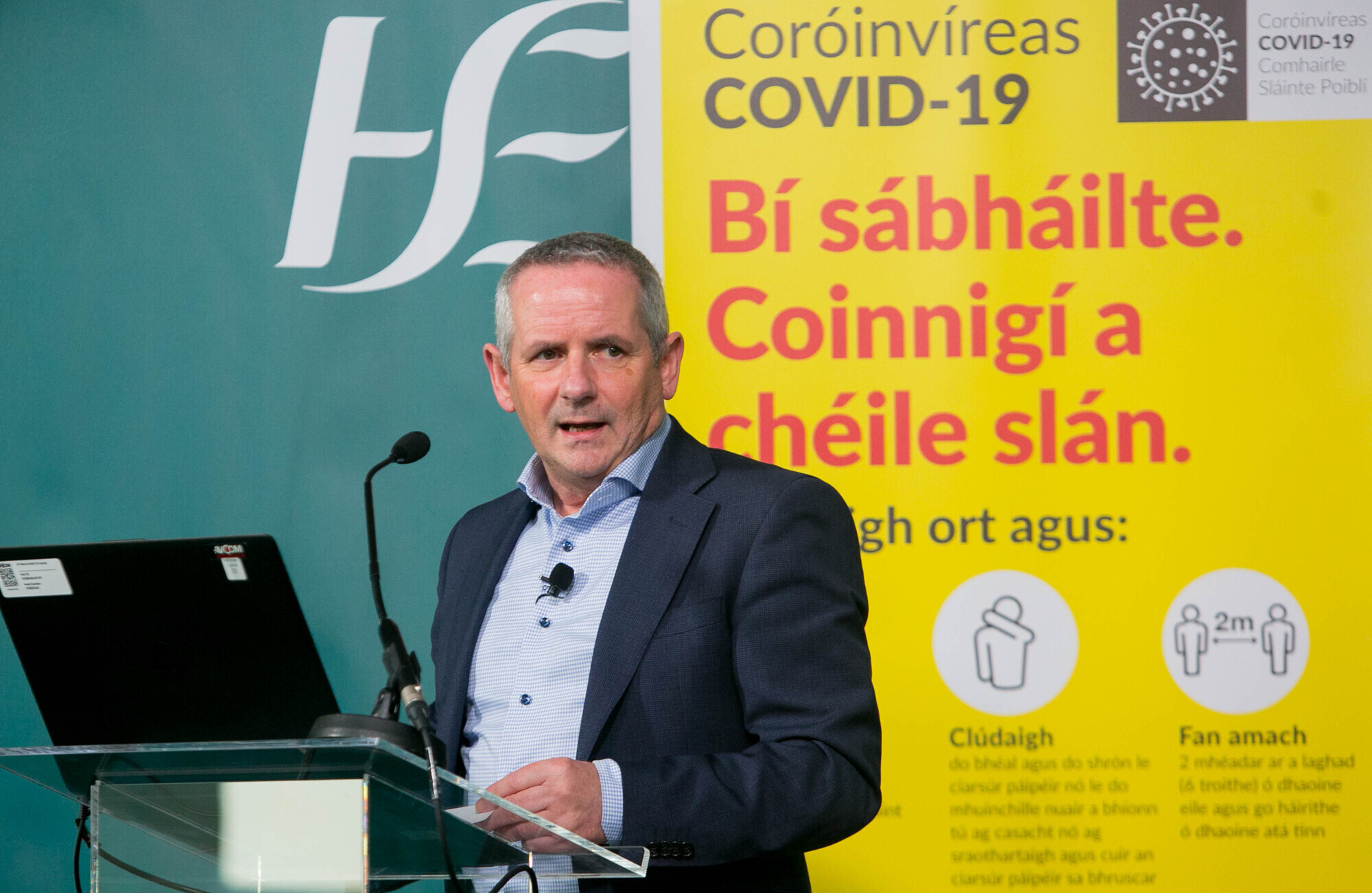
HSE CEO Paul Reid during a weekly HSE operational update on the response to Covid-19 at Dr Steevens Hospital, Dublin. Picture: Gareth Chaney
A series of Covid-19 outbreaks within the University of Limerick Hospital Group has receded significantly in recent days.
Some 130 staff at the hospital group are absent from work due to either confirmed cases of Covid-19 or their being close contacts of same, a substantial reduction from the figure of 221 reported on Monday.
HSE chief executive Paul Reid said that fact showed that University of Limerick Hospital Group was “beginning to see the wash-through of the actions that they took” and said the reversal in the trend is commendable.
Limerick’s figure for absent staff is matched by the 130 in the same position at Letterkenny Hospital, Co Donegal, with Naas, Co Kildare, and Tallaght, Co Dublin (a newer outbreak) each now having 90 staff out of work.
At the latest HSE weekly briefing on Covid-19 in Dublin, Mr Reid expressed concern that “the positive trends we’ve seen in recent weeks haven’t been maintained”, regarding the slight uptick in confirmed cases seen over the past five days.
The HSE’s chief clinical officer Colm Henry agreed that the positive outlook seen after three weeks of level 5 lockdown has “stalled somewhat”. He said that the R, or reproductive, number of the virus was now most likely between 0.7 and 0.9, up from 0.6 a week ago.
It’s understood that the National Public Health Emergency Team (NPHET) is of the opinion that the R number will need to be in the region of 0.5 leading up to Christmas in order to avoid a further resurgence in cases.
The briefing heard that there are currently 290 people with the virus in hospital, 33 of them in intensive care settings, with both numbers continuing to fall, though slowly.
Meanwhile, 10 nursing homes are at the highest level of risk per the HSE’s own ratings, and are in receipt of dedicated supports from the executive as a result.
Earlier, it emerged that nearly 6,000 people have failed to attend for a scheduled test in the mid-west region of Limerick, Clare and north Tipperary, an 8% rate for missed appointments, between March and October.
Nearly half of that 5,581 figure was noted at two Limerick testing centres, with the grounds of St Joseph’s Hospital in the city the worst offender, with more than 10% of appointments missed.
Nevertheless, Mr Reid said that the numbers of people attending for tests has been the subject of a recent research paper commissioned by the HSE, with the results showing a high rate of compliance.
“We’ve seen 82% of attendance for day zero tests across the country. In recent weeks that figure has been well into the 90s,” he said. He said that day seven testing for close contacts of confirmed cases “is in the high 60s. Both figures are far ahead of levels seen in late summer before the resurgence seen in the disease.
The briefing heard that overall testing levels are continuing to drop from their pre-lockdown peak, with 78,000 swabs conducted last week. The average turnaround time from test referral to end of contact tracing is 2.2 days within the community, and between 1.6 and 1.8 days in hospital settings.
Mr Reid meanwhile described the fact Ireland has passed 2,000 deaths from Covid-19 as “a sad reminder of the toll the virus has taken”.
“These are all real people, real families have been impacted,” he said.