Study to provide glimpse into secret world of whales and dolphins off south coast
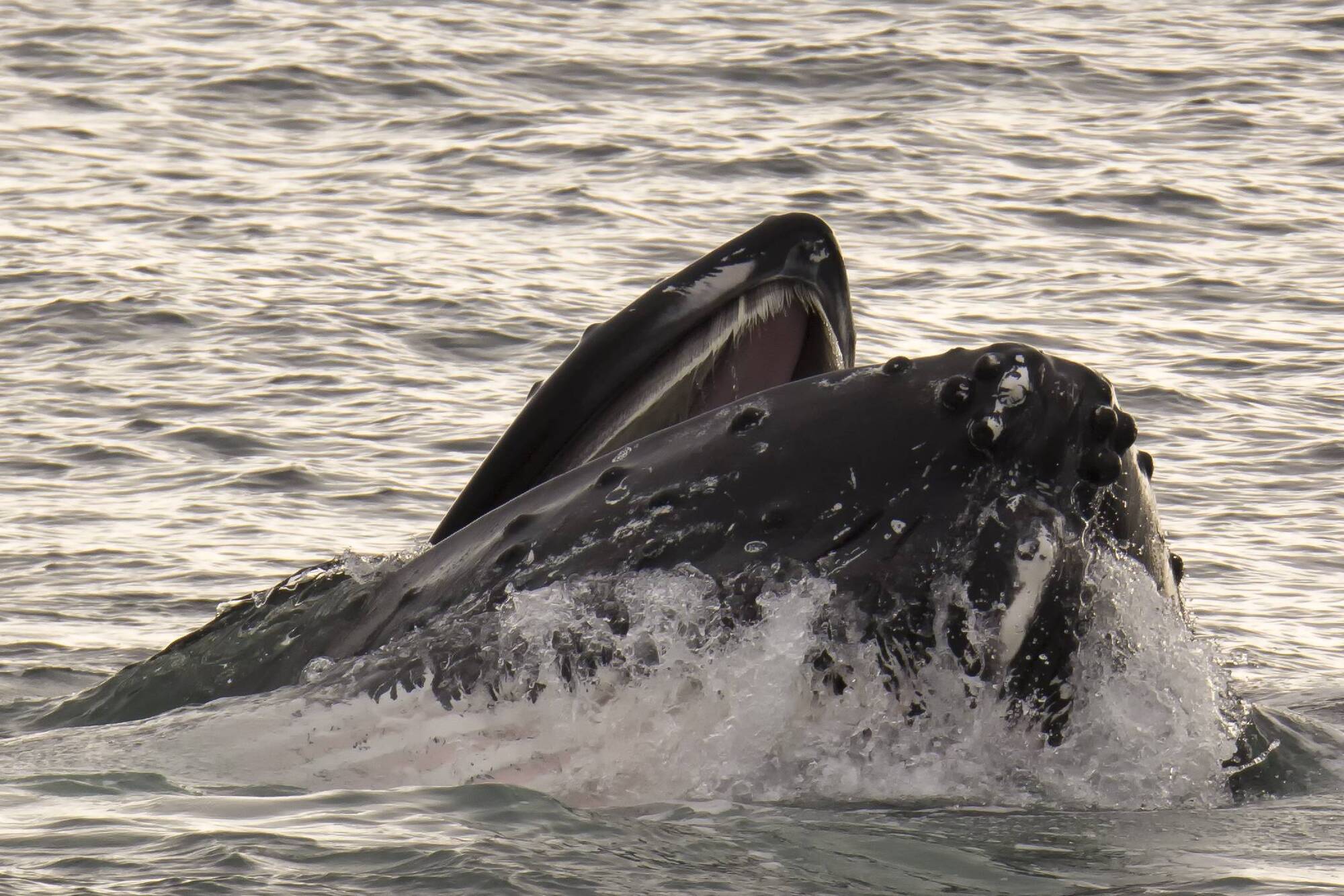
The South Coast is said to be an important foraging, resting and reproductive habitat for 25 species of whales, dolphins and porpoise, and particularly for large Humpback, Fin and Minke whales. File picture: Ronan McLaughlin/IWDG
A major study on how marine traffic and noise affects 25 species of whales, dolphins and porpoises will provide a glimpse into a “secret world” off Ireland’s southern coast for the first time.
Cork-based non-profit conservation group Ocean Research & Conservation Ireland will conduct the study, with the aim to relay warning alerts to maritime traffic to reduce the risk of disturbance and ship strikes.
The Automated Cetacean Acoustics Project (ACAP) will be done in partnership with Rainforest Connection and supported by Huawei Ireland, which is providing a research grant with technological support through its global Tech4All initiative.
Experts behind the project said that 90% of Ireland’s international trade travels by sea, with the South Coast of Ireland one of the busiest 'heavy ship' shipping lanes in the world.
Thousands of large container ships pass through it from eastern Canada to Liverpool and other European ports annually, as well as additional pleasure boats, speed crafts and eco-tour operators, they added.
Research Update: Wed 9th September - common dolphin, harbour porpoise, minke whales and these great bunch of lads sighted on survey with Baltimore Wildlife Tours! We <3 grey seals! 🌊🐶 #seals #WestCork #RoaringwaterBay #SAC pic.twitter.com/EtCfo1s03c
— Ocean Research & Conservation Association (@ORCA_Ireland) September 12, 2020
The South Coast is said to be an important foraging, resting and reproductive habitat for 25 species of whales, dolphins and porpoise, and particularly for large Humpback, Fin and Minke whales.
Heavy ship traffic places whales at an increased risk of ship strikes causing injury or even death, and also raises the ambient noise pollution affecting all the species present, the organisations behind the study said.
Lead researcher Emer Keaveney, a marine mammal ecologist at Ocean Research & Conservation Ireland, said: “Recent advances in technology provide increasing opportunity to use these innovations for good and to enhance our understanding of the natural world.
“This is such an exciting time as now we have a chance to peer inside the secret world of whales in Irish waters, and directly improve their welfare and conservation.
The new study will see the deployment of acoustic monitoring equipment in the Celtic Sea at locations where sightings of whales and other wildlife have been recorded, the organisations said.
The equipment will be able to listen for movements of whales, and with the help of machine learning models to enhance data analysis, for the first time provide near real-time detection, they added.
“This will provide multiple benefits - helping with the identifying and classification of species in Irish waters, their distribution and behaviour, and most importantly, the development of an early warning system that will enable ships to reduce their speed in time to lessen the considerable risk of ship strikes.”
The project will see Ireland leading the way in the advancement of policy and programmes that respect and protect marine wildlife informed by near real-time data available for the first time, with the help of Rainforest Connection and Huawei Ireland, the organisations said.
“Not only will the detections be able to help inform policy and decision-makers in the establishment and management of potential marine protected areas, they will also be used for education and made available to the wider public to hear the symphony of cetacean sounds.”
CONNECT WITH US TODAY



Be the first to know the latest news and updates