Call for permanent national emergency security body amid AI cyber threats
A number of speakers warned that there was a window of '12-24 months' to develop ways to protect both IT systems and operational technology systems from AI models. File picture
The Government should consider setting up a permanent security and resilience body to deal with rising dangers from “multiple threats” across politics, cybersecurity, and climate change, a conference has heard.
The Cyber Ireland event, held in Mullingar, Co Westmeath, heard that changing default passwords is one of the basic steps that can be taken to protect against artificial intelligence (AI).
A number of speakers warned that there was a window of “12-24 months” to develop ways to protect both IT systems and operational technology systems from AI models.
Cyber Ireland, an industry-led body linked to Munster Technological University, attracted national and international experts to its day-long conference.
In his address, former Defence Forces chief of staff Mark Mellett said the recent cyberattacks on supermarket refrigeration systems across Europe showed what happens when cyber incidents have physical effects.
“No one stole data, they simply turned up the temperature,” he said, adding it was followed by hoax bomb threats to airlines, national media, and schools.
Read More
He said the attacks had the desired effect: They created uncertainty, tested the public’s confidence in everyday services, and ate up resources of stage agencies.
He said under Ireland’s existing emergency management structure, a lead department takes charge, but this model reflects a time when a crisis was “easier to fit into categories”.
Mr Mellett said cyberattacks now can spill across sectors and that “multiple crises can converge” at the same time.
He called on the Government to examine the establishment of a “permanent security and resilience” body, to sit between the emergency system and National Security Council.
He said that “all of Europe” was under sustained cyber and hybrid attacks — and claimed the “Russian Federation” was behind it.
Peter Culbert of Opex Performance stressed the importance of trained people, not technology, as the difference between “high-impact cyber event or near miss”.
Lee Carter of Solutions PT urged people to “please, please” back up their systems and keep them offline.
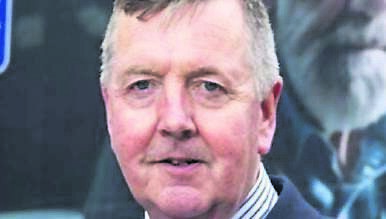
To protect against autonomous AI threats, he recommended “strong protections, multiple boundaries, and good engineering”, including segmenting networks to protect "what is critical” and to have a “kill switch” to isolate operational technology systems from IT.
Hatteras Hoops of Booz Allen Hamilton said the speed and scale of AI “is going to affect everyone”.
He said autonomous frontier AI was taking minutes to detect and exploit cyber vulnerabilities. He said defence involved “deterring or slowing down... access to safety critical systems”.
Andrew Ginter, Waterfall Security Solutions, said there was a window of 12-24 months to make operational technology systems stronger than IT. He said the key question organisations should ask is "what attacks are reasonable or credible to expect?"
He said that if the credible outcome is "loss of life or billion-dollar lawsuits" then action needs to be taken now to defend against that.
Elizabeth Keogh of the National Cyber Security Centre said the recent refrigeration cyberattacks had “huge consequences”, in terms of waste, business interruption, and financial loss and supply interference, and demonstrated how a “small piece of [internet] connected equipment can have a much wider impact”.
Cyber Ireland chair Pat Larkin said speakers highlighted the importance of “basic cyber security”, including changing default passwords.
- Cormac O’Keeffe, security correspondent

BLACK FRIDAY
Already a subscriber? Sign in

CONNECT WITH US TODAY



Be the first to know the latest news and updates