Call for campaign to inform people most at risk of sex-for-rent offers
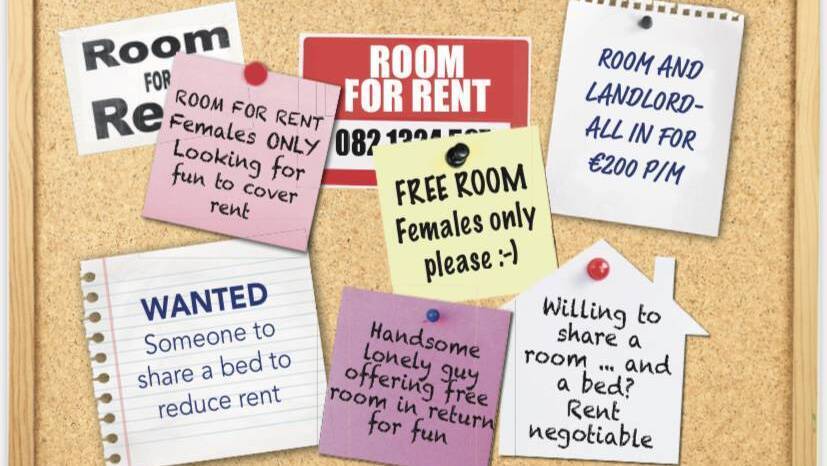
The sex-for-rent ban is among the provisions of the Criminal Law and Civil Law (Miscellaneous Provisions) Bill which includes criminalising sex-for-rent offers through two offences — the offering of accommodation in exchange for sexual activity, and the advertising of accommodation in exchange for sexual activity.
An awareness campaign should be carried out to help educate people most at risk of sex-for-rent offers after a legislative ban comes into place, according to organisations campaigning for a ban on such practices.
It follows an investigation by the which found a number of online accommodation advertisements for sex-for-rent arrangements in December 2021.
Subsequently, this newspaper spoke with several women who were offered accommodation at reduced or no rent, with the expectation that sex or bedsharing with the landlord would be part of the arrangement.
All but one were foreign women who had moved to Ireland for either study or work. An Italian woman interviewed by the said that trying to find a place to rent in Dublin was “like falling into a dangerous hell”.
The ban is among the provisions of the Criminal Law and Civil Law (Miscellaneous Provisions) Bill which includes criminalising sex-for-rent offers through two offences — the offering of accommodation in exchange for sexual activity, and the advertising of accommodation in exchange for sexual activity.
It will be finalised in the Dail on Wednesday.
Chief executive of Ruhama, Barbara Condon, said: “I think migrants have a real fear of going to gardaí because they can feel their interaction could trigger an investigation into their status.
"We need to raise awareness about it. A lot of the women (targeted) have poor English and don’t understand the legislation in Ireland, know what legal entitlements and rights they have.”
Executive director of the National Women’s Council, Corrinne Hasson, said the new legislation needs to “be implemented and enforced effectively”.
Denise Charlton, chief executive of Community Foundation Ireland, said the new laws “enjoy support not only across politics, but across Irish society with a broad coalition of organisations, advocates and researchers supporting the move”.
She added: “Now the focus must begin on making our laws work so we can take another step towards ending sexual violence and exploitation.”
Research published by the Irish Council for International Students (ICOS) last year showed 5% of female respondents said they had either received an offer to rent a room in Ireland in exchange for sex, or had seen a room that was being advertised in exchange for sex.
A female student from Mexico who took part in the survey said she had posted on social media she was looking for a room to rent.
She received two responses “from men saying they had a room to rent and asking me what I could offer in exchange". "One of them directly said that I could sleep with him. He then sent some obscene images.”
CONNECT WITH US TODAY



Be the first to know the latest news and updates