Life sentence for killing of homeless Cork man upheld by Court of Appeal
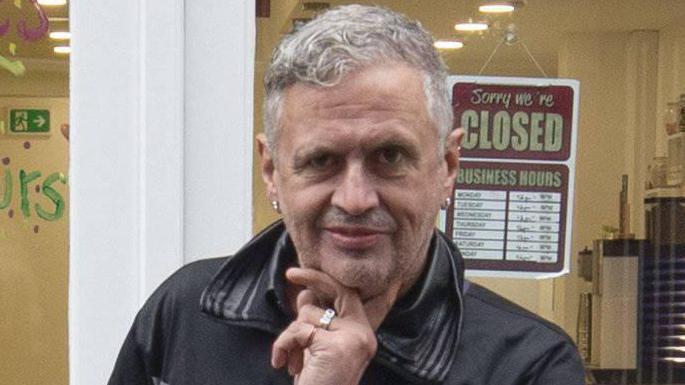
Timothy Hourihane was found dead at a tented village on the Mardyke in Cork.
The Court of Appeal has found that a judge was entitled to jail for life a 43-year-old man with a history of violence after the serial offender punched, kicked, and stamped a homeless man to death.
Christopher O'Sullivan, of no fixed abode but originally from Kerry, pleaded guilty to manslaughter at the Central Criminal Court in Cork in 2023 for his role in the killing of Timothy Hourihane.
James Brady, of Shannon Lawn, Mayfield, Cork, was also convicted of manslaughter for his role in the killing.
Brady was jailed for 11 years.
Mr Justice Paul McDermott sentenced O'Sullivan to life imprisonment, citing his history of violent offending as an aggravating factor.
At a previous hearing, O'Sullivan's lawyers argued that Mr Justice McDermott had imprisoned O'Sullivan for life to protect society from him.
Michael Bowman, defending O'Sullivan, said such 'preventative detention' is not allowed in Irish law.
Mr Bowman said the courts in Ireland have rejected the "three strikes and you're out" principle sometimes used in the US, whereby a person is sentenced to life because of their history of offending.
Mr Bowman said that despite the level of violence used, O'Sullivan's offending did not fall into the worst category according to sentencing guidelines adopted by the higher courts.
He pointed out that there was no premeditation and O'Sullivan did not use a weapon other than his hands and feet.
Mr Bowman said the correct headline sentence based on the nature of the offence would have been between 15 and 18 years.
However, he said Mr Justice McDermott had pushed it into the most serious category after considering O'Sullivan's previous convictions, including one for an assault in which the victim suffered serious head injuries.
Mr Bowman also argued that the discrepancy between the sentences imposed on his client and his co-accused was too great and not justified on the evidence.
Delivering judgment on the appeal, Ms Justice Isobel Kennedy said O'Sullivan had an "extremely high level of culpability" for what was a "severe and vicious attack".
In the aftermath, he tried to avoid being linked to the crime by setting the victim's tent on fire, disposing of evidence and by lying to gardaí.
His history of offending was a further aggravating factor and pushed this offence into the worst category, she said.
Ms Justice Kennedy also rejected the claim that Mr Justice McDermott had imposed a life sentence as a preventative measure.
She said the judge had carefully considered all the options and concluded that if released, O'Sullivan would pose a threat to society.
O'Sullivan remains at a high risk of reoffending and a determinate sentence, the judge said, would not have addressed the issues that will be raised in the event of him being released.
O'Sullivan's trial heard that he had taken a cocktail of cocaine, heroin, prescription drugs and alcohol before the attack, which Mr Justice McDermott described as 'shocking, unrelenting and savage".
Donal O'Sullivan, for the DPP, said the sentencing judge had not imposed the life term solely to protect the public.
Mr O'Sullivan said the judge had considered all the evidence and found that the killing was "just short of murder".
His 48 previous convictions were a factor, counsel said, and the judge was entitled to take them into account.


CONNECT WITH US TODAY



Be the first to know the latest news and updates