World Cup jerseys: The kits we love...and the ones we don't
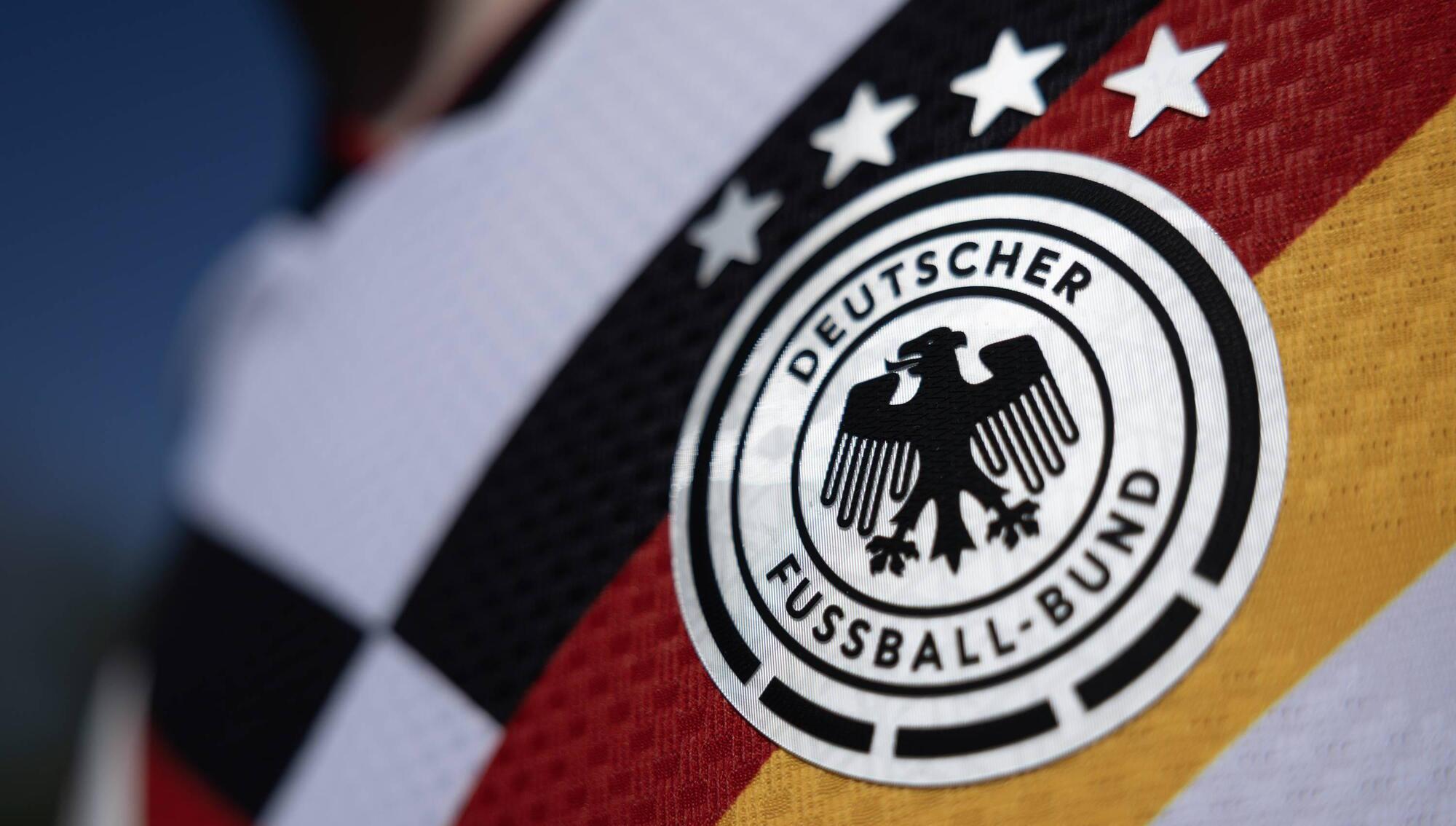
The new old favourite of the Germany national team from adidas - who will wave bye bye to the nation after this tournament. Pic: Visionhaus/Getty Images
“Well, it’s ’cause, uh, ‘remember when’ is the lowest form of conversation.”
The waste-management business was going well enough that Tony Soprano didn’t need to look elsewhere but if he had, comments like that might have prevented him from a career in football kit design.
Very few new offerings nowadays do not feature marketing spiel around how inspiration was drawn from the jerseys worn by the heroes of the past. Sometimes, the rationale is easy to understand if not self-explanatory; others can be more tenuous.
At the same time, it’s hard to be too critical of adidas engaging in a bit of navel-gazing with the Germany home shirt for this summer's World Cup – the company’s last for their native country until at least 2034, following the DFB’s decision to enter into a new partnership with Nike.
Sometimes, assessing the best in a crowded field will generate many disparate, if not divisive, views – but occasionally, the consensus answer will in fact the right one, such as The Beatles or Christy Ring. So it is with World Cup kits, with West Germany’s 1990 strip benefiting from a confluence of superb design and ultimate success.
Introduced for Euro 88, it might have been associated with semi-final failure at home but manager Franz Beckenbauer successfully lobbied for it to be kept on for the World Cup and was duly rewarded for that.
It has been revisited in the past – at the 2018 World Cup, Germany wore a version devoid of red and gold, literally a pale imitation – but for the upcoming tournament, the colours are on full show, with the ‘ribbon’ pattern changed to a V-shaped sash.
The only slight surprise to the casual viewer is that the shirt carries the adidas equipment logo and the new fatter stripes down the arm, whereas the change kit, in an unfamiliar navy and light blue colour-scheme has the classic trefoil, which is making its first appearance on World Cup outfits since 1990.
That is the approach adidas have taken, with all of the countries in their roster having more classical-looking away strips (it should be noted, though, that the shirt have the same material construction from a performance point of view). They deserve credit for not ‘tiering’ their nations, meaning that Curaçao, with a population of under 200,000, have been given a yellow jersey with blue, pink and green stripes that quickly established itself as a favourite.
Unfortunately, they will need to get out of their group if it is to be seen as they are slated to wear their blue home kit in all three group games – Japan’s second kit, white with a rainbow of pinstripes, has also proven popular but it too will remain in the hamper during the group stage. As attractive as they are on the eye, however, both of those fall under the heading of ‘nice’ rather than ‘revolutionary’.
Last week, a BBC online article picked the ten best World Cup kits of all time. It had West Germany 1990 at the top but fell into the trap of evaluating shirts by how iconic they were rather than just aesthetics – it’s hardly controversial to say that England’s red plain jerseys from the 1966 final would have made it on looks alone.
What was interesting is that, of the ten, just two came from after the millennium, despite the fact that each tranches of new releases breathlessly gush about the advances in design.
The baby of the bunch was Nigeria’s 2018 kit by Nike, which managed to nod to that of 1994 while still being fresh and original in its own right. One would have hoped that it would signal a change towards forward-looking styles but nothing in 2026 matches up to that high mark.
Which isn’t to say that things are all bad. Nike have rotated quite a bit between the traditional royal blue and the modern navy since taking over production of the France kit in 2010 and the new one combines both, with an ‘FFF’ motif created by a series of diagonal lines.
To celebrate hosting the tournament 32 years after the 1994 World Cup, the USA’s Nike outfits reference those of back then with two flag-themed kits, but go for hoops rather than stripes on the home while the away is a more sober take than the ‘floating stars on blue denim’ that adidas provided.
Perhaps because they are not the force they once were on the field, Brazil’s new kits no longer feel like major ‘events’ – the challenge for the CBF and Nike after nearly three decades together. One notable change for this World Cup is that the second kit carries the Jordan ‘jumpman’ logo rather than the Nike swoosh, however, the two-tone navy pattern is unfortunately rendered on the shorts, suggesting a leak.
Apart from Nigeria, the other post-2000 kit in that BBC ranking was Cameroon’s from 2002, when they sought to wear sleeveless shirts but FIFA insisted on black sleeves being sewn on. That was made by Puma, who, as the third wheel to the adidas/Nike duopoly, have long sought to be more disruptive with what they provide.
From that point of view, some of what they have issued for this World Cup is almost too boring, such as Czechia’s or Switzerland’s, though they have done well with the Senegal home shirt and Côte d'Ivoire, with tribal designs subtly featuring on the body of the jersey.
An increase to 48 countries may not be to everybody’s taste, not least the fact that 72 group games serve to remove just 16 countries, but it does mean more kits and makers.
Cape Verde’s blue home kit by Capelli and Haiti’s nice mix of blue, white and red kits by Saeta are the pick of the lower-order offerings while Kelme have provided Bosnia & Herzegovina with a pleasing navy and yellow ensemble. Others have gone for what the diplomatic optimist would term ‘classy and uncomplicated’ offerings rather than pushing the boat out too much.
In a sense, this is an unoriginal design – Nike essentially gave Finland the same thing a few years ago, stretching the Nordic cross across the body of the shirt – but it works superbly in the Norwegian colours and serves as a recall to the kit used in 1998, when they beat Brazil. The navy section houses a series of Norse knots, which are all but the same as Celtic knots: enough to claim support for the tournament’s dark horses?
Derivative of the late 1980s and early 1990s, without being a slavish copy, this combines subtle gold trim with three shades of blue. Your mileage may vary with regard to the ‘bold, free-spirited’ pattern that is said to be reminiscent of the 1970s, but the overall effect is a positive one.
A large proportion of the range of adidas away kits features retro-styled neck designs. The Algeria example does not, with the collar instead resembling a 2003 look for something of an anachronistic mishmash, but that does not detract from the visual. The two greens work well together, all the more so with the red accents – it would also have worked well as a Mexico home shirt but unsurprisingly they went with an Aztec theme.
: Belgium have done well in the past with light blue change shirts that draw upon national influence: in 2016, they were shirts based on the country’s cycling kit while Euro 2024’s was a tribute to Tintin. This one claims ancestry from the surrealist movement but looks more like Chinese lanterns.
Going for an abstract pattern can be a fine risk/reward line. In 2024, Portugal’s away kit had a white and blue pattern and looked very well, all the more so with navy shorts. Having switched from Nike to Puma, they will now sport a white and ‘lagoon green’ outfit when red cannot be used – an ocean theme is a nice idea for a country with such a maritime tradition but the triangulated cut-off may not be to everybody’s tastes.
It must first of all be pointed out that the Canada home kit is lovely, a two-tone red that incorporates a maple leaf motif without going overboard and it is a design reflected in white and grey with their third strip. The black away is different, in every sense: a fractured white graphic is said to represent the country’s “winter sport culture and resilience”.

CONNECT WITH US TODAY



Be the first to know the latest news and updates