Local authority bye-laws could be used to curtail public drug use, committee hears
However, concerns were expressed as to whether this would be enforced given the level of public drinking in spite of bye-laws
Local authority bye-laws could be used to curtail public drug use, committee hears

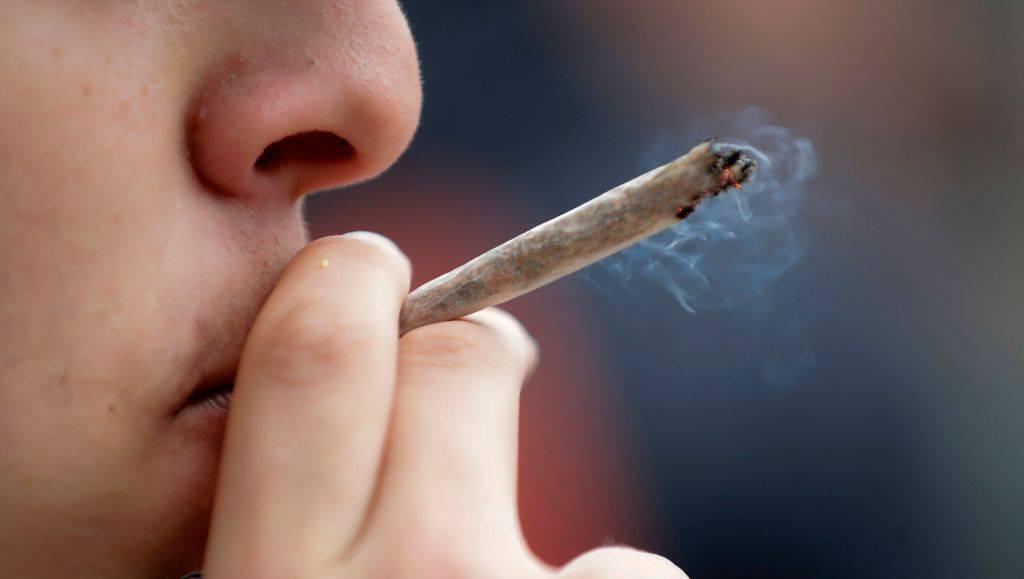
Senator Mary Fitzpatrick of Fianna Fáil said people are 'sick of smelling weed in parks, on the canal or on the street' and that this issue should be taken seriously. File picture: Getty

Public concerns around decriminalising the possession of drugs could be alleviated by introducing local authority bye-laws banning the consumption of drugs in a public place, an Oireachtas committee has heard.

The Oireachtas Committee on Drugs was told that local authorities could extend the current bye-law on public drinking to drugs and that gardaí could enforce the laws as they currently do with alcohol.

But some concerns were expressed as to whether this would be enforced given the level of public drinking in spite of the bye-laws.

The committee is holding extensive hearings on the recommendations of the Citizens Assembly on Drugs, which reported in January 2024.

The committee was previously told by Garda HQ that if possession of drugs was no longer a criminal offence — by removing Section 3 of the Misuse of Drugs Act — it would seriously impact the ability of gardaí to combat local dealing.

Garda bosses said street level dealers would just carry 'possession amounts' of drugs at any one time in order to avoid being stopped, searched, and prosecuted for supply.

Appearing before the committee on Thursday, Cian Ó Concubhair, assistant professor in the School of Law & Criminology at Maynooth University, asserted that this was an “incorrect reading” of the law.

He said search powers for other drug offences, such as supply, would remain if Section 3 was removed from the statute.

Senator Mary Fitzpatrick of Fianna Fáil said public consumption of drugs is one of the “biggest complaints” of non-drug using people in communities. 

She said people are “sick of smelling weed in parks, on the canal or on the street” and that this issue should be taken seriously.

Mr Ó Concubhair said local authorities currently have bye-laws prohibiting public consumption of alcohol, which give gardaí the power to seize alcohol from people drinking in public, dispose of it and direct people to move on.

He said if the person refuses to cooperate and move on they can be prosecuted under public order laws and potentially receive a criminal conviction.

Mr Ó Concubhair said he has witnessed gardaí using this power effectively for alcohol and typically in a restrained manner.

He added that as part of an effort to “retain public trust” in a Government decision to decriminalise possession of drugs, that public authorities could specifically make the consumption of named drugs in a public place an offence, enforceable by gardaí.

Ann Graves, Sinn Féin TD for Fingal East, Dublin, said she had previously been a councillor. She said there are "bye-laws for everything and none are implemented”.

She said public drinking is evidence of that and said in her local park at the weekend it was “party central”, particularly with young people, with no enforcement.

Mr Ó Concubhair said this is a “capacity issue” and that public authorities are “radically underfunded”. He said there are “limits to how much gardaí can enforce” the law and that this is a reality in a democratic state.

His colleague in Maynooth, Ian Marder, told the committee that almost 4,000 people received convictions for possession of drugs in the district courts in 2025.

He said international evidence suggests that changing the law "reduces drug-related harms", particularly when, as in Portugal, decriminalisation is combined with investment in health and welfare.

  • Cormac O'Keefe is Security Correspondent.

More in this section

Lunchtime News

Newsletter

Get a lunch briefing straight to your inbox at noon daily. Also be the first to know with our occasional Breaking News emails.

Cookie Policy Privacy Policy Brand Safety FAQ Help Contact Us Terms and Conditions

© Examiner Echo Group Limited