Graham Dwyer fails to overturn conviction for murder of Elaine O'Hara
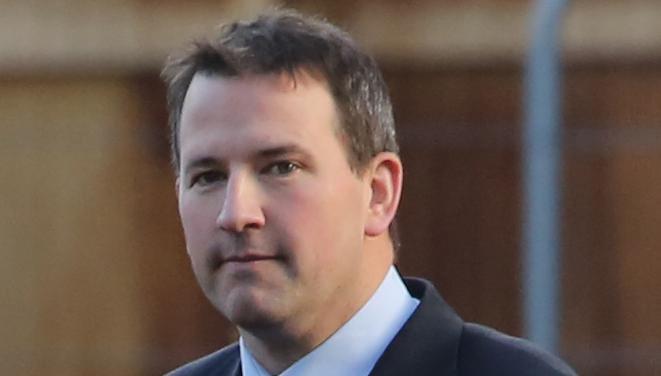
Graham Dwyer is serving a life sentence after he was convicted at the Central Criminal Court in 2015 of the murder of Elaine O’Hara. File picture
Graham Dwyer has lost his last-ditch attempt to overturn his conviction for the murder of care worker Elaine O’Hara.
A Supreme Court ruling which dismissed his final appeal means it is the end of the legal road in Ireland for the killer who has already spent nine years behind bars.
He has always denied the murder of 36-year-old Ms O’Hara, who was last seen in August 2012 in a park in Shanganagh, south Dublin. Some of her remains were found in the Dublin mountains just over a year later and she was identified from dental records.
Members of Elaine’s family, including her father Frank and sister Anne Charles, were in the Four Courts to hear the ruling of the court.
Seven judges in the highest court in the land on Wednesday ruled to dismiss the appeal.
Mr Justice Maurice Collins gave the judgment of the court.
The Supreme Court ruled unanimously that evidence of mobile phone data was admissible at Dwyer’s trial and affirmed Dwyer’s conviction for murder.
Mr Justice Collins, giving the main judgment of the court, noted there was “ substantial evidence” linking Dwyer to Ms O’Hara in various ways. The cornerstone of the prosecution case was the content and timing of the text messages, which on their case were sent by Dwyer to Ms O’Hara as well as the messages sent by her.
On the prosecution case, once those messages were attributed to Dwyer it was inevitable the jury would convict.
The attribution of those messages to Dwyer was therefore an essential building block of the prosecution case.
Mr Justice Collins analysed the evidence linking Dwyer to the phones from which those messages had been sent — the so-called green phone and the master phone as well as the evidence linking Ms O’Hara to the phone not registered to her, the so-called slave phone.
That evidence, the judge said, was not challenged or contradicted.
The judge said the position was very clear. “Even if the traffic and location data relating to the work was inadmissible, which it was not, the remaining evidence available to the prosecution was more than sufficient to establish attribution beyond any reasonable doubt.
Mr Justice Collins said the content of the text messages alone effectively excluded any possibility the person texting Ms O’Hara from the green phone was anyone other than Dwyer but that was far from being the only evidence to that effect.
The evidence relating to the master phone equally, the judge said, left no room for doubt.
“No reasonable jury hearing such evidence could have had reasonable doubt that Dwyer was the user of the green phone and the master phone or for that matter that Ms O'Hara was the user of the slave phone from, which as I have said, does not appear to have been the subject of dispute.
"Once these phones and the messages sent from them were attributed to Dwyer, the evidence that his work phone was located near the M50 on the evening of August 21 had little or no significance," the judge said.
It followed, the judge said, there was no question of any last chance of acquittal here and therefore no miscarriage of justice within the meaning of the proviso.
“Accordingly, had I concluded that the traffic and location data was inadmissible I would have upheld the decision of the Court of Appeal to apply the “proviso” and would have dismissed Dwyer’s appeal on that basis.”
Mr Justice Gerard Hogan in a concurring judgement said he felt bound by an earlier decision of the Supreme Court a few weeks ago where the court dismissed objections to the admissibility of phone data at a criminal trial.
Speaking outside court after the ruling, Elaine O'Hara's father Frank said he was relieved and pleased and said: "It's been a long journey."
In a statement, the O'Hara family said it was now almost 12 years since they had lost Elaine.
They said a missing persons case had turned into a murder investigation and a long, arduous criminal trial, with many challenges to the jury's verdict over the years.
They said they were relieved the Supreme Court had upheld the Appeal Court's verdict. They also said they hoped Elaine could now, at last, rest in peace.
The family thanked members of An Garda Síochána, in particular the investigating team, the detectives and their family liaison officer, who they said had been by their side throughout. They also thanked friends and family for their support over the years.
In the last few years, Dwyer has brought his case to several courts, including the High Court, Court of Appeal and Europe in his bid to secure his release from prison since being jailed for life in 2015.

Mobile phone data had helped to tie Dwyer to Ms O'Hara's murder, linking him to a phone used to send messages to her, and to certain locations.
Dwyer’s trial was told a Nokia phone found in Vartry Reservoir in Co Wicklow in 2013 was used to send Ms O’Hara messages, including one about stabbing, culminating in a text dated August 22, 2012, the last day she was seen, to “go down to the shore and wait”.
The prosecution argued that phone, and another phone found in the reservoir, were secret ‘master’ and ‘slave’ phones Dwyer and O’Hara used almost exclusively to contact each other.
Following his conviction, Dwyer in long-running civil proceedings brought his case before a number of courts including the Court of Justice of the EU (CJEU) where he successfully challenged the validity of section of the legislation which permitted phone metadata to be retained “on a general and indiscriminate basis”.
In April 2022, the CJEU found Ireland’s data-retention regime breached EU law.
But in March of last year the Court of Appeal here dismissed Dwyer’s earlier appeal against his conviction and said the metadata evidence, which it described as “not very significant”, was admissible. Even if excluded, there was enough evidence to link Dwyer to the two phones that formed part of the prosecution case, it held.
Dwyer then secured a further appeal before the seven-judge Supreme Court.
The Supreme Court decided to allow a final appeal on the grounds "significant issues of general public importance" arose about the admissibility of mobile phone data evidence retained and accessed under legislation that was later found to breach EU law.