Ireland’s nature plan hopes to boost climate resilience and bring economic benefits
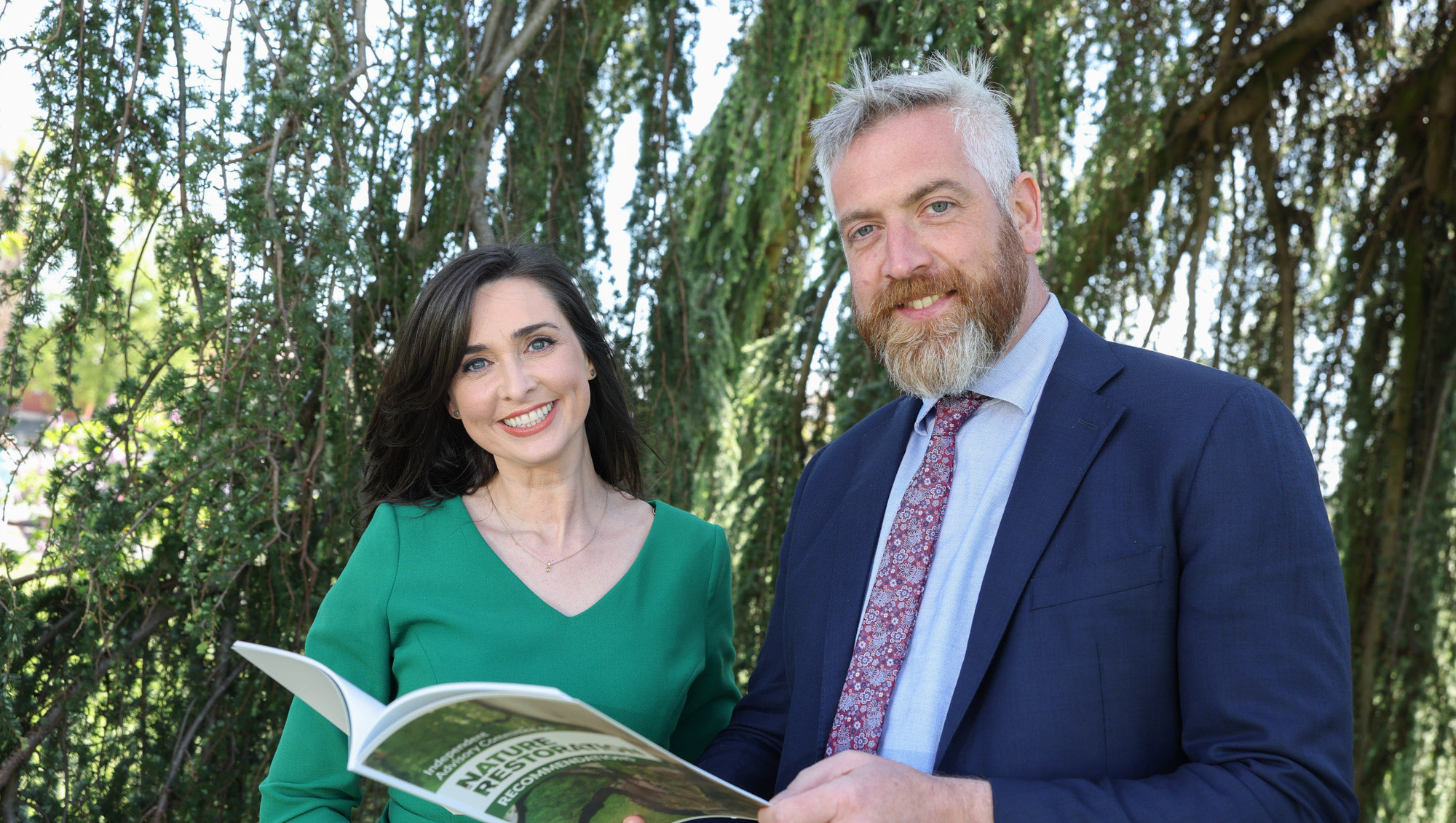
Aoibhinn Ní Shúilleabháin, chairperson of the Independent Advisory Committee on Nature Restoration with minister of state Christopher O’Sullivan.
Almost 7,500sq km of Ireland’s land, coastal, and freshwater ecosystems require restoration, according to Ireland’s draft Nature Restoration Plan published today.
The framework, which provides indicative costs and a rough outline to the EU based on available data, said it could cost €5.8bn to restore degraded areas by 2050, including €2bn for restoration and €800,000 for re-establishment.
It said maintenance and monitoring, which is assumed would be needed “across the full area to prevent further degradation”, are estimated to cost €2.9bn.
The analysis also says the “significant” socio-economic benefits of restoring degraded habitats include flood mitigation, improved water and soil quality, and recreational and cultural values.
It estimated the economic benefit in the billions of euro.
Read More
It said many nearshore habitats are degraded, and will require active restoration such as seagrass or oyster reefs, and noted the potential of restoration measures to minimise the impact of climate change.
This includes the restoration of salt marshes, dunes, machair, and seagrass beds to help address "coastal squeeze" and sea-level rise — observed at about 1.5mm a year in Dublin and a cumulative 40cm in Cork Harbour since 1842.
After storms Darragh and Éowyn, which caused in excess of €500m in forest damage, it recommended species diversification and avoidance of afforestation on deep peat.
The plan states that while the Government “has committed to prioritising” State land to restore habitats and species, incentives will also be offered to private landowners who want to restore nature.
The EU Nature Restoration Regulation set out a target of restoring at least 20% of the EU’s land and sea area by 2030 and all ecosystems by 2050.
The draft plan sets out how Ireland will contribute to the EU’s target.
Ireland expects to receive feedback from the European Commission by March 2027, and will submit its final plan by next September.
Submissions from public consultations and the work of the Independent Advisory Committee, chaired by Aoibhinn Ní Shúilleabháin, will also be considered.
Estimates can be based on incomplete data and countries are expected to fill knowledge gaps on habitat and species and to make investments such as surveys, maps, and monitoring as part of the plan.
Three interdepartmental working groups in Ireland are on establishing datasets on land, sea, and cities and towns, while a fourth group is considering the financial aspects of the plan.
Minister of state Christopher O’Sullivan said he was “determined to ensure that all voices are heard and respected” in developing the plan.
He said: “Representatives from the farming, forestry, and fishing communities, local authorities, public bodies, scientists, and NGOs [non-governmental organisations] played a foundational role in the development of this work, as did the many Government departments and agencies who inputted at the technical level.
“For this reason, I am deeply proud of the collaborative spirit at the heart of this draft plan.”

BLACK FRIDAY
Already a subscriber? Sign in

CLIMATE & SUSTAINABILITY HUB
CONNECT WITH US TODAY



Be the first to know the latest news and updates