Cop31: When it comes to protecting our coasts, we need transformative large-scale solutions
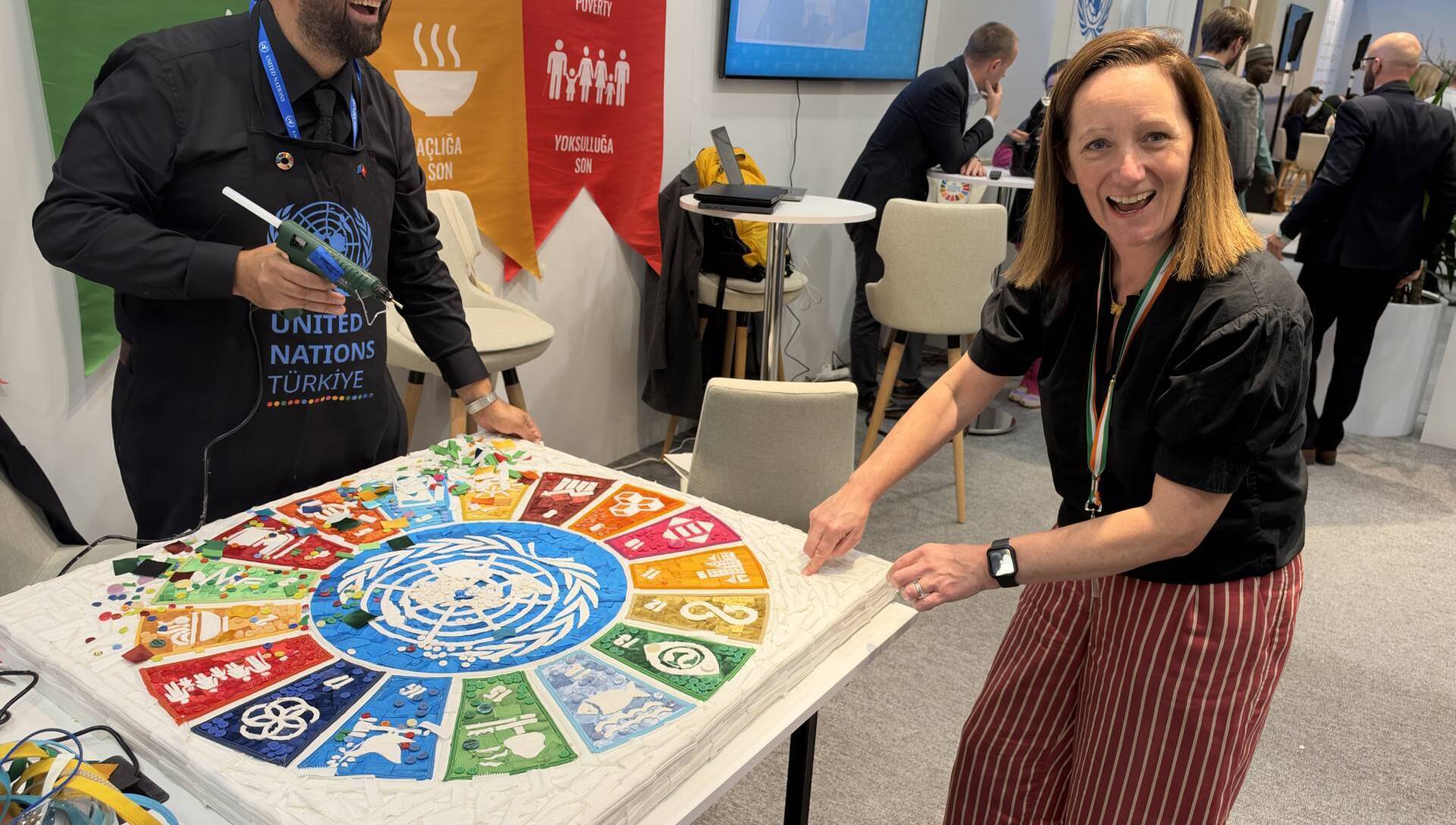
Dr Louise Firth, senior lecturer in environmental sustainability at UCC, is in Antalya for the UN's climate change summit Cop31 as part of the UCC delegation.
One of the clearest takeaways from Cop31's session on coastal nature-based solutions (NbS) was that, despite excellent examples of innovation and progress, we are still working predominantly at small scales.
Too often, our efforts remain project by project, rather than forming part of the larger, connected strategies needed to address the scale of the climate and biodiversity crises.
Conservation International shared compelling examples from Brazil, demonstrating that investing in green solutions can be more effective and less expensive over time than conventional grey infrastructure. Yet even these successes highlighted a persistent challenge: how do we move from individual projects to transformative, landscape-scale implementation?
The discussion offered some encouraging signs. Conservation International shared its work developing a coastal management plan for Bangladesh, emphasising the need to include India, given the Sundarbans (the world’s largest contiguous mangrove forest) spans both countries.
Meanwhile, the Norwegian Research Council announced its Arctic Ocean 2050 funding programme, supporting research across the Arctic rather than within Norway alone.
41935224;41936235;41936238[/readmore]
Both examples reinforce a fundamental truth: nature does not respect borders, and neither should our research, funding or solutions.
We need practical, scalable, investable and meaningful solutions — supported by collaboration that extends beyond political and jurisdictional boundaries.
For Ireland, an island nation with extraordinary coastal natural assets, this message is particularly relevant. Our salt marshes and other coastal habitats are not simply places to conserve; they are infrastructure, helping buffer coastlines against erosion, flooding and sea-level rise.
Yet the 2025 National Parks and Wildlife Service report finding that 90% of protected sites were in unfavourable condition is a stark reminder we are not protecting this natural infrastructure effectively enough. Research, restoration and scaled implementation must advance together, backed by sustained investment.
We must also rethink the grey infrastructure already lining our coasts. Seawalls and other coastal structures can be designed to do more than protect human assets. The Living Seawalls in Cork initiative demonstrates how modular concrete panels, with five different surface designs that create greater complexity and retain water, can encourage marine life to colonise artificial structures.
These installations are simultaneously habitat, public art and an educational resource, while contributing to a global experiment comparing outcomes across locations.
Similarly, the Blueshores project is trialling hybrid, biodegradable elements to support salt-marsh restoration and erosion management across three European sites: Cork/Kerry; the Scheldt Estuary in the Netherlands; and the Venice Lagoon in Italy. This cross-site approach is essential to understanding what works, where, and why.
The challenge now is to move beyond isolated successes. We need research and implementation happening side by side, adequate and sustained funding, and collaboration at the scale nature demands.
By making space for nature — within our landscapes, our infrastructure and our decision-making — we can build coastal systems that work better for biodiversity, society and the economy.
- Dr Louise Firth is a senior lecturer in environmental sustainability at University College Cork

CLIMATE & SUSTAINABILITY HUB
CONNECT WITH US TODAY



Be the first to know the latest news and updates