‘Make or break time’: Cop31 hears UN chief call for no new fossil fuel infrastructure
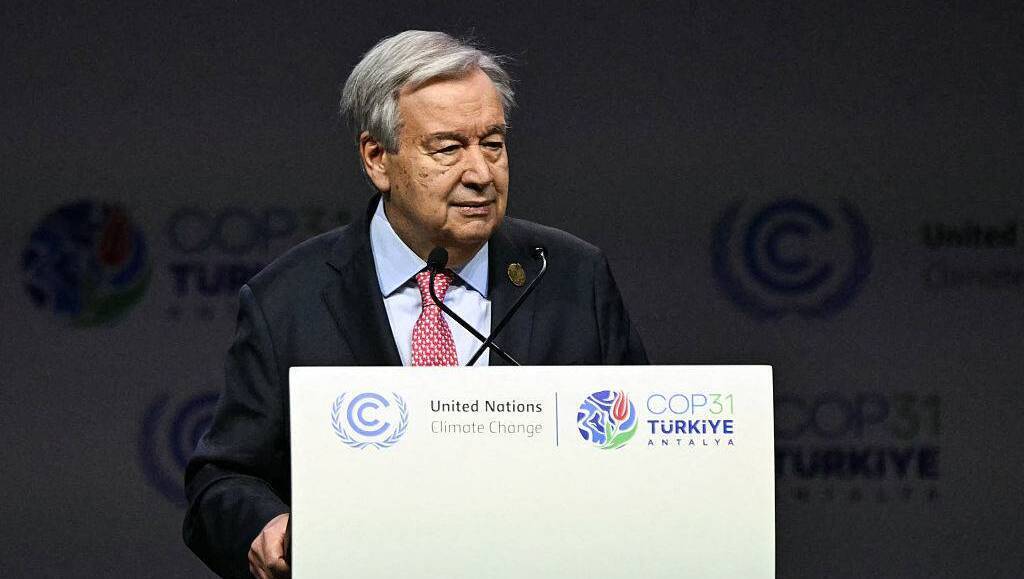
There should be no new coal, oil or gas infrastructure that puts a temperature increase of 1.5C further out of reach, UN secretary general António Guterres has said. Photo: Ozan Kose/ AFP via Getty Images
There should be no new coal, oil or gas infrastructure that puts a temperature increase of 1.5C further out of reach, UN secretary general António Guterres has said.
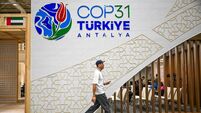
Guterres told world leaders that it was “make or break time” and the fossil fuel “addiction” needed to end, in a powerful address to mark the start of the leaders’ summit of Cop31 in Turkey.
The 77-year-old, who retires from the role next year, said he would “not stop telling the truth” after his departure and would remain an advocate for climate action.
“The brutal truth is the climate crisis is outrunning us,” he said.
Read More
“Emissions in 2025 reached all time highs, heat records keep shattering.
“The last four years were the hottest ever and fossil fuel interests keep making a killing - while killing our planet.”
He said that while a temperature rise above 1.5C was now “inevitable”, countries needed to “fight harder” to determine how high and how long the overshoot will be and to ensure it is not a “permanent sentence”.
“That means no new coal, no new oil or gas infrastructure that puts 1.5 degrees further out of reach, slashing methane emissions, expanding renewables, green storage, clean electrification at bullet speed, safeguarding forests, oceans and biodiversity.”
Addressing young people, scientists, indigenous people and people from small island nations, he commended them for being “the conscience of our struggle”.
“When others looked the other way, you told the truth,” he said.
Turkey’s president Recep Tayyip Erdoğan said that not only was a genocide taking place in Gaza, but an "ecocide" as well as he called for humanitarian aid to be let into the Palestinian enclave.
He said centuries-old olive trees had been cut down in Gaza, soil and water had been polluted, and cities had been reduced to rubble.
“Hundreds of thousands of our brothers and sisters in Gaza have no roof under which to shelter, among them, innocent children shivering with cold, struggling to survive among the floodwaters and winter conditions, often without their mothers or fathers,” he said to applause.
He called for a “show of power” on behalf of the people of Gaza, saying not to do so would show “weakness” and a “lack of conscience”.
“The passage of humanitarian aid into the region must be permitted immediately.
“The policy of isolation must end, and this persecution and cruelty must finally be brought to an end.”
On the climate issue, he said that humanity, driven by “a greed for excessive consumption”, was going through “one of the deepest, one of the worst existential crises in history”.
“We are facing serious challenges ranging from global warming and loss of biodiversity to the excessive consumption of natural resources, threats to food security, to ecological destruction, and sudden, devastating climate events.”
Newly re-elected Brazilian president Luiz Inácio Lula da Silva, who hosted Cop30 last year, said it was appropriate to gather in Turkey, a “bridge” between nations, at a time of geopolitical divisions across the world.
He said momentum from global leaders on climate had “dropped off” at the start of this year and “we started talking more about weapons and tariffs than future generations”.
Referencing his election win in October, he said that indigenous people had travelled far to vote to “defend their territories”, and the youth rose to “ensure a worthy tomorrow”.
“Brazil is back to defend the continuity of a healthy planet. Good luck to us all.”
Ethiopia’s prime minister Abiy Ahmed said that droughts had forced families from homes and while Ethiopia gave the world arabica coffee, that supply is threatened now due to the changing climate.
“We are helping communities to prepare for extreme weather, we are improving forecasts to give farmers earlier warning.
“But a warning is only effective if people have the means to act on it,” he said ahead of Ethiopia hosting Cop32 next year.
Australian prime minister Anthony Albanese raised the plight of Pacific islands and said its “brave and resourceful” people had called on them to act.
He read out a letter from a student from Tuvalu, a Pacific island just 1.8 metres above sea level, who said that she and her friends dream to “grow up safely in Tuvalu” and asked for islands like hers to be protected.
CLIMATE & SUSTAINABILITY HUB
CONNECT WITH US TODAY



Be the first to know the latest news and updates