‘I have to go to a hostel and I’m scared’: Growth in older homeless numbers ‘almost inevitable’
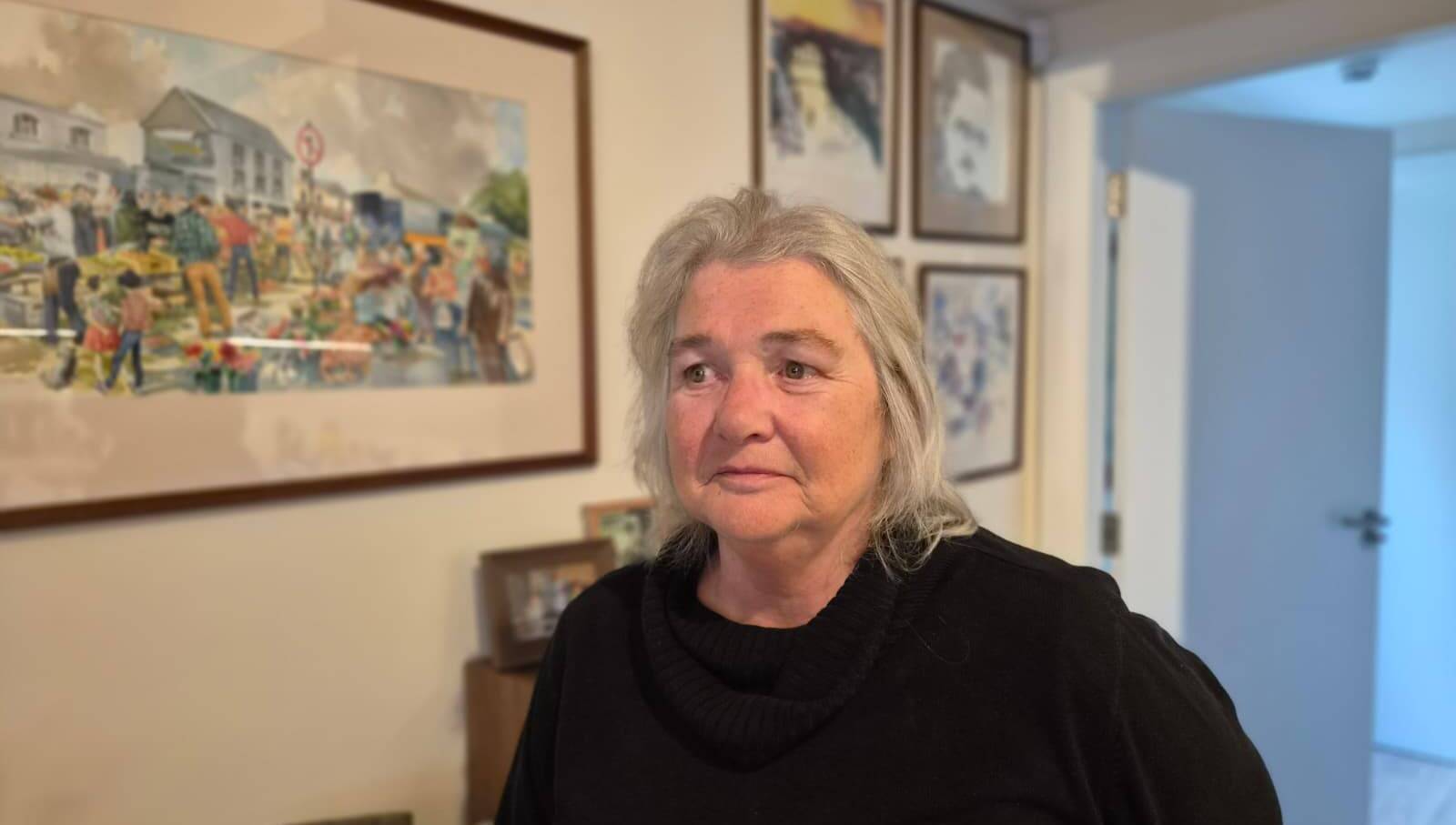
Mary Jane Farrer, from Galway, poses in front of her father's paintings.
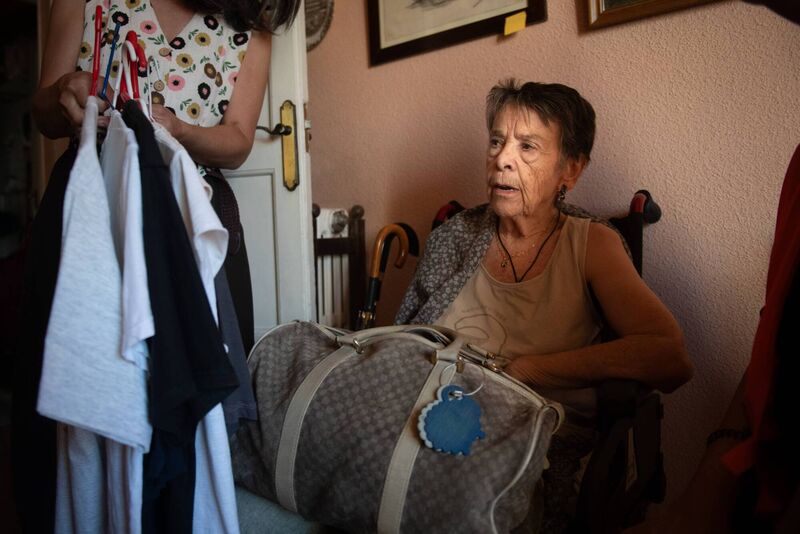
Rose*, a 62-year-old woman from North Dublin, is going to be evicted from her home of 30 years next Thursday morning.
As a young woman, she had bought her own home and had the mortgage paid off 10 years later, but sold it the day before she got married so she and her husband could buy a bigger house, with more room for their two children.
After a workplace incident that left her unable to work, and her husband left them and did not engage with the bank, she was unable to pay the mortgage.
“This time next week I’ll be out of here,” she told the through tears, while sitting in her kitchen surrounded by her belongings that she had begun packing away.
“I am devastated, even looking at all my furniture, looking at my garden, which I adore, and I don’t know where I’m going. It’s very hard.
“When I was 22, I always had in my head that I was going to buy a house and I was going to leave my children OK. And now I’m not OK, I have nothing, and it’s very hard to think at 22 I had it all, and at 62, I have nothing.”
She has no family based in Dublin who she can stay with — her daughter is couch surfing while working full time — and said many of her peers have paid their mortgages off and are planning their retirements.
“I know that I have to go to a hostel and I’m scared,” she said. “The fact that I’m 62, I’m not the norm, I’m not a substance user, but I know it’s the only option I have.
“I have to deal with what’s ahead of me.
“I just want people to know that it can happen to anybody. It doesn’t just happen to young people anymore.”
The number of older people presenting as homeless — some for the first time in their lives — has increased in Ireland.
Although the cohort has remained small in the overall monthly homeless figures, charities representing older people and the homeless have noted that the trend is expected to continue.
In Spain, tens of thousands of people took to the streets over the eviction of an 87-year-old woman from her home of seven decades in Madrid, with a snap election called in response to the political crisis that ensued.
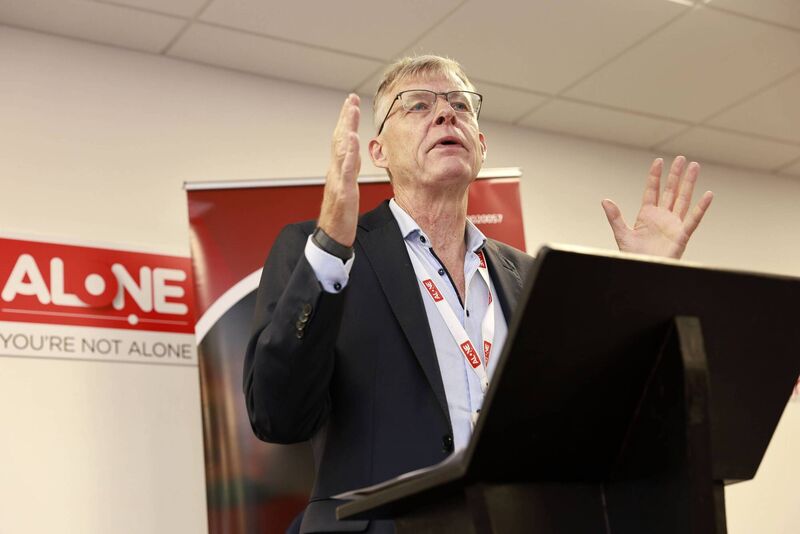
“If you take what happened in Spain, the potential for the political system here is something like that will happen,” said Seán Moynihan, chief executive of the charity Alone, of the protests in support of María del Carmen Abascal, who died last week.
“The social contract was very simple: You pay your taxes, you work hard, you’re a good citizen, you pay your insurance, you don’t break the law, and in return, health and housing. Ultimately, that’s been broken.
“In the current scenario, it’s nearly inevitable that we’re going to have more homeless older people.”
He said Ireland is at the “thin end of the wedge” of an aging population and a continuing drop in house ownership among people aged over 60, which is projected to fall to 65%.
“So where are that 35% going when their income goes down, or they are bereaved?” he said, noting that it is inevitable that your income drops after retirement.
“I’ve asked every minister for housing that question for 15 years, back to Alan Kelly, and I don’t know the answer — how are they going to pay the rent when they retire?”
He said “thousands and thousands” of age-friendly social housing units are needed over the next 15 years to meet demand, which would also suit single people and couples on the social housing list.
The last Census, recorded in 2022, found there was an 83% increase in the number of properties rented by those aged 65 and over from a private landlord, a total of almost 17,000.
The number of people aged 65 or older who are in emergency accommodation has also increased by 168% since 2017, to 271 people recorded in August this year.
This does not include people rough sleeping, couch surfing, or those staying in hospitals or with friends or family.
A 75-year-old chef, originally from Co Kildare, became homeless nine years ago after he got pains in his stomach while at work and had his kidney removed.
He said that he could not work and could not pay rent, and slept in his car for a year. When he needed to wash, he would take a dip in the sea at Portmarnock.
“Lousy,” he said of how he felt at the time.
“You’re completely helpless. I was begging. It was hard. ‘Why don’t you get a job,’ everyone was saying, and they don’t realise what homelessness is.”
He went into emergency accommodation for two years, where he said he could not leave his belongings in his room during the day in case they were taken.
“At the time, you’re just going through everyday life and just hope something good will happen.
“The best thing to do is to think positive, don’t start feeling sorry for yourself, that’s the worst thing you can do.”
Brídín Carroll, a social gerontology researcher, said older people at risk of homelessness can face shame and stigma, both internal and external, as well as depression and anxiety.
“The research shows that these feelings are more intense for the people who are experiencing it for the first time in later life because you have this massive shift in their reality and they have no idea how to navigate the homelessness system,” she said.
Ms Carroll’s research, funded by the National Disability Authority, on older adults with disabilities who are experiencing housing challenges, indicates that a dedicated agency or key worker to support older disabled adults in navigating the housing system would make a big difference.
“Quite often their need is more urgent because they are older and they can’t just be left sitting as number 700 on the list.
“If someone has cognitive decline and they’re living in homeless accommodation, they can’t be cared for properly in that situation, but that situation still happens.”
Ms Carroll said the cohort of older people becoming homeless for the first time in later life included people who were never in a position to buy a property, because they were in lower-paid jobs; people who do not have a private pension because of the sector they worked in, such as the arts or hospitality; people whose relationship had broken down; or people who had developed an illness or disability and their home became inaccessible or unsuitable.
In addition, private market renters may have missed rent payments due to illness or other personal challenges.
She said one research participant’s partner was dying, while at the same time they were dealing with “a cascade of catastrophic health challenges”, which had left them disabled and unable to work.
This made paying rent on their home, which they had lived in for over a decade, impossible, and they became homeless.
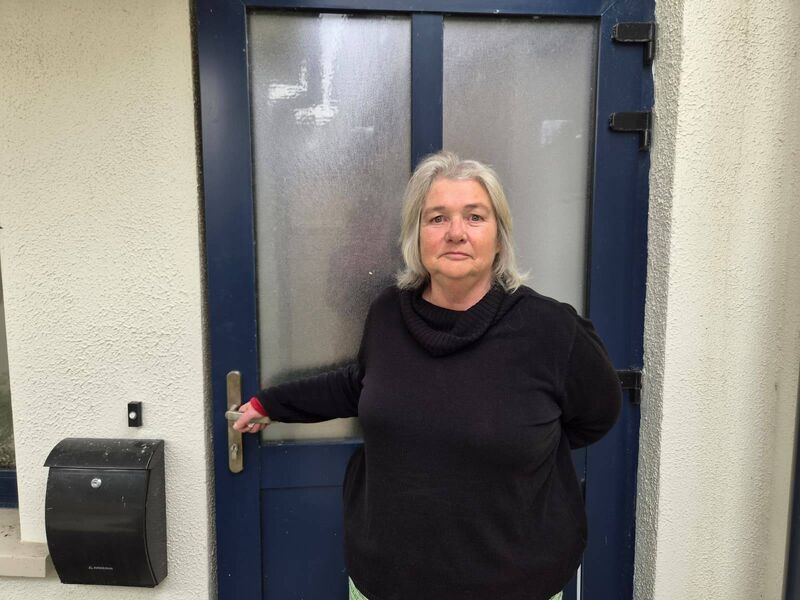
In the Galway home of Mary Jane Farrer, aged 66, several paintings by her father Jack take pride of place in the hallway, sitting room, and bedroom.
These include one of a farmers market in Galway from 1989; one of her as an eight-year-old girl in a kimono; and a self-portrait of her father playing the trumpet.
In her previous tenancies, from which she was evicted, she could not hang her father’s paintings up.
Although Mary Jane had worked as a chef all her working life, 15 years ago she had to give it up when she badly injured her back, which created uncertainty for her living situation.
She said she was evicted from a flat in Salthill after the landlord decided to sell; then moved to a Celtic Tiger-era flat in Doughiska, which was “really damp” and was evicted again; and then to a flat in Headford because she couldn’t afford anywhere in the city.
“About eight or nine years ago, prices started going up, and just the availability wasn’t there.”
She said an agent told her her flat in Headford had been sold, and she couldn’t find anywhere else to rent.
“Every time a car drove in, you’d be thinking, ‘Oh no, are they coming to evict me now, to kick me out?’ “Because you hear all these things about these people turning up, and it’s just awful. Not sleeping properly and not being able to eat properly, just not looking after yourself because it’s constantly on your mind.
“Everything that you need as a human being to live is affected by getting eviction orders or by becoming homeless, everything you need for your sanity, whether it’s in your brain or in your body, it’s just gone.”
She said it was 18 months before they were evicted, due to issues with another block of flats, which led to a “very frightening period” where she tried and failed to find a place to rent.
“You don’t sleep at night, and you don’t tell people how you feel because it sounds silly at your age.
“I get emotional talking about it, even still. You do a lot of crying at night, and it’s just really hard and scary and there’s no way out of it. You’re ringing all these places and saying, ‘I need somewhere, and there’s nowhere to get anything’.
“I always thought I’d be able to afford somewhere. I didn’t think that a one-bedroom flat or a two-bedroom flat in Galway City would be nearly €1,500.
“I just didn’t think that was going to happen. Now it’s €2,500, it’s crazy.”
Galway Simon Community said they could foresee six or seven years ago that the demographics were shifting — as the number of older people who were renting grew, so would that age cohort who were at risk of homelessness.
It built a community development for older people in Galway city, Sómas — and Mary Jane was housed in one of 10 A-rated, fully furnished one-bedroom apartments in April 2025.
Mary Jane now pays rent to Simon from her State pension and urged the Government to back similar developments for older people around the country.
“I can pay my rent, and I still have money left over to buy food — it’s just such a difference,” she said.
“I remember my daughter drove me up, and she said, ‘I think that’s it, mum’, and I went ‘Oh my god!’
“I just burst in and said, ‘Is this mine?’ It took me six or eight months to get rid of the stress, and to actually go, ‘Yeah, this is mine’.”
The Department of Housing said an action plan on delivering housing for older people is being prepared and “is expected it will be completed in the coming months”.
It also said a homeless prevention framework would be published, and that Budget 2027 provided funding of €543m towards homeless emergency accommodation and support services, including for older persons.

CONNECT WITH US TODAY



Be the first to know the latest news and updates