Remains of further 10 infants recovered from former mother and baby institution
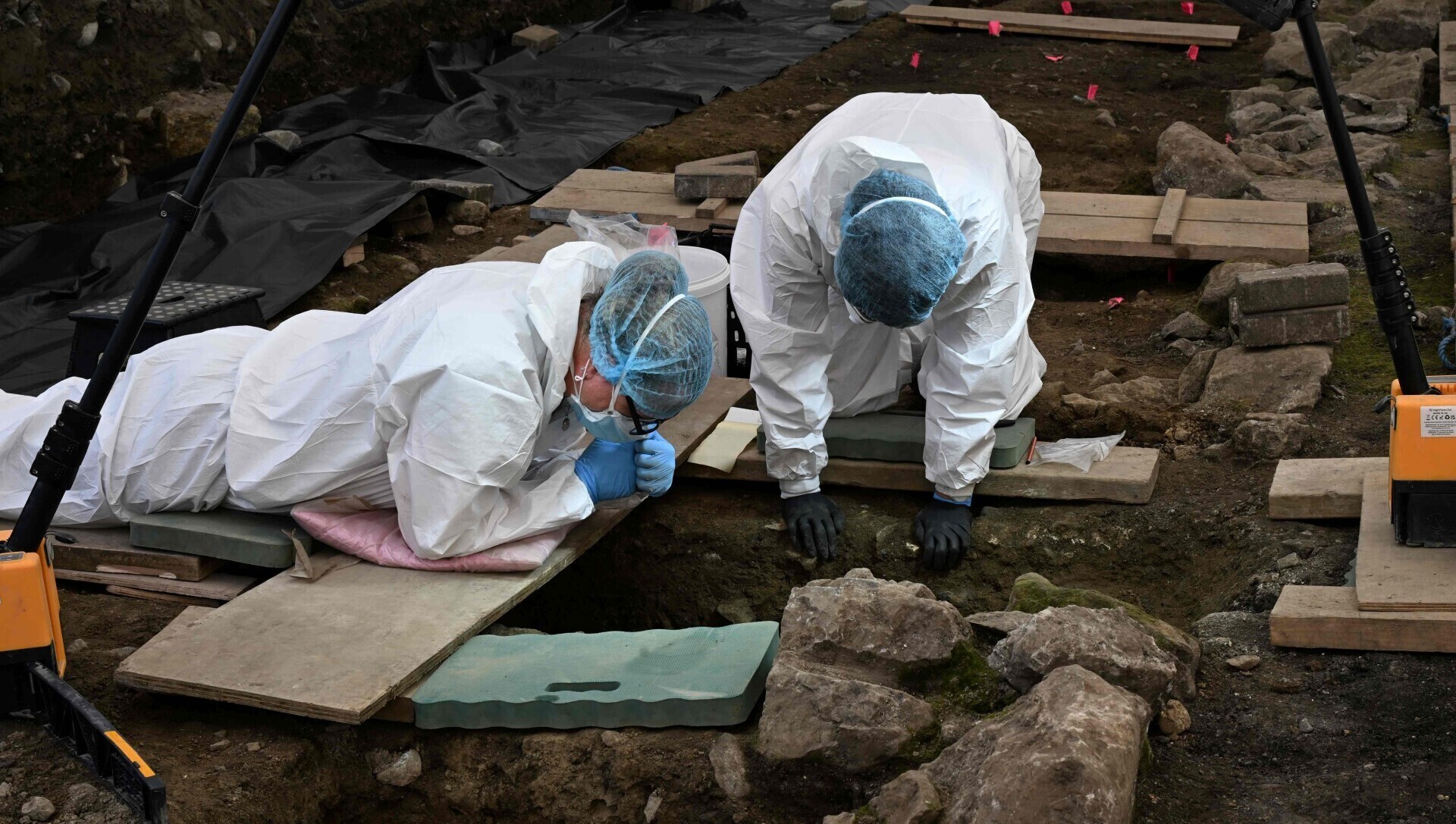
A search under way the former mother and baby institution in Tuam, Co Galway. File picture: Odait/PA
The remains of a further 10 infants have been recovered from the site of a former mother and baby institution in Galway.
They were found in coffins in a section of land which was excavated by hand by the Office of the Director of Authorised Intervention, Tuam (Odait) Forensic Excavation team.
The search, which began in July last year, has so far discovered the remains of 109 infants at the site.
The most recently found infant remains were discovered in the search period from July 16 to September 30, and was carried out by hand-excavation in an area marked as “tent 2”.
Read More
It was confirmed that there was evidence of coffins being present in all of the recent remains found.
It brings the total recovered in this particular location of the site to 32 infants and the total institutional human remains recovered on site to 109 individuals.
The excavation of the former St Mary’s mother and baby institution in Tuam is attempting to identify the remains of infants who died there between 1925 and 1961.
In 2014, research led by local historian Catherine Corless indicated 796 babies and young children were buried in a sewage system across that time period.
The recovery of all accessible mother and baby institution remains has been completed in the area marked ‘tent 2’, and the excavation process was paused to allow for the dismantling of the current tent and the erection of a bigger tent, marked ‘tent 3’.
The larger tent will allow Odait to excavate the entire area up to and beyond the old boundary wall of the institution’s grounds as required by the forensic excavation.
The report further stated that artefactual evidence from all historic periods represented on site continues to be discovered on site.
It stated that work has continued to amend the institutional burials legislation to include first cousins as eligible family members, with officials from the Department of Children working with the Office of the Attorney General.
The bill has been brought to Government and is expected to be published in the coming days, following which it will proceed through the Houses of the Oireachtas as part of the legislative process.
During this reporting period, Odait collected an additional 12 DNA reference samples which have been delivered to Forensic Science Ireland.
This brings the total number of DNA reference samples taken to 74.
Odait has urged anyone who believes they may have a family member buried at the site of the former Tuam institution to contact its office.
“Our team can answer any questions and help guide you through the process,” they said in the report.
Forensic analysis is now under way in a recently opened facility and mortuary located close to the excavation site.
In 2017 a commission found “significant quantities” of child and infant remains in subsurface chambered tanks located in the memorial garden area of the site.


CONNECT WITH US TODAY



Be the first to know the latest news and updates