EU Kids Act: Under-15s face social media account restrictions under new proposals
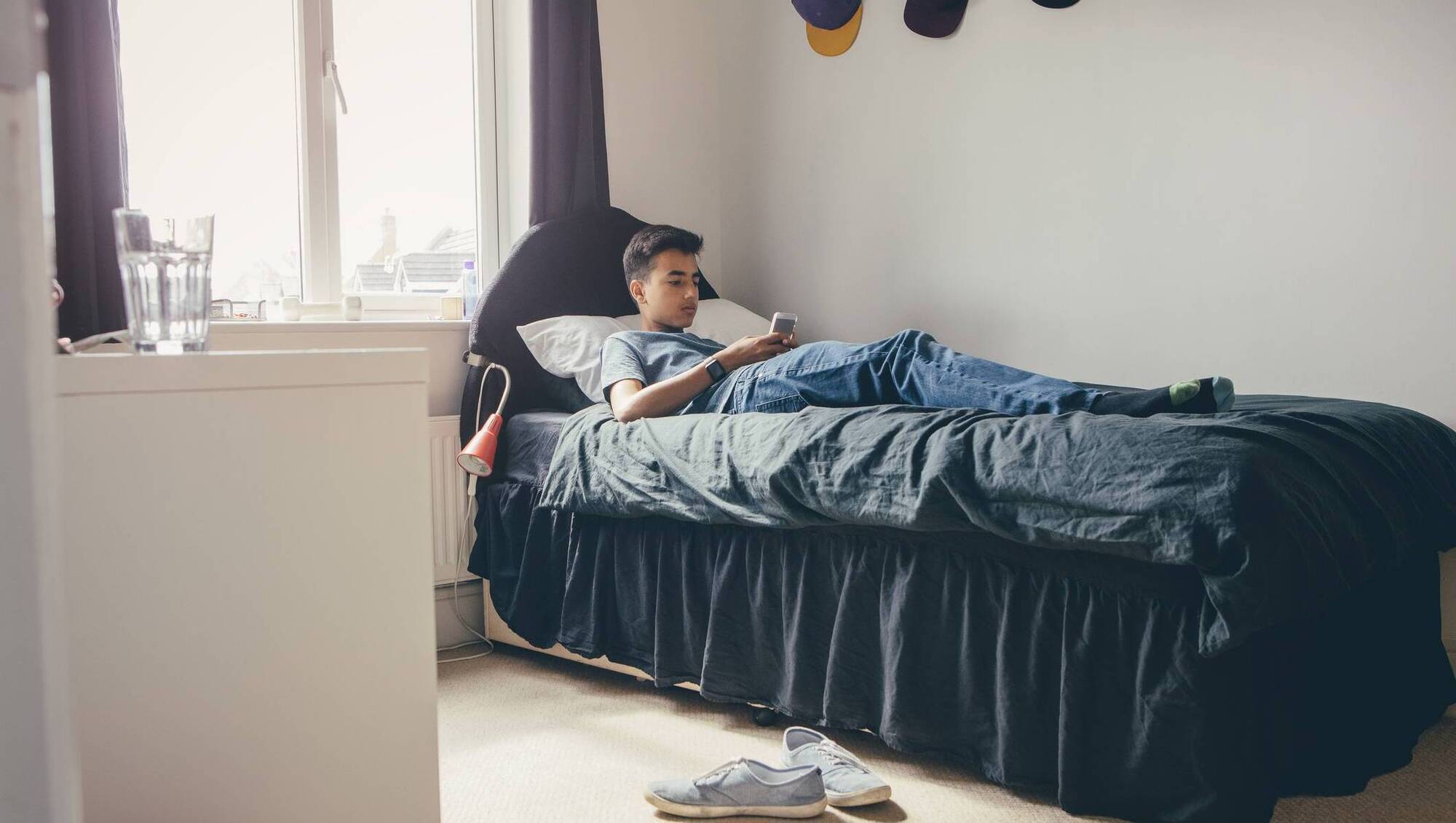
There will be a ban on addictive features and profiling-based recommender feeds that draw minors into 'rabbit holes' of harmful content. File picture: iStock
Young people under the age of 15 who already have social media accounts will have their accounts disabled under new EU legislation restricting social media access for under-15s across member states.
Following the announcement on Wednesday of the EU Kids Act by European Commission President Ursula von der Leyen, the European Commission published details of the legislation after it was adopted on Thursday morning.
It has now been submitted to the European Parliament and Council, with a view to beginning the legislative process for their examination and adoption. The Commission is calling for the legislation to be “adopted swiftly”.
Under the act, children must be 15 years old before being able to open their own social media account.
According to an explainer of the act on the European Commission’s website, those under the age of 15 who already have an account on social media will be affected by an obligation on platforms to check whether existing account holders are under the age of 15 within six months of the new rules applying.
Those who are under the age of 15 or whose age cannot be verified will have their accounts disabled, according to the Commission.
The explainer added: “Today a date-of-birth box is the only barrier. Under the KIDS Act, self-declared age is explicitly not enough: Access must be gated by certified age verification, existing accounts must be checked, and underage accounts must be easy to report. The era of signing up with a false birthday will be over.”
Ms von der Leyen said on Thursday morning: “Today, our children are engaging with the most sophisticated technologies ever created. Technology that was never created with their wellbeing in mind. Our KIDS Act is reversing the burden of proof - it is for platforms to show they are safe by design. And we put parents back in the driving seat, giving them the tools to help their children navigate a safer online world.”
Read More
Under the proposals, for children aged 13 to under 15, parents and guardians will be able to set up mini accounts that children can access through their account.
While this will allow children to access age-appropriate social media and video-sharing platforms, children under 13 will not be able to access social media.
There will be a ban on addictive features and profiling-based recommender feeds that draw minors into “rabbit holes” of harmful content.
It also includes prohibiting infinite scroll without stopping points, reward tricks and push notifications during sleeping hours, as well as unsolicited contact from strangers.
In addition, AI companions and chatbots must be turned off by default and cannot simulate interpersonal relationships in ways that create emotional dependency.
Profiles for minors must be private by default, with geolocation, camera and microphone access turned off.
Online services must also offer easy ways for minors to block and mute users, effective time-management tools, and safe recommender systems that minors can control, tune and reset.
Online services and app stores must use age-assurance tools.
“They can, for example, use the EU age verification app, which does not retain identity documents or biometric data, thereby meeting the highest privacy-preserving safeguards. Member States will be closely involved in setting up this ecosystem,” the Commission said.
Providers of very large online platforms will be responsible for proving that their services are “safe by design” and will be obliged to submit a compliance plan to the Commission and an independent auditor, who will have to thoroughly assess the new service, feature or functionality.
Online Safety Coordinator for the Children’s Rights Alliance Noeline Blackwell said the move “recognises that the protection provided to children online within the EU has not been enough so far”.
She continued: "Earlier this year, the Commission convened a special panel of children's experts to consider the harms posed by unsafe online products and recommend what needs to happen to protect children's safety online. It is welcome to see their advice heeded in the proposal which recognises the need for a tiered and gradual approach that does not exclude young people but rather, ensures age-appropriate responses and experiences."
She said that EU institutions and Member States “have an immediate duty to fully use their powers and bolster national regulators to require 'safety by design' to protect children in this digital world they live in”.
She warned that the legislation will “have to be careful to ensure that platforms are adapted sufficiently to be truly safe in their design and roll-out”.
She said that while the proposal acknowledges industry responsibility, it still maintains a heavy focus on parental controls for children under 15.

CONNECT WITH US TODAY



Be the first to know the latest news and updates