Sepsis survivor urges people to be aware of 'silent, devastating' illness
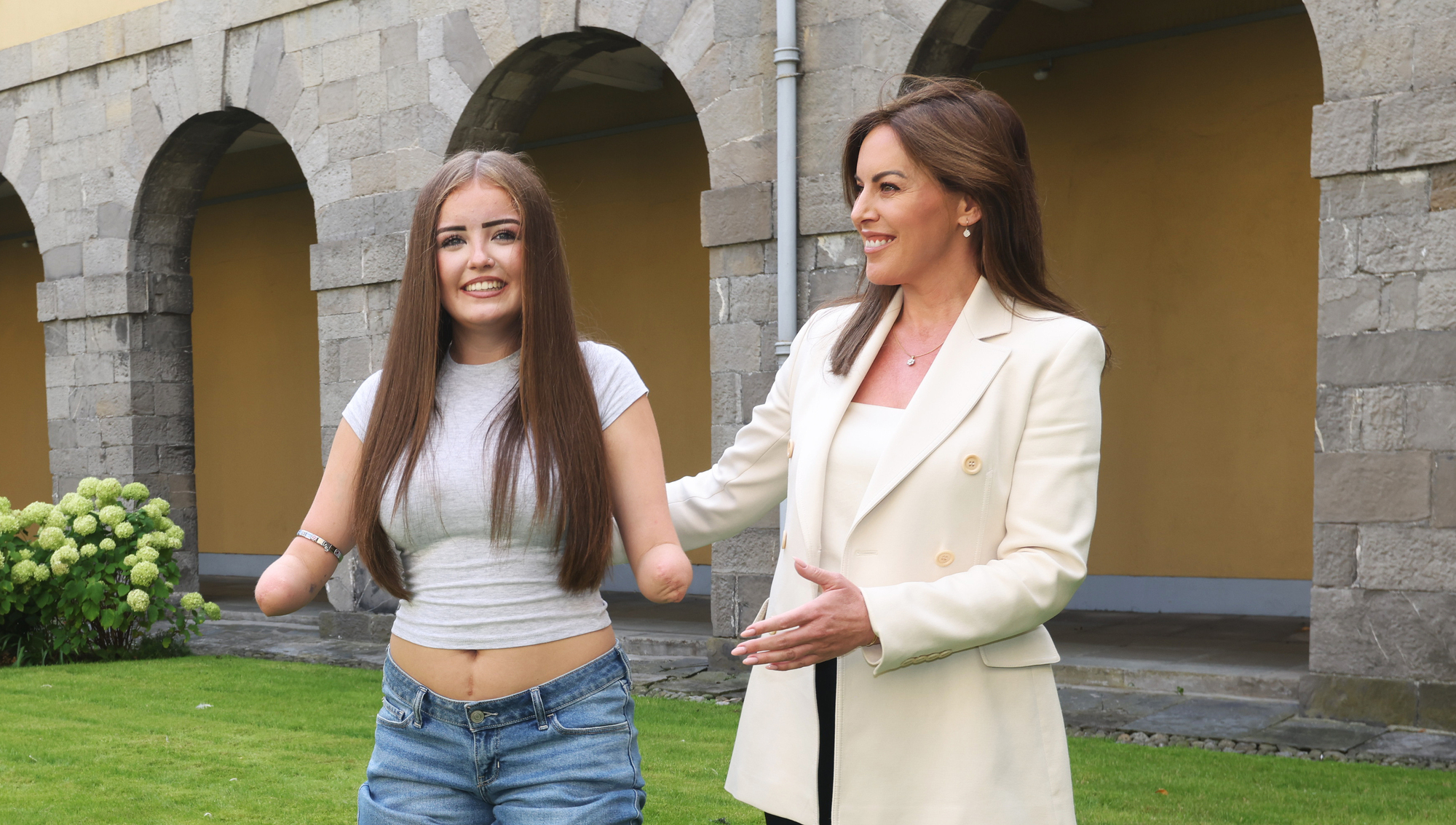
Sepsis survivor Sophie Lanigan, aged 16, with minister for health Jennifer Carroll MacNeill. Sophie was just 12 when she contracted sepsis in December 2022; the treatment to save her life meant that both her hands and feet had to be amputated. Picture: Leon Farrell/Photocall Ireland
A teenager who survived sepsis has urged people to be aware of the signs of the "silent, devastating" life-threatening syndrome.
Dubliner Sophie Lanigan was just 12 when she contracted sepsis in December 2022; the treatment to save her life meant that both her hands and feet had to be amputated.
Sophie said she went from playing with her friends on Friday and Saturday to having a temperature on Sunday and being brought to hospital on Monday.
She said she woke up vomiting that morning and her mother brought her to the GP, by which time she could not sit up straight and was referred to CHI Temple Street.
She was given a blood transfusion and put on a ventilator.
Read More
"I was in septic shock and all my organs were failing," she said. She was later told that she had Strep A which then developed into sepsis.
As well as having her hands and feet amputated, Sophie also had to have a double hip surgery due to a lack of blood supply to the bone. She said post-sepsis syndrome saw her lose her hair, struggle from lack of sleep and suffer from PTSD.
Now 16, Sophie is urging people to be aware of the signs of sepsis.
The symptoms can be subtle and varied.
In adults it can appear as:
- slurred speech or being too sick to communicate;
- extreme shivering or muscle aches;
- not passing urine in the last 12 hours;
- shortness of breath;
- lips tinged blue;
- mottled skin.
In children, it can manifest as:
- very fast breathing;
- fits or convulsions;
- mottled skin;
- a rash that does not fade when you press it;
- they are unusually cold when you touch them.
"I deteriorated very quickly, my first symptom was a high temperature on the Sunday, and by Monday evening I was on a ventilator fighting for my life," Sophie said at the launch of the HSE’s five-year 'Action on Sepsis' plan in Dublin.
There were 11,939 documented cases of sepsis and septic shock in acute hospitals in Ireland last year, with a mortality rate of 21.2%.

The Action on Sepsis plan notes that improving recognition and management of sepsis "is not straightforward"; HSE chief executive Anne O'Connor called the syndrome a "silent, devastating threat that can affect anyone, anywhere, at any time".
Cork man James Corcoran, whose 37-year-old sister died from sepsis in June 2020, said including lived experiences in the strategy is important.
"Sometimes the most important information in healthcare will not come from a blood result or a monitor," said Mr Corcoran, who is a board member of Cork-based charity Irish Sepsis Foundation.
"Sometimes it comes from a mother saying 'This is not normal for my child', the husband saying 'I've never seen her like this', the patient saying 'Something is seriously wrong here'."
CONNECT WITH US TODAY



Be the first to know the latest news and updates