Dublin Rape Crisis Centre to look at male attitudes to masculinity
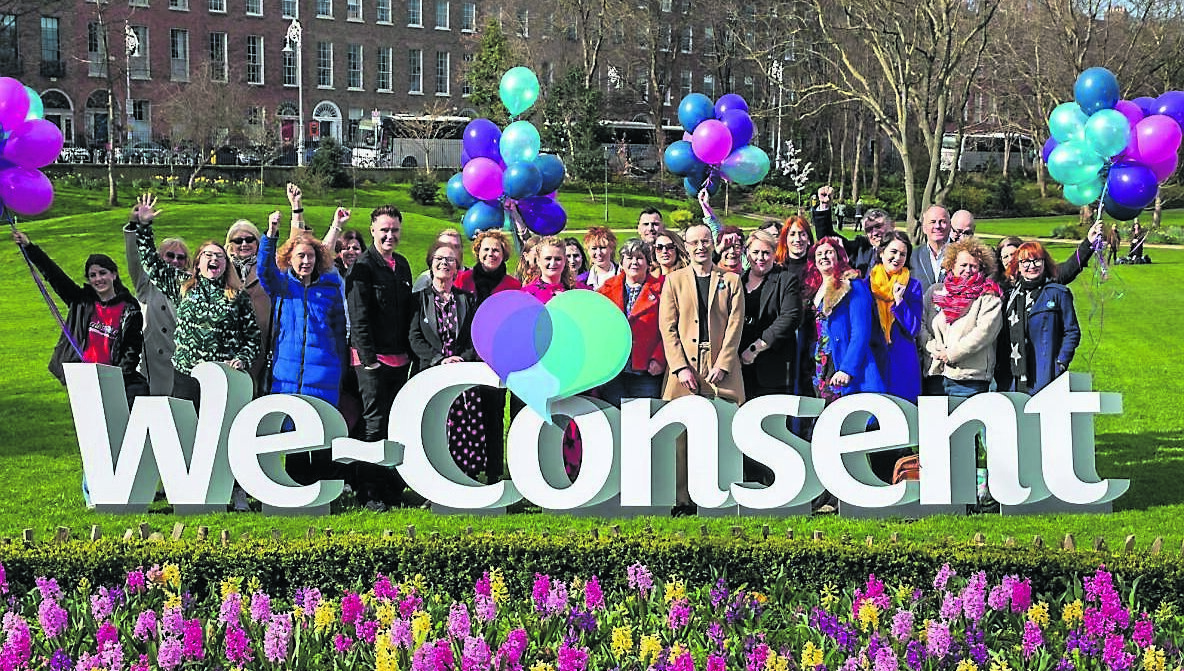
Noeline Blackwell of Dublin Rape Crisi Centre with Chris Rooke, Dr Caroline Kelleher, Royal College of Surgeons Ireland, Louise McSharry, comedian Jarlath Regan, Denise Charlton, Community Foundation Ireland, with DRCC staff and stakeholders at the launch of the We-Consent campaign. Picture: Keith Arkins
A study of male attitudes to masculinity is being undertaken by Dublin Rape Crisis Centre (DRCC) as part of its campaign around consent.
The study aims to explore the attitudes of males between 16 and 65, as part of its We-Consent campaign.
The DRCC says that “understanding how masculine norms and attitudes are formed and expressed is central to effective violence prevention”.
The research aims to “inform the design of future prevention and education initiatives”.
Last autumn, the DRCC released findings from its We Consent Benchmark campaign, which found that young men aged 18-24 are the least confident around consent, with 16% unsure what consent means.
It also found that 27% of those surveyed agree that “sometimes people say no when they want convincing”.
Some 43% of men under 45 held that belief, according to the research.
Among the areas to be researched will be the sphere of influence on men, including peers, sport, and the online world.
Read More
The focus will also explore the openness of males in the survey category to engagement around masculinity, as well as the preferred formats for such engagement.
The tender document outlines that the project “is grounded in moving beyond a traditional ‘deficit model’ of prevention, in which men are framed solely as a risk or a problem to be addressed”.
It continues: “Instead, We-Consent is building a collaborative, invitational space in which men are engaged as active participants in shaping a healthier, safer culture. The intention is to shift the narrative from what masculinity is not (e.g. ‘not toxic’) towards what it can affirmatively be — reflective, supportive and emotionally literate."
The project is expected to take six months, with the final report due to be delivered in January.
Last month, a judge in a Co Clare rape case spoke out against the toxic masculinity of influencers on young men.
Judge Tony Hunt said young men are acting out what they are seeing in online pornography as well as being exposed to “a kind of toxic masculinity shown by influencers”.

CONNECT WITH US TODAY



Be the first to know the latest news and updates