Colin Sheridan: The world has grown accustomed to constant war and conflict 
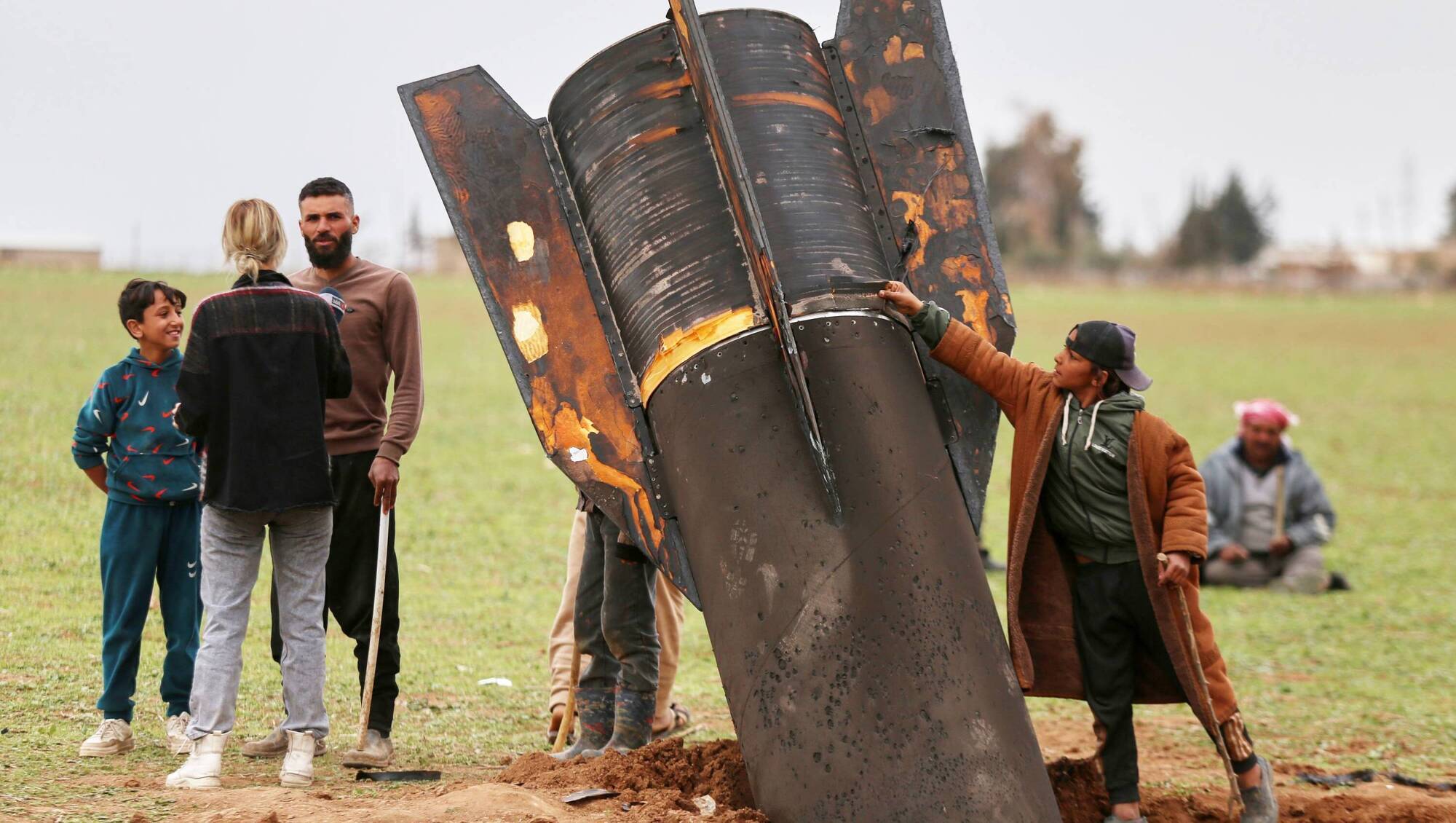
A young boy touches an unexploded Iranian projectile that landed in an open field in the outskirts of Qamishli, Syria, this March. File picture Baderkhan Ahmad/AP

A young boy touches an unexploded Iranian projectile that landed in an open field in the outskirts of Qamishli, Syria, this March. File picture Baderkhan Ahmad/AP

Nearly three years is a long time in international affairs.

Long enough for governments to fall, alliances to shift, front lines to move, and yesterday’s defining crisis to become today’s background noise.

Sadly, it’s also enough time for hundreds of thousands of people to die, and millions more to be displaced.

Since October 7, 2023, the geopolitical landscape has changed beyond recognition.

Gaza has been devastated, its population subjected to an alleged genocide.

Israel and Iran have confronted one another more directly than ever before. Lebanon has once again become a proxy battlefield.

Syria has a new ruler with the most dubious credentials. Sudan has descended further into catastrophe. Ukraine continues to grind through a war with no obvious conclusion.

And yet those are only the conflicts that still occasionally make the evening news.

Myanmar remains trapped in civil war. Yemen remains fractured. Millions continue to suffer in the Democratic Republic of Congo.

Haiti has become overwhelmed by criminal gangs. Venezuela and Cuba continue to wrestle with profound political and economic crises and nefarious intervention, while tensions between Armenia and Azerbaijan simmer.

If there is one defining feature of the past three years, it is not simply the number of wars but the difficulty of keeping pace with them. International crises no longer arrive one after another. They overlap, often colonising one another. Everything seems so important, so, eventually, nothing is.

Against a backdrop of climate devastation, political posturing, and World Cup fever, the world’s conflicts rage on regardless.

Gaza and the Occupied West Bank

Gaza remains the defining conflict of this era.

Although the intensity of fighting has ebbed and flowed, vast areas of the Palestinian territory have been destroyed, humanitarian conditions remain desperate, and the political future of Gaza is as uncertain as ever. Despite having no legal claim to the territory, Israel maintains that Hamas cannot remain in power. Hamas, despite sustained military pressure, continues to exert influence.

International proposals for governing Gaza after the conflict remain fragmented, and crucially, devoid of any Palestinian input, while reconstruction on any meaningful scale appears impossible without a broader political settlement.

The conflict has also reshaped the occupied West Bank.

Settler violence has increased steadily since October 2023.

Many analysts now argue that the future of the Israeli-Palestinian conflict will be shaped as much by events in the West Bank as by the eventual outcome in Gaza itself.

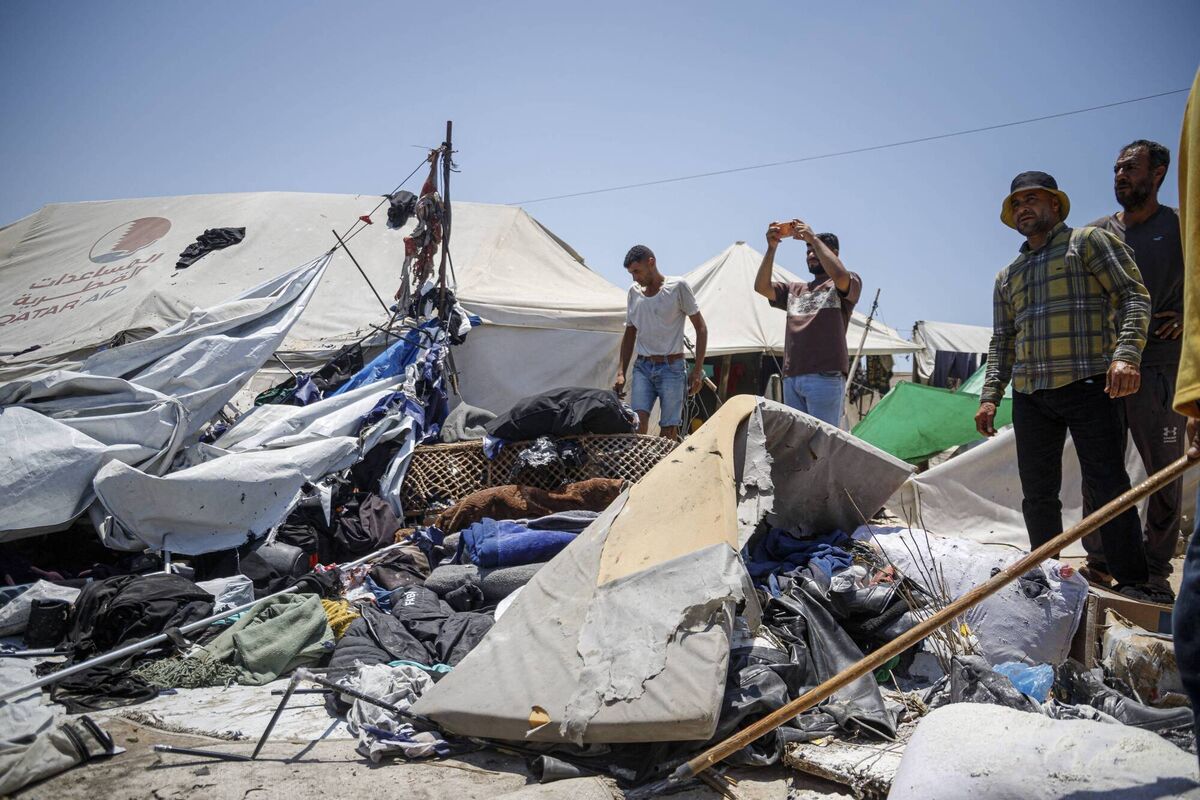
Palestinian men gather around a destroyed tent and scattered belongings in Gaza City, Gaza Strip, on July 7, following an Israeli drone strike. Picture: Mohammed M Skaik/Middle East Images/AFP/Getty

Lebanon

Southern Lebanon — illegally occupied by Israel — remains one of the most dangerous borders in the Middle East.

Although periods of relative calm have reduced the immediate risk of a wider regional war, Israel and Hezbollah continue to test one another across the frontier while both prepare for the possibility that fighting could resume.

Running alongside those military tensions is another profound change.

The future of the United Nations Interim Force in Lebanon (UNIFIL), deployed since 1978, has become increasingly uncertain amid sustained diplomatic pressure over its mandate.

Supported by both the United States and Israel, calls to scale back or fundamentally reshape the mission have raised the prospect that one of the UN’s longest-running peacekeeping operations could eventually come to an end, dramatically altering the security architecture along the Blue Line.

For Lebanon itself, those regional tensions come on top of economic collapse, political paralysis, and a population exhausted by years of conflict and crisis they never wanted.

Syria

The dictator is gone, but the contradictions remain.

The departure of Bashar al-Assad ended one of the defining political dynasties of the modern Middle East.

But Syria’s new leadership would have seemed almost unimaginable only a few years ago. The country is now led by President Ahmed al-Sharaa, better known by his former nom de guerre, Abu Mohammed al-Jolani.

Once a jihadist commander, whose movement emerged from al-Qaeda-linked networks during the Syrian civil war, he has since recast himself as a pragmatic nationalist leader.

Backed diplomatically by the United States and increasingly accepted by regional governments as the acceptable face of Syria, his political rehabilitation represents one of the most remarkable transformations of the post-Arab Spring era.

That does not mean Syria is stable. Israel continues to strike targets inside the country, citing security threats and Iranian-linked networks.

Turkey maintains influence across parts of northern Syria, Kurdish forces continue to control territory in the northeast, and millions of refugees remain displaced.

For the first time in more than a decade, Syria’s greatest challenge is no longer overthrowing a government. It is building one.

Iran, Israel, and the United States

The shadow war has stepped into the open.

For decades, Iran and Israel confronted one another indirectly, through allied militias and proxy organisations across the Middle East.

The US used its tools of indirect intervention and propaganda to diminish Iran’s power and image.

Over the past three years, those rivalries have become increasingly direct, fuelling fears that a regional conflict could erupt with little warning.

At Israel’s behest, Donald Trump struck the match. On the back of a dozen consecutive days of strike and counter strike this month, we appear no closer to a pause, never mind a sustainable peace.

Sudan

The world’s largest humanitarian catastrophe remains one of its least discussed.

Fighting between rival military factions has displaced millions, devastated entire communities, and produced one of the gravest humanitarian emergencies anywhere in the world.

Aid agencies continue to warn of famine, collapsing healthcare systems, and widespread civilian suffering.

Yet despite the scale of the crisis, Sudan receives only a fraction of the international attention devoted to conflicts elsewhere.

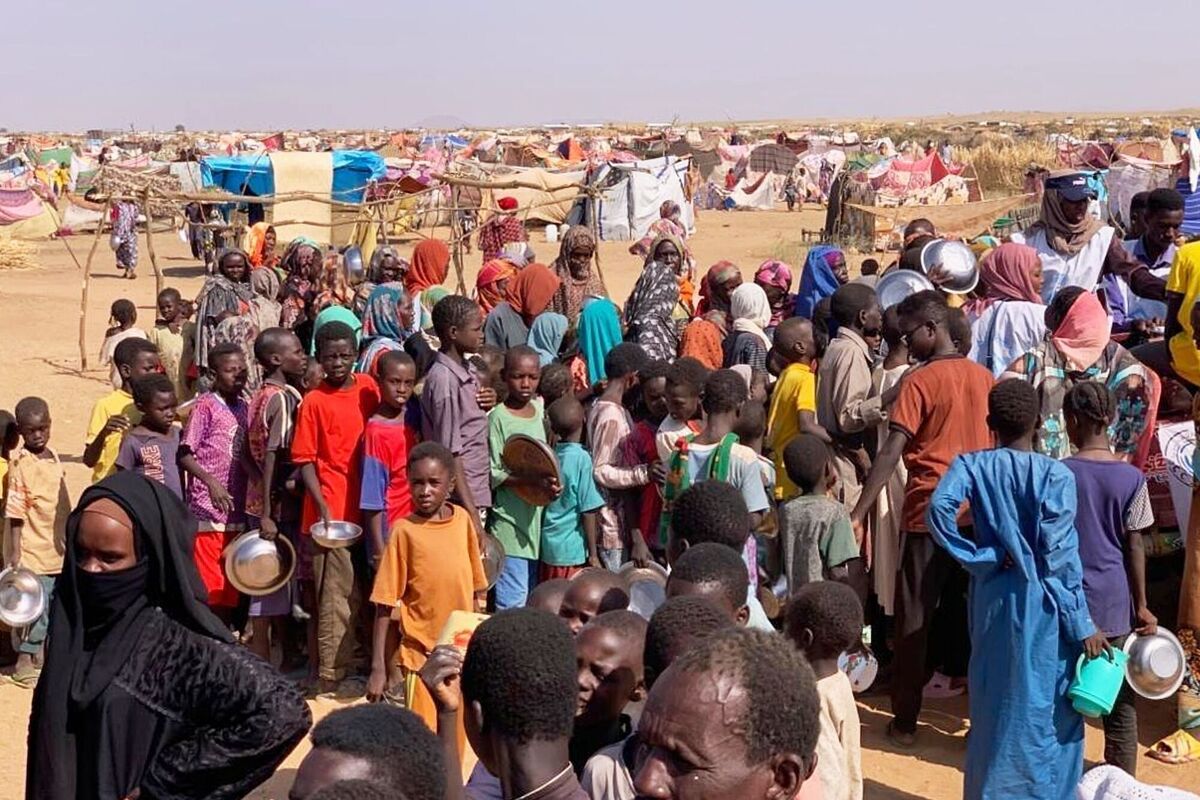
Displaced families who sought refuge from fighting between government forces and the RSF in Sudan in October last year. Picture: Norwegian REfugee Council/AP

Ukraine

Europe’s biggest war since 1945 has become part of everyday reality.

Russia’s invasion no longer dominates every news bulletin, but it continues to define European security.

The war has become one of attrition rather than rapid advances, with diplomacy stalled and both sides preparing for a conflict measured not in months but in years.

For Europe, Ukraine has evolved from an emergency into a strategic reality that is reshaping defence spending, energy policy, and relations with Russia for a generation.

The forgotten conflicts

Beyond the world’s best-known battlefields, numerous crises continue with remarkably little international attention.

Myanmar remains locked in civil war following the military coup. Yemen remains divided despite periods of reduced fighting. Violence continues to displace communities in the eastern Democratic Republic of Congo.

Haiti struggles with armed gangs that have overwhelmed state authority.

Venezuela and Cuba continue to wrestle with profound political and economic challenges, while tensions between Armenia and Azerbaijan remain unresolved despite diplomatic efforts.

The world has grown used to war

Previous generations often experienced international crises sequentially.

Today, they unfold simultaneously, competing for attention without ever truly ending.

Understanding international affairs has become less about following one defining war than maintaining a constantly shifting mental map of multiple crises, each evolving at its own pace.

Wars do not end when summers arrive, and Wimbledon starts. Their consequences continue to shape migration, food security, energy prices, diplomacy, and security long after they have slipped down the agenda.

Nearly three years after October 7, the world is undeniably different. Yet perhaps the most striking conclusion is also the simplest.

The world is not at peace.

It has simply become more accustomed to living with conflict.

More in this section

Lunchtime News

Newsletter

Get a lunch briefing straight to your inbox at noon daily. Also be the first to know with our occasional Breaking News emails.

Cookie Policy Privacy Policy Brand Safety FAQ Help Contact Us Terms and Conditions

© Examiner Echo Group Limited