Mick Clifford: Eight years after Maurice McCabe, nothing has changed for Garda whistleblowers
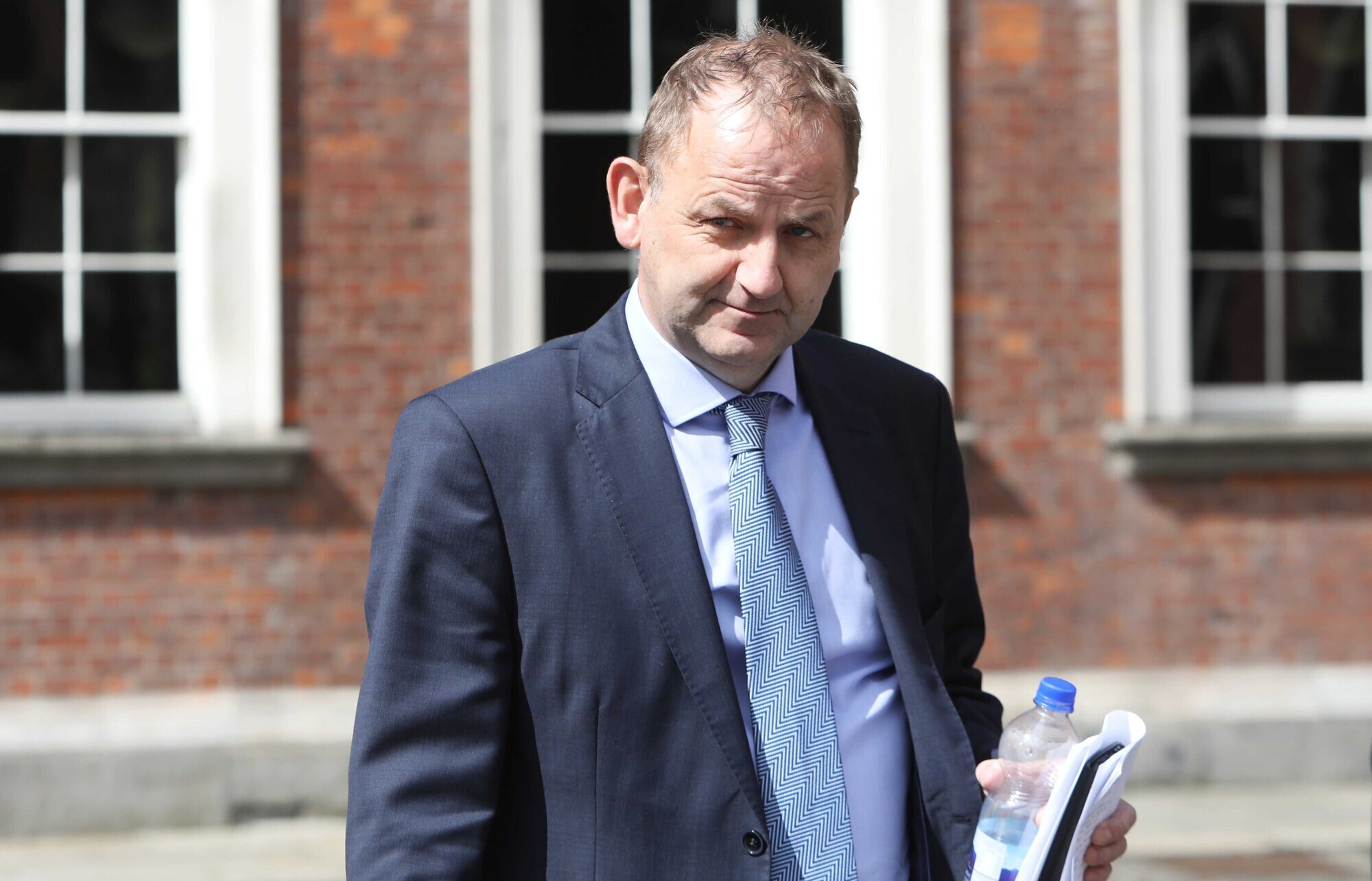
Maurice McCabe (pictured) was found by judge Peter Charleton in the Disclosures Tribunal to be 'a genuine person' who had 'done the State considerable service'. File photo: Leah Farrell/RollingNews.ie
The Maurice McCabe case was supposed to be the closing of an arc.
In the aftermath, everything was on the table. Change was inevitable. A commission on the future of policing was set up and peopled with heads who really knew their stuff.
New protected disclosure laws came in and, we were assured, it would open up a brave new world. The whistleblower would be greeted as an agent of positivity rather than hunted like a Judas. Everything would change.
Eight years later, the arc has not closed.
In October 2018, Judge Peter Charleton reported on the Disclosures Tribunal which he had chaired. The inquiry investigated allegations that Sergeant McCabe had been traduced and, to put it plainly, blackguarded to a severe extent as a result of calling out bad practice.
Charleton found that McCabe was “a genuine person” who had “done the State considerable service”.
Read More
His report went on: “The tribunal has been convinced that there was a campaign of calumny against Maurice McCabe by Commissioner Martin Callinan and that in it he was actively aided by his press officer Superintendent David Taylor.”
The report was a damning indictment on the prevailing culture within the force. The man at the top ran a campaign to discredit one of his own officers for attempting to highlight malpractice. In such a milieu it had to have been open season on any whistleblowers.
The commission was formed and reported. A new office to accept protected disclosures within An Garda Síochána was established. A clean-up operation in which “our critical friends” were to be accommodated and listened to was initiated.
A new broom, a policeman unsullied by the prevailing culture because he was from outside the state, swept into office. And then?
The new commissioner Drew Harris did make some positive changes in policing and he ruffled not a few feathers. But all that has tumbled out of the force over the last few years suggests he made little impact on the culture of circling wagons and taking aim at whistleblowers.
The cases that are coming to the fore now have largely been covered by this newspaper over the last year or so. Detective Superintendent Brian O’Reilly made genuine efforts to ensure that dangerous holsters be discarded.
After the murder of Garda Colm Horkan, who was wearing one of the defective holsters, O’Reilly should have been embraced as an agent of change. Instead he was considered a pariah, his considerable assets in policing foregone, his career trampled over.
The issues highlighted by another whistleblower who worked in An Garda Síochána (AGS) armoury were reported on in these pages. It involved a senior officer who got, under false pretences, gun parts for a private gun club in Kildare.
One element of the acquisition involved obtaining the signature of the minister for justice to import the parts on the basis that it was for garda business. An internal report into the matter amounted to a hill of beans. Yet the whistleblower is now before the criminal courts in a case that will demand major attention.
All of these, along with the fate of the two people who were originally assigned to the protected disclosures office in AGS, points to a culture that can’t escape the past.
The arc of impunity opened up in the 1970s, when paranoia in government about the activities of the Provisional IRA meant the gardai were given a free hand. This was at a time when human rights policing was being initiated in forces across the western world.
The time, it was to turn out, wasn’t deemed right here because of the Troubles up north. There was the heavy gang beating up Republican suspects.
One of those cases involved three men accused of a train robbery in Sallins, Co Kildare, in 1976. Just two months ago the courts finally deemed the convictions in that case to be a miscarriage of justice.
The impunity didn’t just apply to assaulting Republican suspects. Other innocent people were subjected to the same treatment.
The Troubles ended but impunity was bedded down in the force by then. There were scandals like Donegal and others and then finally there was McCabe.
The platitudes that followed were matched with apparent actions. But as has become increasingly obvious, the culture was not yet ready for redemption.
Blowing a whistle on malpractice is not greeted as a brave call and an opportunity to repair and minimise the chances of a repeat.
Instead, it is, as it has always been, considered an embarrassment, a possible albatross around the neck of a managing officer en route up through the ranks. And so the person who calls it out transmogrifies into a threat.
Malpractice, corruption? There is none, according to the prevailing culture. The problem is with the person who is calling it out. The messenger is the problem, the message is that there is nothing to see here, now everybody, move along please. At least until the next scandal.
The Disclosures Tribunal was set up on foot of a report into the McCabe case compiled by senior counsel Sean Guerin.
Among his conclusions was the following: "No complex organisation can succeed in its task if it cannot find the means of heeding the voice of a member whose immediate supervisors hold them in the high regard in which Sgt McCabe was held. Ultimately An Garda Síochána does not seem to have been able to do that.”
That was written in 2014, which seems like a long time ago in terms of policing. Unfortunately, all that is emerging suggests the same conclusion could be reached today.

CONNECT WITH US TODAY



Be the first to know the latest news and updates