Team Ireland win three medals at maths world championship
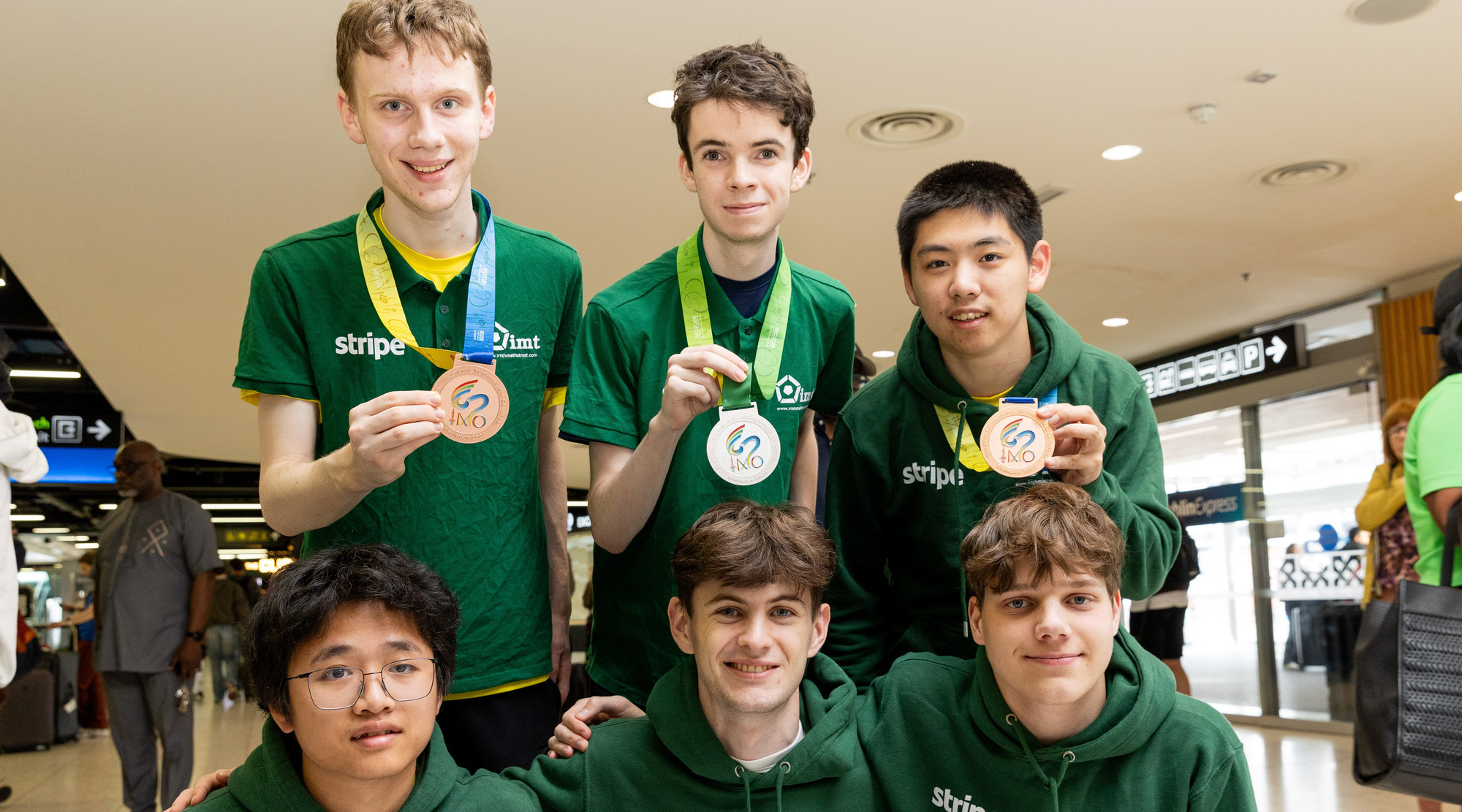
Members of Team Ireland (Back row left to right) Jack McAuliffe, Ben Maguire, Angyang Li (Front row left to right) Tianci Yan, Owen Barron, Vitali Halushko. Photo: Gareth Chaney
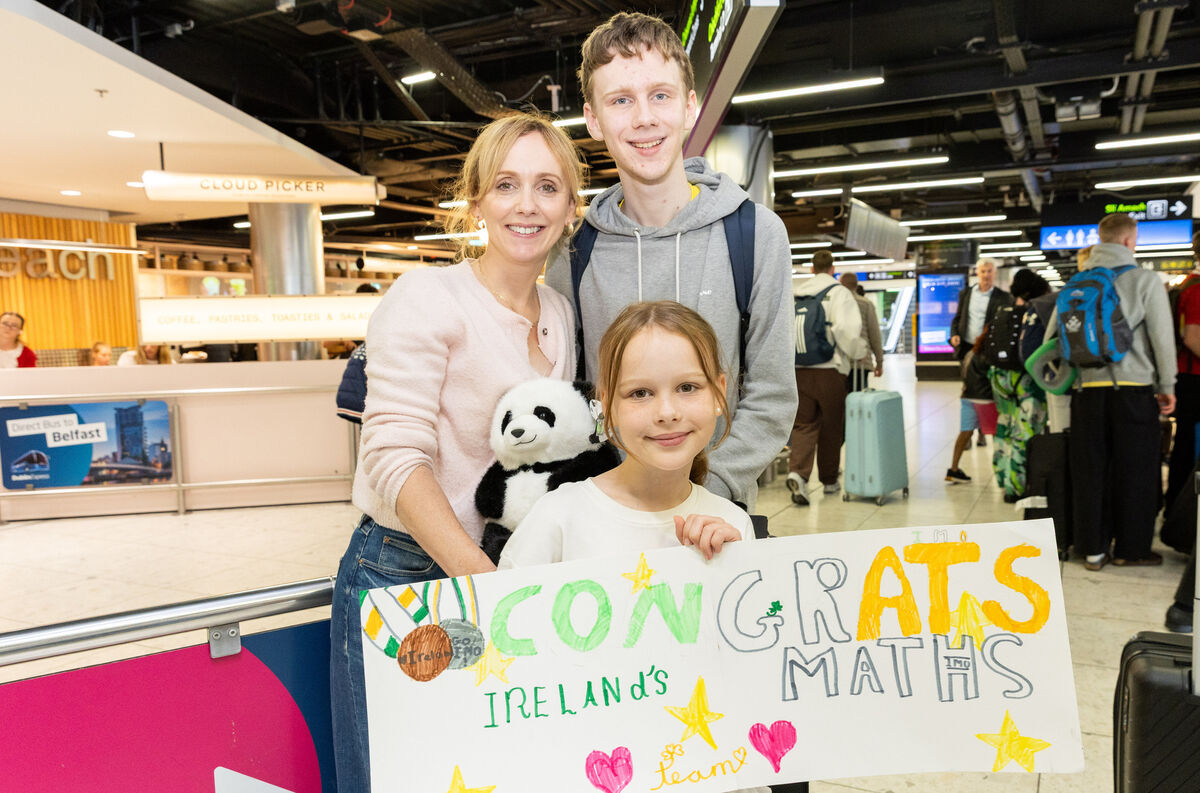
Some of Ireland’s brightest young minds are celebrating extraordinary success at this year's maths world championship.
Team Ireland secured one silver and two bronze medals at the 67th International Mathematical Olympiad (IMO) held this year in Shanghai, competing against almost 670 students from 117 countries.
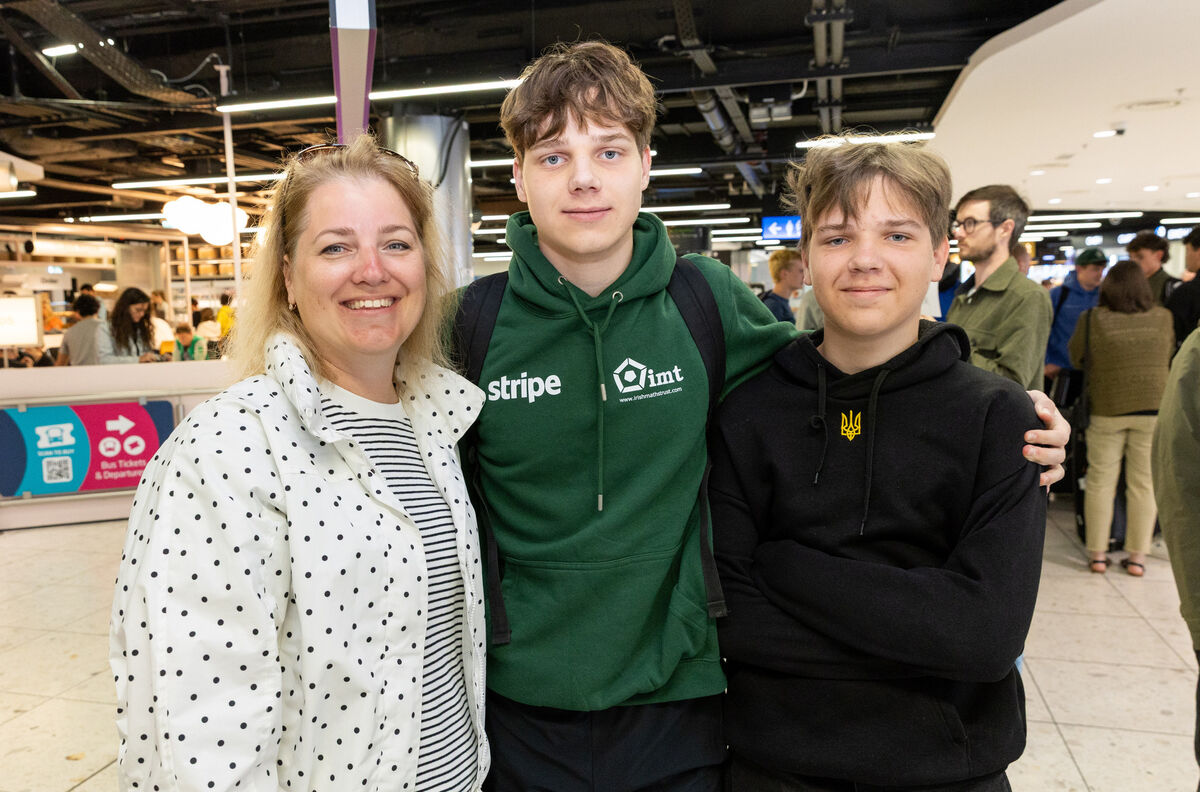
Owen Barron (Cork), Vitalii Halushko (Dublin/Ukraine), Angyang Li (Dublin), Jack McAuliffe (Clare), Ben Maguire (Dublin), and Tianci Yan (Dublin) undertook the challenge that sees the young competitors given 4.5 hours each day to solve six highly complex mathematical problems.
Each question is worth a maximum of seven points, making the highest possible individual score 42 points.
This year, the threshold for a bronze medal was 16 points, 23 for silver, and 29 for gold. Gold medals are awarded to the top 16% of competitors.
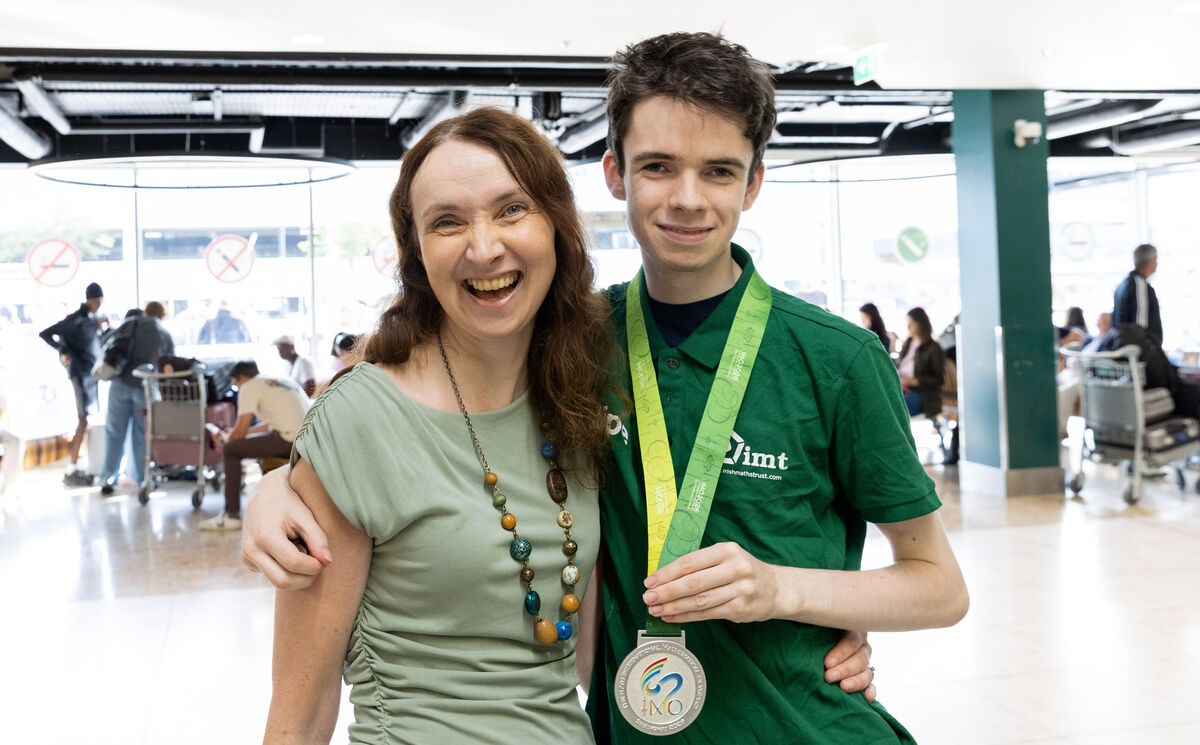
Ben Maguire earned Ireland’s fifth-ever silver medal, while Angyang Li and Jack McAuliffe received bronze medals.
Owen Barron, Tianci Yan, and Vitalii Halushko, who each medalled at last year’s IMO, all earned honorable mentions for a complete and correct solution to at least one problem.
The team was led by Professor Steve Buckley, Tianyiwa Xie, and Dr Mark Flanagan.
Dr Neil Dobbs, lecturer in mathematics at University College Dublin and chair of the Irish Mathematical Trust (IMT), said: "That all six team members have medalled at the IMO either this year or last is simply extraordinary.
"The dreams, the hard work, and the sense of community throughout the wider squad have been wonderful to witness.”
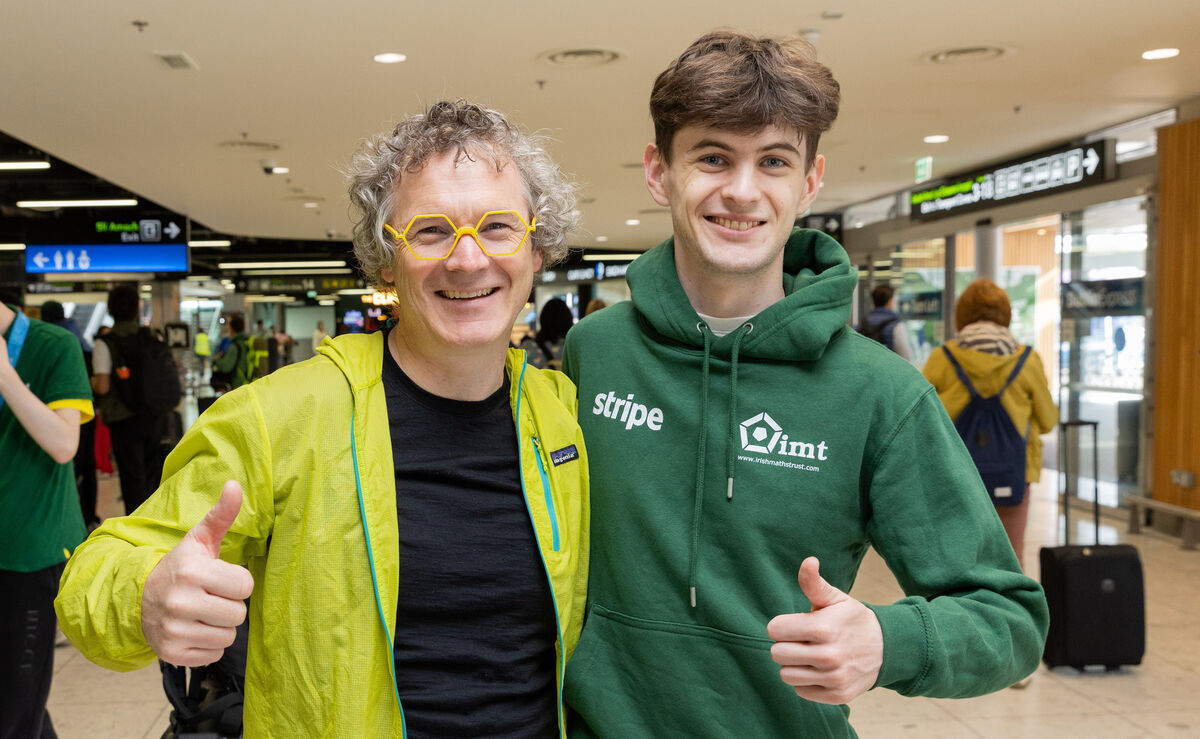
IMT volunteers provide extracurricular maths training and coaching across the country to second-level students.
It said that Team Ireland's success at IMO is the product of years of work, backed by more than 80 volunteer mathematicians from the IMT, many of them former IMO competitors themselves. These volunteers ran a rigorous selection process and a packed training calendar.
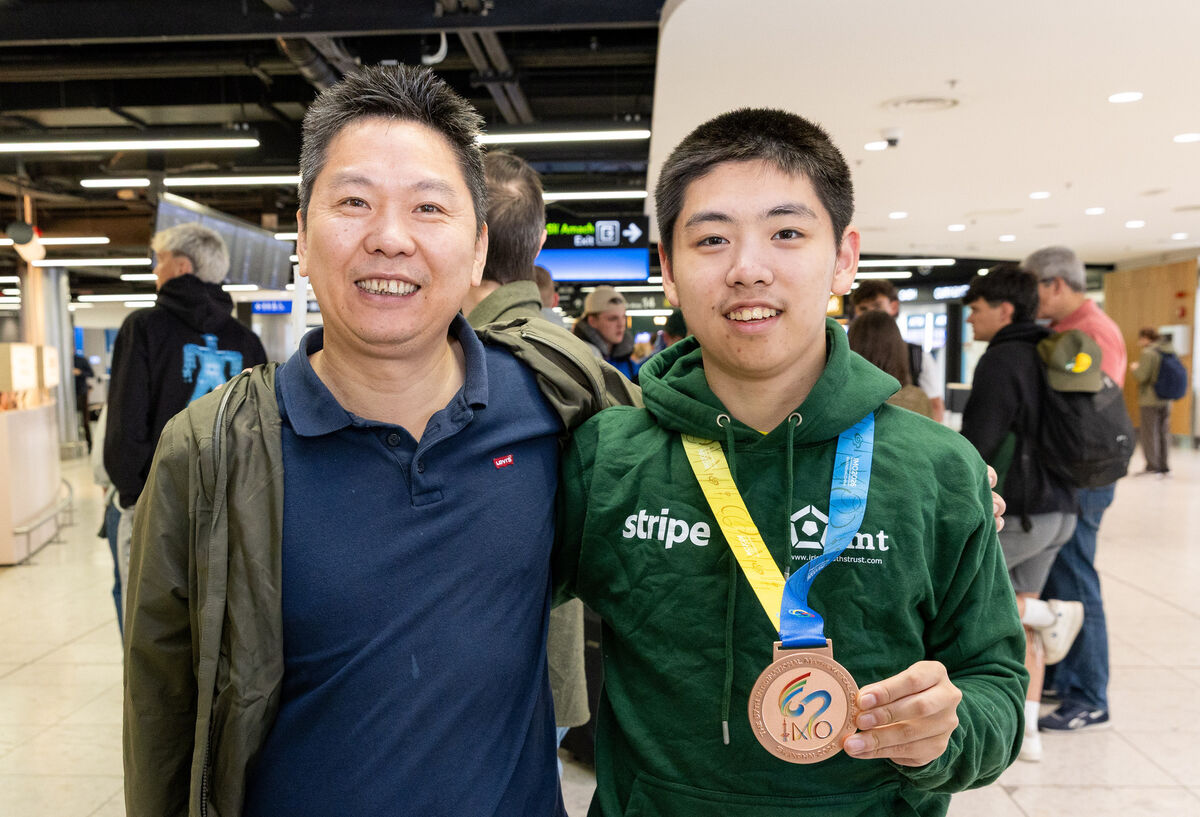
Prior to the IMO, Team Ireland participated in the prestigious International Mathematics Summer Camp in Beijing, which incorporated an Olympiad-style contest.
Here, Tianci Yan, Vitalii Halushko, and Jack McAuliffe got bronze medals, and Owen Barron a silver.
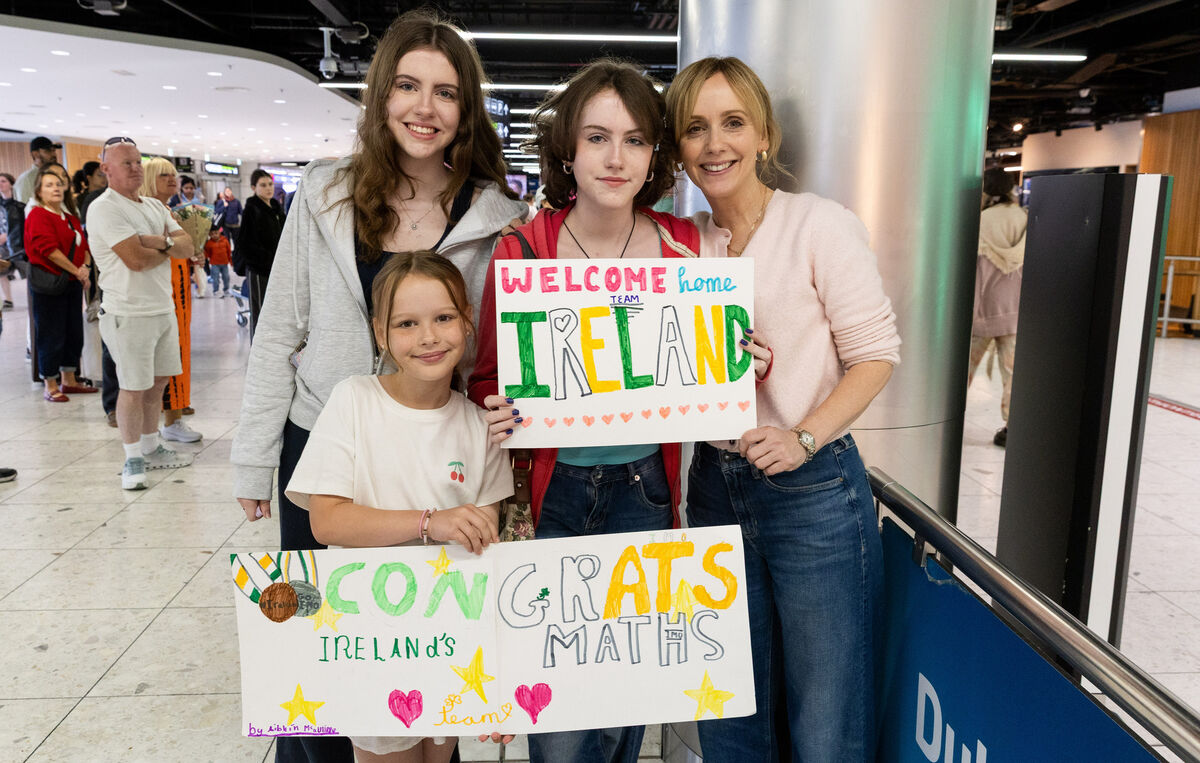
This followed strong performances by Irish teams at the Junior Balkan Maths Olympiad in Romania in June, the first European Maths Olympiad in Lithuania in late April, and the European Girls Maths Olympiad in France in early April.
The IMT also runs free mathematics enrichment classes for post-primary school students at colleges across the country. Having secured the backing of financial services company Stripe, the IMT has been able to expand these programmes further.
Maths is the "cornerstone of future success" across fields like engineering, finance, medicine, and software development, said Alison Ahern, head of education partnerships at Stripe. The company is "hugely proud" of this year’s International Maths Olympiad team, she added.
A question from the 67th International Mathematical Olympiad:
Shan-Yu and Mulan are playing a game. Let θ be an angle with 0º < θ < 180º known to both players.
Initially, Shan-Yu makes a paper triangle T with measurements of his choice. Then, they repeatedly perform the following steps:
● If T has at least one angle measuring exactly θ, then the game stops and Mulan wins.
● Otherwise, Mulan chooses a point P on the perimeter of T, different from its three vertices. She then makes a straight cut from P to the opposite vertex of T, splitting it into two triangles.
● Shan-Yu discards one of the two triangles. The remaining triangle becomes the new T.
For which real values of θ can Mulan guarantee her victory in finitely many steps, no matter how Shan-Yu plays?
You can see the full list of problems answered by the team here
- Jess Casey, education correspondent
CONNECT WITH US TODAY



Be the first to know the latest news and updates