Covid 'intensified' reading and maths gap between disadvantaged and more affluent schools
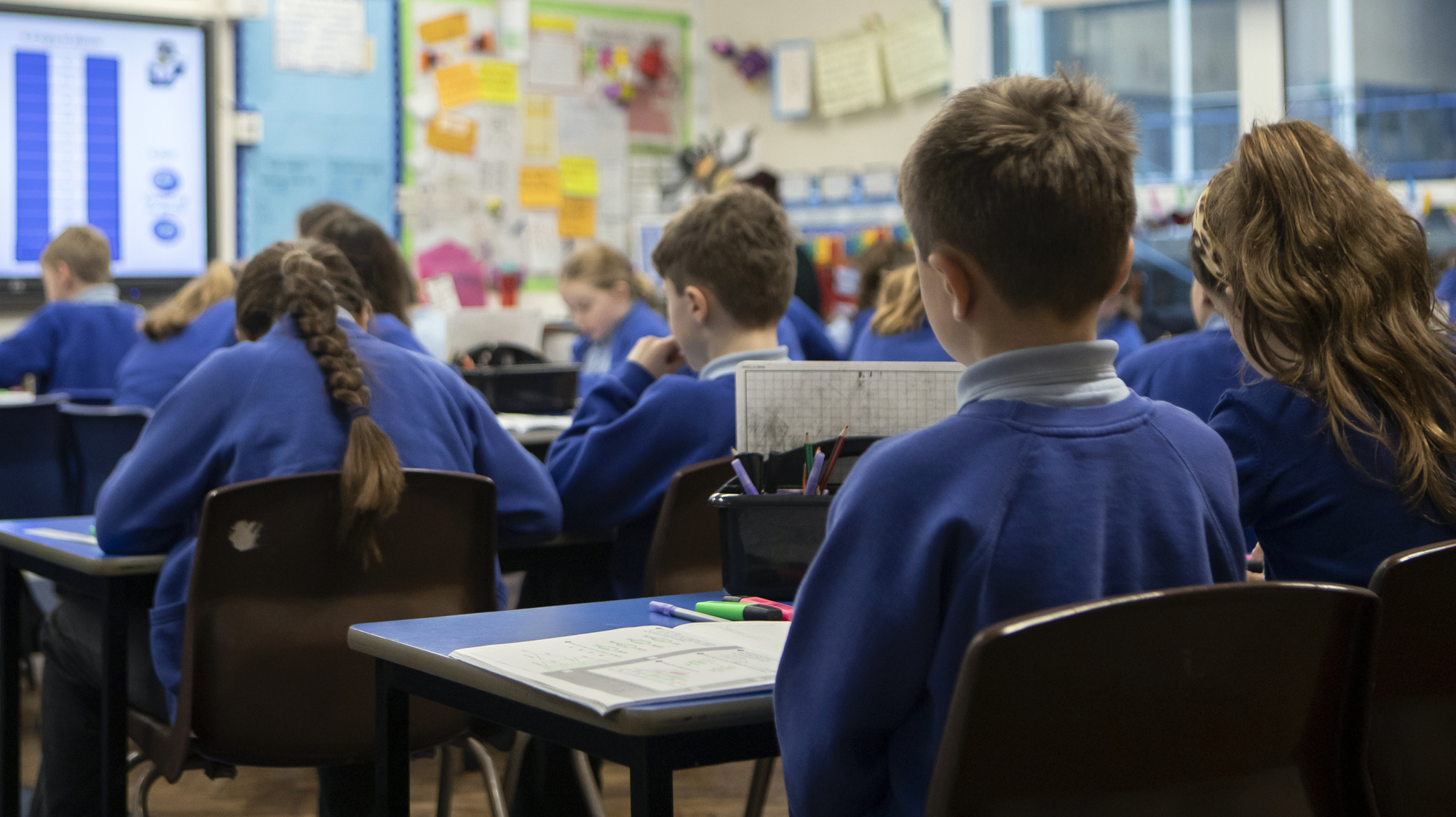
The findings are included in one of the final reports to be published by the ‘Children’s School Lives’ study, a landmark report following 4,000 students across almost 200 primary schools around the country. File picture: Danny Lawson/PA Wire

The findings are included in one of the final reports to be published by the ‘Children’s School Lives’ study, a landmark report following 4,000 students across almost 200 primary schools around the country. File picture: Danny Lawson/PA Wire

The pandemic “intensified” the gap in reading and maths between the children attending disadvantaged schools, and those who do not, a major study following thousands of children through primary school has found.

It also found poverty and privilege shape children’s engagement in learning, with structured inequalities in educational attainment beginning to emerge early. The data has been captured through standardised testing scores.

Children from poorer families were found to score “significantly lower” than children from families with medium to high affluence.

The findings are included in one of the final reports to be published by the ‘Children’s School Lives’ study, a landmark report following 4,000 students across almost 200 primary schools around the country.

The five-year study, undertaken by researchers at the University College Dublin School of Education on behalf of the National Council for Curriculum and Assessment (NCCA), tracked students between 2019 and 2023.

Through fieldwork, data analysis and interviews with teachers, SNAs, parents and students themselves, the longitudinal study gives an extensive account of children’s experience of school during a time of significant social, cultural and economic change.

This included “rising child poverty; a growing housing crisis; rising immigration, including refugees from war-torn countries; and the disruption of a global pandemic". 

It found there is a “pronounced” socio-economic effect on children’s reading and mathematics attainment. “Children attending DEIS designated schools and those experiencing poverty achieve lower results.”

These inequalities “intensified during the covid-19 period”, and are visible in the “significantly lower” attainment of second-class children, both pre-and post-pandemic, particularly in DEIS status schools.

“Even after accounting for family affluence, gender, immigrant background and school gender mix, school-level effects of socio-economic clustering remain.”

It found attainment in maths is also influenced by the gender composition of a school. “Girls in all-girls’ schools achieve higher maths outcomes, net of background factors.”

Immigrant and minority ethnic background was also found to intersect with attainment. Second-generation children achieve parity in reading scores, or better with maths scores, than peers, while first-generation migrants and Traveller children "under-achieve", with this disparity exacerbated post pandemic.

"Of concern also is the decline in attendance in school by Traveller children over time, especially evident in the later years of primary school." 

There is also a “pronounced” impact of poverty on the work of educators, the report notes, with the challenges of deprivation reflected in "widening gaps" in principals’ stress, burnout, and self-efficacy between those working in designated DEIS and non-DEIS schools.

“Growing complexity in children’s academic and social needs, exacerbated by structural inequalities and pandemic disruption, places pressure on school leaders, especially in DEIS schools, whose frontline roles increasingly involve navigating administrative processes to secure resources for children in need.”

  • Jess Casey is education correspondent for the Irish Examiner

More in this section

Lunchtime News

Newsletter

Get a lunch briefing straight to your inbox at noon daily. Also be the first to know with our occasional Breaking News emails.

Cookie Policy Privacy Policy Brand Safety FAQ Help Contact Us Terms and Conditions

© Examiner Echo Group Limited