Taxpayers face paying millions more to resurface roads disintegrating due to extreme weather

Padraig Barrett, Cork County Council’s director of roads and transportation, oversees more than 12,000km of roads. File picture

Padraig Barrett, Cork County Council’s director of roads and transportation, oversees more than 12,000km of roads. File picture

Taxpayers face paying millions more to resurface roads to stop them becoming dangerous due to the weather extremes brought on by global warming.

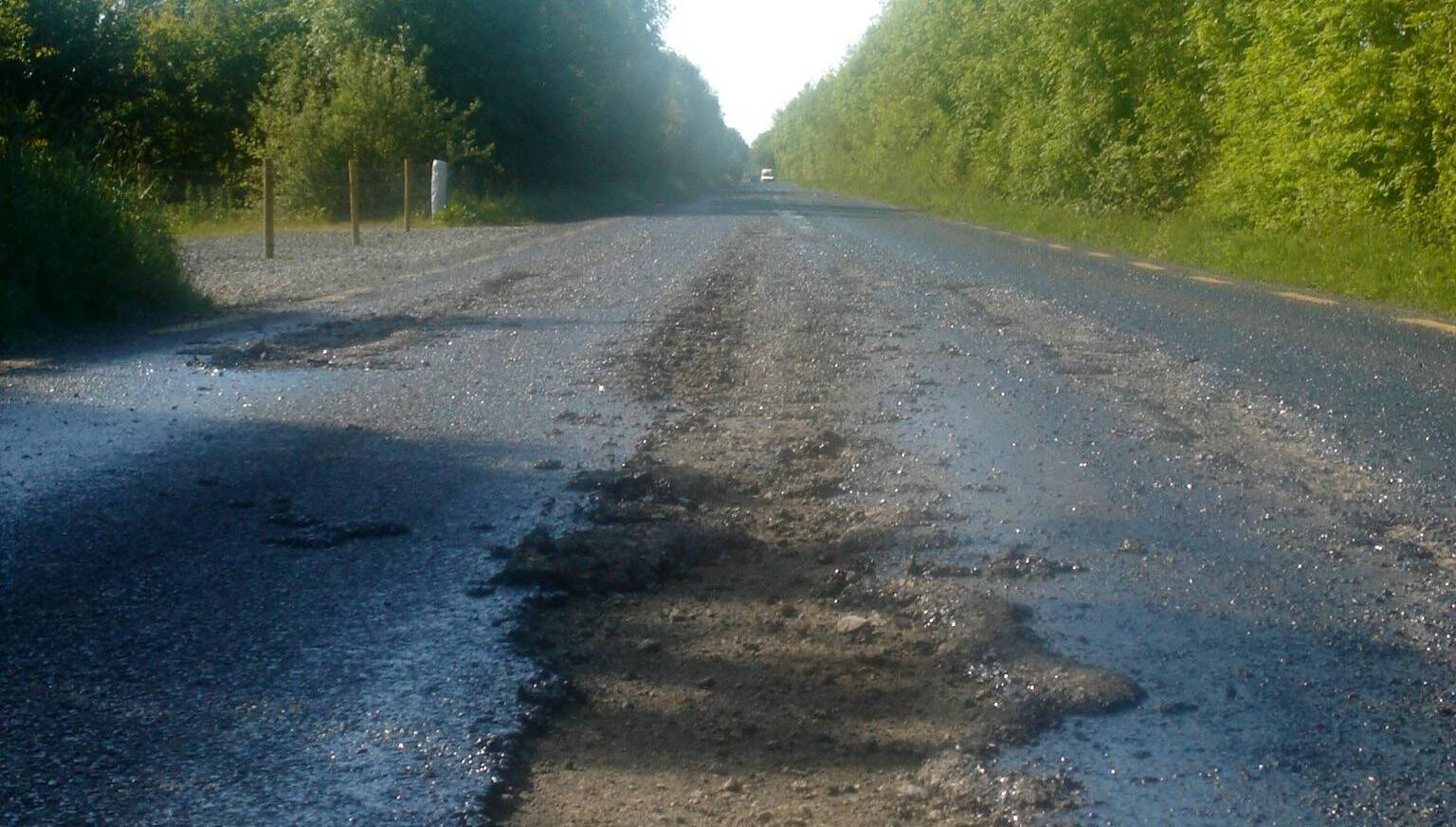
The warning from the senior official in charge of the largest local authority road network in the country, comes as current temperatures have disintegrated numerous routes.

The heatwave has seen several roads forced to close because the tar is melting in surface temperatures that are consistently reaching 50C or more, according to thermometers installed on main thoroughfares.

Padraig Barrett, Cork County Council’s director of roads and transportation, who oversees more than 12,000km of roads, said his crews have had to treat roads with sand and grit to stop them melting and to keep them passable.

“While more than 50 degrees isn’t unusual to see in the height of summer, the daily frequency of this occurring is unusual. We'll have to make provision for this in the years ahead because scientists are telling us that it will keep happening,” he said.

Mr Barrett said this means reducing the use of standard cationic bitumen and instead shifting to laying ‘Premium Polymer Modified Emulsion’ (PPME).

Councils cannot carry out road resurfacing projects at present because road temperatures are too high. File picture: Denis Minihane

This substance can withstand road temperature variations from -15C to + 60C, which is likely to protect against Ireland’s varying seasonal temperatures.

However, PPME is anything between 15% and 20% more expensive than the standard materials. 

Mr Barrett said he and other council officials recently met with senior representatives from the Department of Transport, who are "aware" of the challenge posed by consistently hot temperatures. 

The senior official has previously said that years of central government underfunding had led to a situation where it would cost an estimated €1bn to bring all the county's roads up to an acceptable standard.

This underinvestment is being compounded by the current heatwave.

Councils cannot carry out road resurfacing projects at present because road temperatures are too high.

The summer normally presents them with the best time to do resurfacing works, as they also cannot carry them out satisfactorily during the cold winter periods. 

Increasing rainfall in winter and spring is impacting the amount of resurfacing work which can be undertaken.

Mr Barrett is concerned that if this extreme heat trend continues in future summers, as predicted, it could wipe four to six weeks off local authorities' annual road maintenance programme.

Cork County Council has earmarked around €90m for road resurfacing projects in the region this year. 

A further €110m is earmarked for new road projects, although the vast bulk of this money will be spent on the Cork – Ringaskiddy (M28) motorway project.

The north and western areas of the county are currently recording the highest road surface temperatures.

Coastal areas are cooler due to sea breezes. 

Overall, the further inland the road network is, the more likely it is to become “stressed” by the heatwave, Mr Barrett said.

He has urged drivers to slow down as they may come across melting roads, especially in rural areas.

Tyres are unable to grip the road in such conditions, which could lead to a serious accident.

There have been many social media reports around the country of motorists skidding on untreated roads. 

In the heat, chippings are also coming loose and being propelled at oncoming vehicles, leading to cracks in windscreens.

Mr Barrett is also asking HGV drivers and owners of heavy agricultural machinery for their help.

He said that large vehicles performing turns at speed at junctions can eat into the road surface, causing it to deteriorate even more quickly.

“I am asking them to turn slower, and, if possible, increase their turning arch at corners if it is safe to do so,” Mr Barrett added.

Check out the Irish Examiner's WEATHER CENTRE for regularly updated short and long range forecasts wherever you are.

More in this section

Lunchtime News

Newsletter

Get a lunch briefing straight to your inbox at noon daily. Also be the first to know with our occasional Breaking News emails.

Cookie Policy Privacy Policy Brand Safety FAQ Help Contact Us Terms and Conditions

© Examiner Echo Group Limited