Pilot Garda-HSE response team in Limerick should be rolled out nationally, report finds

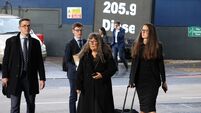
Researchers from University of Limerick said CAST reached a group of people characterised by 'repeat crisis interventions, substance use and housing instability'. File picture
A groundbreaking Garda-HSE intervention service piloted in Limerick should be established nationally given how it has helped people experiencing a mental health crisis and reduced demand on policing and hospitals, an external evaluation has concluded.
Researchers from University of Limerick (UL) said the Community Access Support Team (CAST) is capable of delivering “substantial benefits” to the police and health systems, if investment was sustained and clinical capacity expanded.
It said the initiative marks a “clear shift” in policing response to vulnerable people, away from detention and criminalisation, to a health intervention and support.
CAST is a joint pilot by An Garda Síochána and the HSE Mid-West Mental Health Service and comprises Garda members, a clinical nurse specialist (mental health), a social worker, and a social care worker.
The study said the service was described “as restoring hope in situations where families had previously felt exhausted and powerless” and that some affected individuals and families credited it with “reductions in suicide attempts”.
Over its pilot period, January 2025-January 2026, CAST:
- Responded to more than 1,000 incidents, involving 477 individuals;
- A third of incidents were acute mental health crises, suicide attempts, assaults, domestic incidents or missing person cases;
- Prevented over 130 mental health detentions, over 60 emergency department presentations, five arrests and almost 20 prosecutions
It said there was a dramatic reduction by gardaí in the use of mental health detentions, described as “traumatic” for the people concerned and “resource-intensive” for gardaí.
The evaluation said service users — the individuals in crises — reported “feeling safer, less criminalised, listened to and more willing to engage early”.
It concluded: “This evaluation provides robust, multi source evidence that the CAST represents a credible and effective interagency innovation at the interface of mental health and policing.”
The pilot was first recommended in 2009 and, again, by the Commission on the Future of Policing in Ireland in 2018.
Gardaí and the HSE agreed a proposal in 2022 and it was due to start later that year, but suffered delays.
A detailed 60-page evaluation by a five-person team at UL, led by Professor Owen Doody, stressed that CAST is not only a crisis intervention, but also provides structured follow-up (through callbacks) and longer-term multi-agency intervention (through CAST Support Forum).
It said CAST reached a group of people characterised by “repeat crisis interventions, substance use and housing instability” as well as “disproportionate use” of Garda and emergency department resources.
Service users and families described the project, located at Henry Street Garda Station, as a “humanising” crisis response.
“While service users and families acknowledged ongoing system gaps and unmet needs, Cast was consistently described as providing protection, reassurance, and dignity during periods of acute distress,” the study said.
CONNECT WITH US TODAY



Be the first to know the latest news and updates