EU rejects suspending 'not perfect' biometric border controls despite 20 'difficult spots'
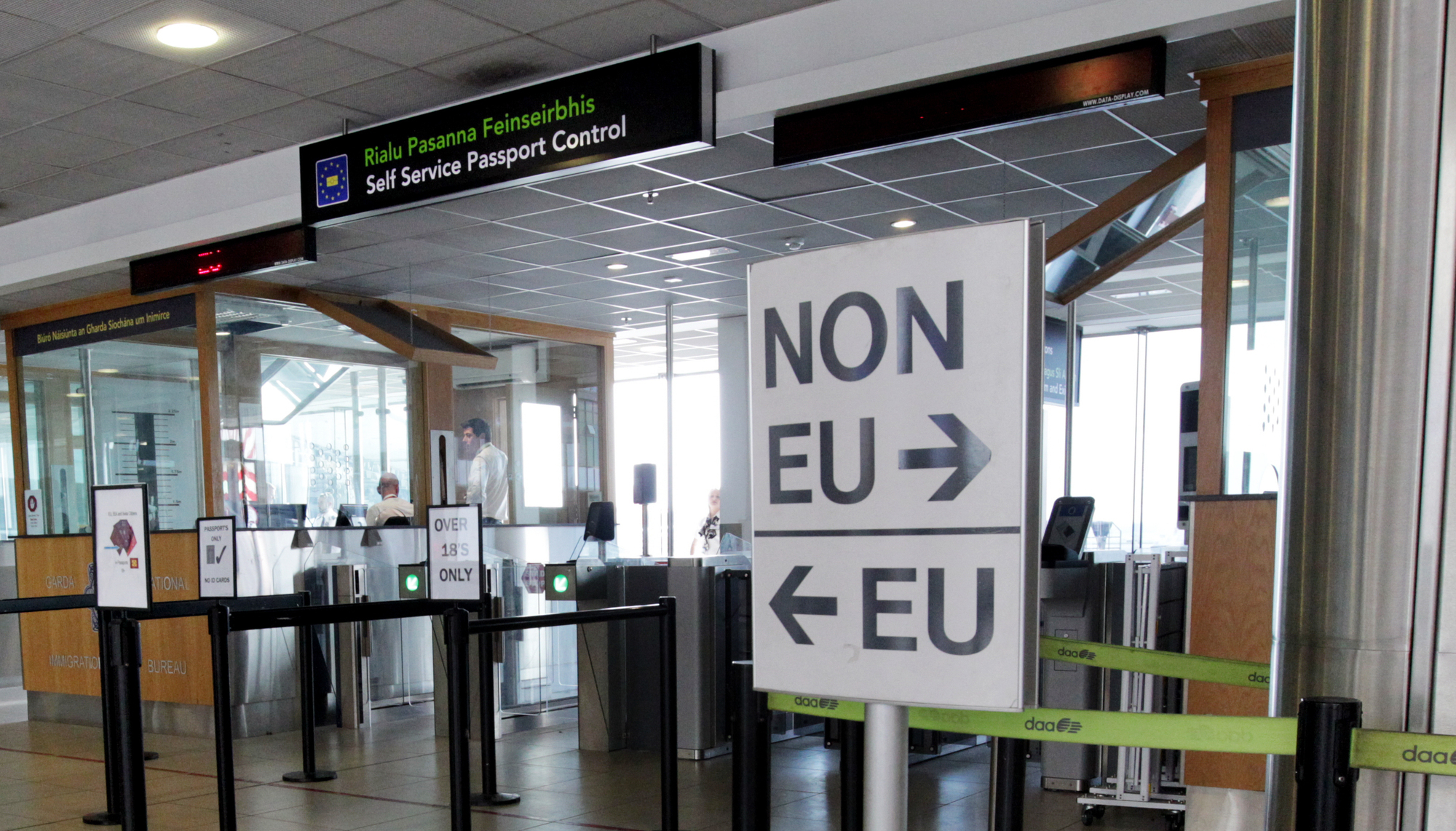
Under the new entry/exit system, non-EU passengers have to register fingerprints and facial images the first time they enter the Schengen zone and then have their biometrics verified every time they leave and re-enter. File photo: Mark Stedman/RollingNews.ie
The EU has rejected calls by airports and airlines to suspend the implementation of new fingerprinting and facial recognition border controls even though it admits there are “20 difficult spots” with queue chaos.
With only a week to go before the peak summer holiday season starts, EU officials said the new entry/exit system (EES) was “not perfect” but would tell travel industry representatives that a full suspension was “not needed” and “not possible”.
Under the EES, non-EU passengers have to register fingerprints and facial images the first time they enter the Schengen zone and then have their biometrics verified every time they leave and re-enter.
Irish passengers are largely unaffected by the changes but have been warned they could get caught up in the chaos of European airports as staff there struggle to deal with the volume of travellers.
Airlines and airport representatives and the International Air Transport Association (Iata) last week demanded a suspension of the new controls until next summer amid fears of chaos in holiday hotspots.
Iata said passengers were experiencing “delays and missed connections” in Portugal, Spain, Italy, Greece and Belgium, while last week Ryanair warned last week of “queue chaos” in airports including popular holiday destinations such as Málaga, Alicante and Palma.
However, EU officials say it is impossible to have the system open in some countries and not in others as it would lead to the “unfortunate situation of travellers stranded at border crossings”.
This could happen, for example, if a passenger from Britain entered the Schengen area at a border where the new controls were operational but left via a border where they were not. In this instance, they would be at risk of being registered as overstaying their 90-day travel allowance in any 180-day period and refused entry on a future trip.
The EU is also reportedly delaying the introduction of a separate pre-authorisation visa system known as the European travel information and authorisation system, similar to the US Esta system, according to the .
Officials said that out of the 1,500 border crossing points, only 20 were “difficult spots” and it would put pressure on those member states responsible to put measures in place to ease the pressure. One of the sites with the worst delays was a small regional airport where 3,000 passengers arrived an hour and could not be assessed quickly because of space, officials revealed.
Lisbon had already eased its queues by deploying extra workers and 50 new Frontex border agency staff were being stood up in Brussels airport, officials said. “I think we have recurrent progressive improvements everywhere,” an EU official added.
The controls have been eight years in the making and were designed to address the weakness in border controls exposed by the terror attacks in Brussels and Paris in 2015 and 2016.
The introduction of the system was delayed many times before it finally began last October, but with options for member states to opt out while the technology and the logistics of fingerprinting passengers were tested. Under the new EES regulations, airports and ports can temporarily suspend the system if queues become unmanageable, but that opt-out is due to end in September.
CONNECT WITH US TODAY



Be the first to know the latest news and updates