Ireland’s reliance on fossil fuels leaves public exposed to fuel price shocks, report warns
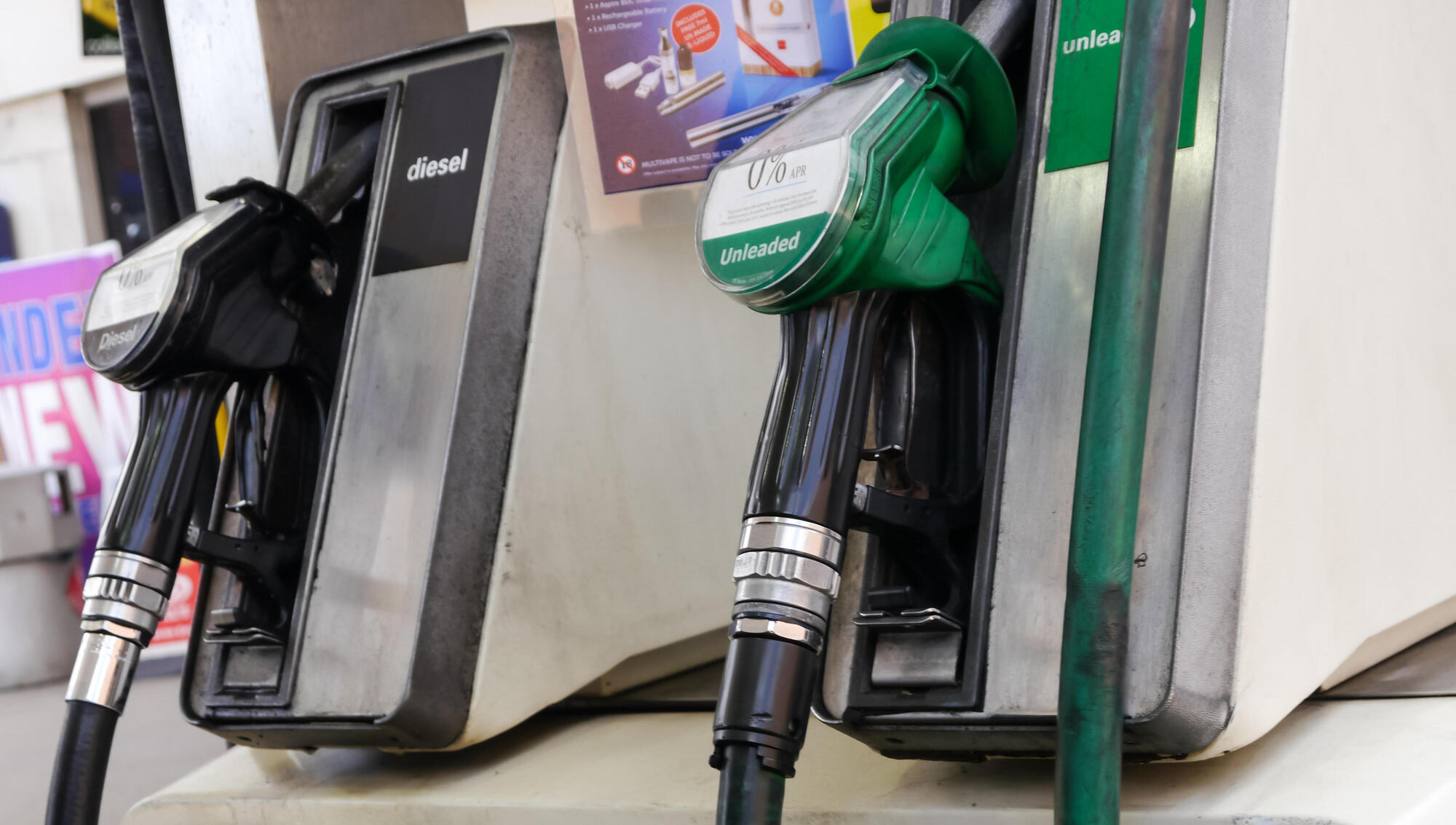
Report warns Ireland remains vulnerable to future fuel price shocks. File picture
The public is being exposed to repeated fuel-price shocks because of Ireland’s dependence on fossil fuels, while the Government’s “regressive” emergency measures are likely to benefit higher-income households more, according to a new report.
In its annual review of Ireland’s transport sector, the Climate Change Advisory Council (CCAC) said the risk of consumers being hit in the pocket by global instability, such as the conflict involving Iran, Israel and the United States, could be reduced through accelerated investment in public transport, active travel and electric vehicle (EV) charging infrastructure.
“Fossil fuel shocks are not one-off events,” the council’s chair Alex White said.
“As long as Ireland remains heavily dependent on petrol and diesel for transport, people, businesses and public services will remain exposed to global price volatility and geopolitical crises. The way to reduce that exposure is to give people real alternatives.”
Read More
CLIMATE & SUSTAINABILITY HUB
The Climate Change Advisory Council said the transport sector remains the largest source of energy demand in Ireland and accounted for 21.8% of total national emissions in 2024.
Under Ireland’s first carbon budget, covering the period 2021-2025, the transport sector’s emissions ceiling is expected to have been exceeded significantly.
We are also expected to exceed our next carbon budget for 2026-2030 if urgent action isn’t taken, according to the council.
According to the council, Ireland is also expected to exceed its next carbon budget for 2026-2030 unless urgent action is taken.
To help shield consumers from fuel-price increases linked to the conflict in the Middle East, the Government introduced significant cuts to petrol and diesel excise duties, which were further increased following nationwide fuel protests in April.
However, the council said such measures would not help Ireland meet its transport emissions targets and described them as regressive.
“The emergency measures introduced in 2026 include significant reductions in excise duties on fossil fuels, which are likely to benefit higher income households more in absolute terms due to higher consumption and the untargeted nature of the excise cuts,” the report said.
“The Council urges the Government to adopt more targeted and efficient measures over time and recommends the appropriate removal of the regressive measures.”
The report said future measures should ensure those most exposed to fuel-cost increases, and least able to absorb them, are supported while maintaining planned carbon tax increases and ring-fencing the revenues for climate action and a just transition.
It also called for targeted measures to increase EV uptake among lower-income households, particularly in rural areas with limited access to public transport. The council said the Government’s recently announced pilot scheme for people who own a car that is at least 13 years old is a welcome development.
The report also called for improvements to EV charging infrastructure through network expansion and better real-time mapping to give motorists greater confidence in switching to electric vehicles.
Currently, publicly available charging infrastructure in Ireland remains well below the EU average, the council said, adding that ongoing grid constraints and gaps in the network must be addressed.
“The Government has set the right ambition to end Ireland’s reliance on fossil fuels, the test now is delivery,” Mr White added.

CLIMATE & SUSTAINABILITY HUB
CONNECT WITH US TODAY



Be the first to know the latest news and updates