Hiqa: Women rate midwife-led units and private obstetric care highest
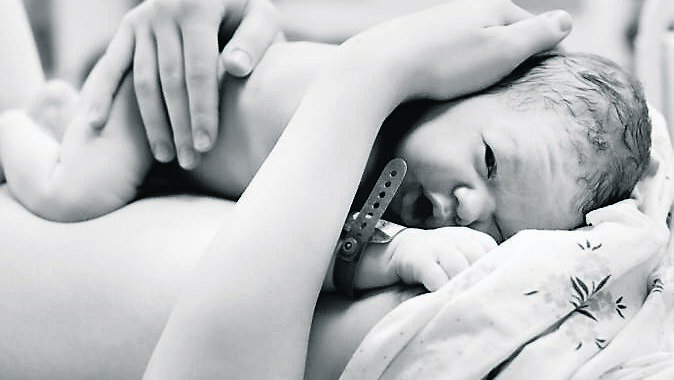
In recent days, women, healthcare workers, and advocates have raised questions about what is being rolled out to replace private obstetric care in hospitals. File picture
Midwife-led units and private obstetric care are the two maternity hospital options that women rate the highest, according to health watchdog Hiqa — but neither is available to all women.
The gap between care options that women value and what is available comes amid renewed focus on maternity care in the wake of the controversy between the Rotunda maternity hospital and health minister Jennifer Carroll MacNeill over private care.
This type of care is being phased out of HSE hospitals as consultants switch to a new public-only contract.
New HSE data shows nine obstetricians/gynaecologists in the HSE Midwest region are now on the new contract, 17 in the HSE Dublin and Southeast region, 26 in the HSE West and Northwest region, and 28 in the Dublin and Midlands region.
HSE Southwest said last week that 85% of these doctors in University Hospital Kerry are on this contract and 66% at Cork University Maternity Hospital.
Any obstetrician who chooses to stay on their older contract can continue to offer private maternity care in HSE hospitals, a HSE spokesman said.
“The States Claims Agency indemnifies them in respect of this work,” he said.
In recent days, women, healthcare workers, and advocates have raised questions about what is being rolled out to replace private obstetric care in hospitals.
The Irish Nurses and Midwives Organisation called for a midwifery-led care model to be funded, while senior staff in maternity hospitals called for the recruitment of obstetricians and gynaecologists also.
Hiqa’s findings arise from its analysis this week of results from the National Maternity Experience Survey for 2025.
This shows 60.5% of women who attended either of the midwife-led units in Drogheda or Cavan hospitals rated their experience as ‘very good’.
It has been a decade since the national maternity strategy recommended expanding the number of these units.
Some 18% of all the women opted for private obstetric care in any hospital, and 54.2% of them rated this as 'very good'.
Another 10.6% rated their experiences as only 'fair to poor'.
Read More
A Hiqa spokeswoman said responses showed women having private care “reported significantly more positive experiences with many different aspects of their maternity care, compared to average national scores”.
However, the survey also shows that these women “were also significantly less likely than average" to receive enough breastfeeding support in hospital and at home, she said.
Income is a clear barrier, with 30% of responses from affluent areas receiving private care compared to 6% of women in disadvantaged areas.
For obstetric-led care in the public system, some 45.3% of women who opted for this said it was ‘very good’.
She also said this group overall “reported significantly poorer experiences" compared to the average.
Homebirth is the maternity option with the highest positivity rating overall at 75%.
However, this is also only available in some counties.
Overall, across all types of maternity care, answers showed “continuity of care was identified as an important issue”, Hiqa said.
The HSE said patient safety is its “overall priority in the delivery of services”.
It said access to midwife-led care was extended since 2016; covering hospitals, homebirth and also 15 home-away-from-home delivery suites.
The HSE said the latter have “a similar physical environment and birthing infrastructure” to the midwife-led units in Drogheda and Cavan, adding it has prioritised these suites.
“This approach reflects the infrastructure constraints that exist in many maternity sites and has enabled the expansion of midwifery-led birth environments within existing maternity units,” a spokeswoman said.
It is committed to further expanding access to this network.
The HSE also continues to expand continuity of care models where possible, the spokesperson said.
She said women can request to be under the care of a particular consultant, and this can be arranged depending on staffing and other factors.
The Department of Health said some €28m has been invested in new development since 2016 for maternity care. More than 560 healthcare workers have been hired, including over 390 midwives and nurses, along with 44 consultants.
It also said the homebirth service is available “where it is safe and feasible to do so".
Meanwhile, Ireland’s caesarean section rate has been ranked 11th highest among 42 countries by the Nuffield Department of Women’s and Reproductive Health at the University of Oxford.
The team found in 2020 that some 34.7% of births here were by caesarean section. This had risen to 38.6% by 2023, the last year for which full data was available.
Norway had the lowest rates with just 16.3% of all births by caesarean section that year. The Netherlands also had very low rates at 18.4%.
The caesarean section rate in England increased from 32.9% in 2020 to 44.5% last year, and the report said this “marked increase” was not seen in other European countries.
Turkey had the highest caesarean section rate at 61.5% of all births in 2023.
Concern has been growing at the rising rates of cesarean section in Ireland, with questions raised about links between this and growing rates of induction of labour or other interventions.
CONNECT WITH US TODAY



Be the first to know the latest news and updates