70 is the new 50 - if we think more positively about ageing, says neuroscience professor
70 is the new 50 - if we think more positively about ageing, says neuroscience professor

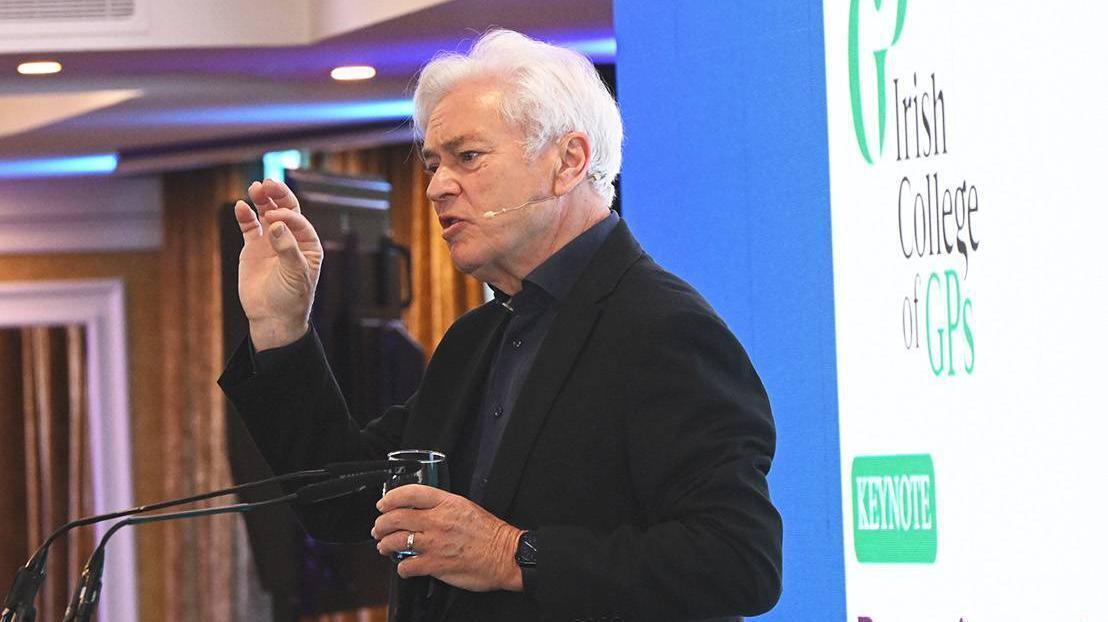
Professor Ian Robertson, keynote speaker at the Irish College of GPs annual conference on Saturday.

The age of 70 "can be the new 50" if older people lose “highly inaccurate and out-of-date” ideas about what growing older feels like, a leading neuroscience expert has said.

Many people become less active as they age because of these old-fashioned ideas, Professor Ian Robertson, a fellow emeritus of psychology at Trinity College Dublin Institute of Neuroscience, said.


He said some “highly inaccurate and out-of-date mental models that we have of our ageing” can have a real impact on how our minds age.

He highlighted an Irish study which compared people over 50 who believed negative ideas about ageing, against people with positive ideas.

“They found that people with negative expectations of ageing over the next two years walked significantly slower two years later, showed a significant reduction in cognitive flexibility, and had a slight decrease in their social activity,” he said.

These Irish longitudinal study on ageing findings should be food for thought, he told doctors at the Irish College of GPs annual conference in Dublin. 

Older people might think that forgetting someone’s name is an early sign of dementia, wheras people in their 30s simply brush this off, he suggested.

“Then you start worrying about your memory and thinking about your memory,” he said. “That’s the equivalent of thinking about your feet as you walk down the stairs, and that produces anxiety.” 

He added: “Anxiety interferes biologically with your memory, and also psychologically, it uses up memory space.” 

Mr Robertson, a clinical psychologist and neuroscientist, advised people to examine their pre-conceptions about lifestyle also.

He pointed at research looking at brain function in people across 41 countries, published by the International Monetary Fund last year.

This found “the cognitive performance of a 70-year-old in 2020 was the same as the cognitive performance of a 53-year-old in 2000,” he said.

“The sub-heading on the chapter was '70 is the new 50'.” 

He encouraged people to keep working for as long as possible, saying an OECD study raised questions about diminishing brain function for people who retire in their 50s.

He gave the example of men who retire early in Italy or Austria “playing boules, sitting happily with their coffees in the piazza.” 

However, he said: “Their memory function is significantly lower than the 65-year-olds in Florida, or in Ireland or the UK. You’re losing cognitive function by retiring.” 

He acknowledged also that the ability to work for longer depends on the type of job people do.

Retired people should keep trying new activities to stimulate the brain, he advised, including joining a charity committee or doing other voluntary work.

Referring to how the brain functions, he said: “This engagement with the world and the demands that the world makes on these networks in your brain actually reinforces these superhighways in the brain.”

More in this section

Lunchtime News

Newsletter

Get a lunch briefing straight to your inbox at noon daily. Also be the first to know with our occasional Breaking News emails.

Cookie Policy Privacy Policy Brand Safety FAQ Help Contact Us Terms and Conditions

© Examiner Echo Group Limited