Teachers' union accuses Government of having 'recession mindset' in dealing with public pay agreements
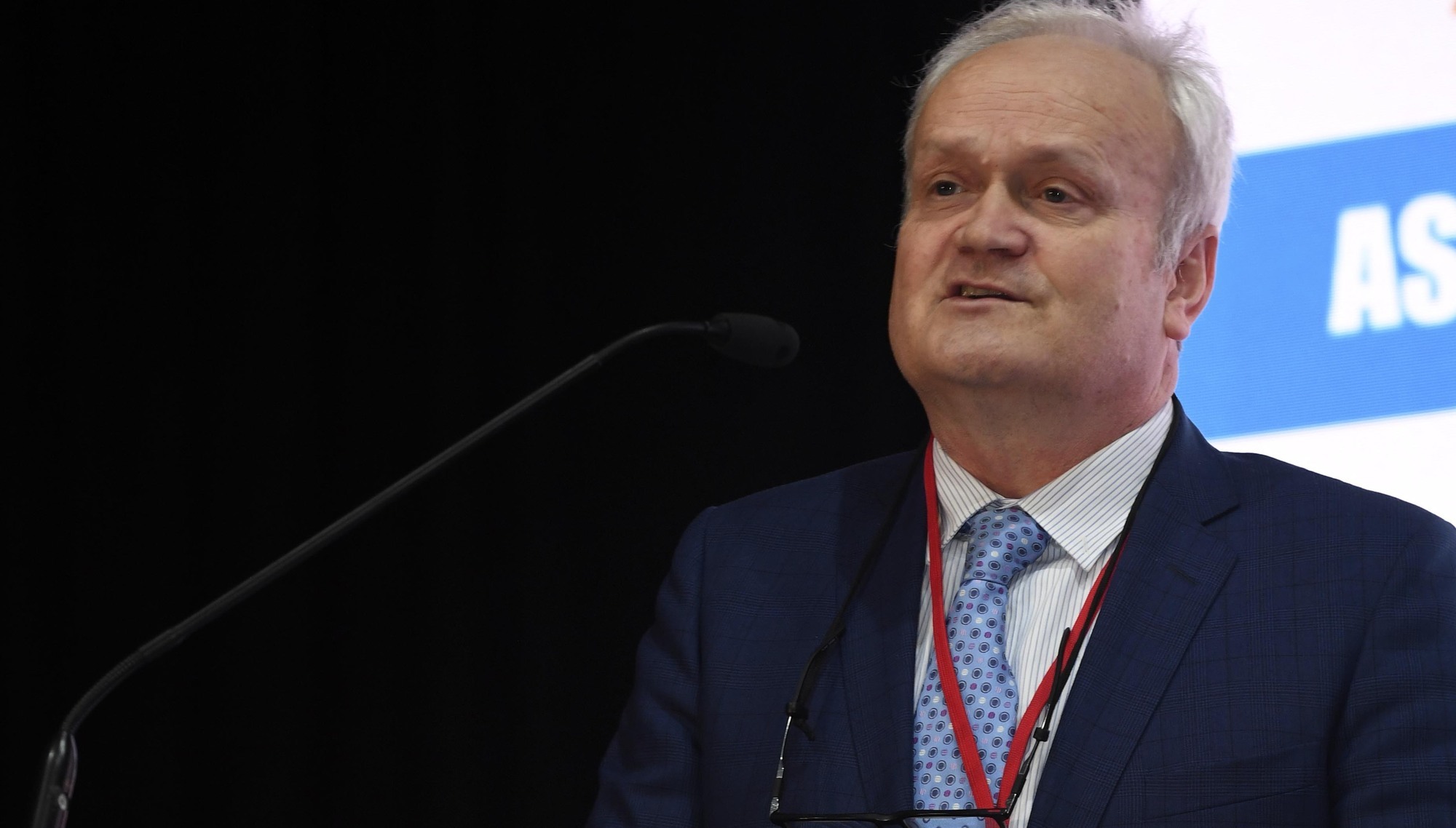
ASTI general secretary Kieran Christie told the union’s annual convention it was 'clear as a pikestaff' that the Government continues to use the same approach as during 'the austerity years of a decade ago or more' when negotiating public pay agreements. File picture: Don MacMonagle
The head of Ireland’s largest secondary teaching union has criticised the Government for never "moving on from the mindset of the recession” in its dealings with public sector workers.
Kieran Christie, general secretary of the ASTI, told the union’s annual convention it was “clear as a pikestaff” that the Government continues to use the same approach as during “the austerity years of a decade ago or more” when negotiating public pay agreements.
In his final address to the union after 11 years at the helm, Mr Christie said the Government “seem to have no comprehension” of the need to address ”the daily problems that workers face — be they housing, childcare, healthcare" in terms of pay increments.
“A new deal will have to be a better deal,” he said. “The narrative of the next deal must change. Teachers must receive a substantial pay rise. No ifs, no buts.”
Mr Christie criticised the fact certain provisos of previous public pay agreements have yet to be implemented, despite the fact negotations are set to begin on a successor agreement within the next six weeks.
“How can it be credible for the Government to expect unions to go back to members to ask that they agree a new deal — when so much of the previous two deals in our case remains outstanding to be paid?” he asked.
Despite this, Mr Christie said the ASTI, in not actioning a ballot of its members which voted to take industrial action last year over changes to the Leaving Cert format, had done the right thing.
He said by instead taking the Department of Education into an industrial relations process accusing it of breaching the public sector pay agreement, the ASTI would likely achieve more for its members than if they had gone on strike.
He said there was a “real prospect” the department may be found to be in breach, adding: “I believe that concerns them a lot”.
Separately, the general secretary reiterated the union’s concerns around the implementation of senior cycle reform, notably the new additional assessment component which sees 40% of final marks for certain subjects — currently the three science subjects and business — allocated via project work.
He said a need for appropriate laboratory equipment in schools was “not optional, it is foundational”.
“Schools cannot deliver reformed curricula without appropriate laboratory infrastructure,” he said.
He also said there needed to be “clear safeguards against the inappropriate use of AI in student work”, while calling for a “defined legal protection” for teachers charged with authenticating project work which may have been composed with the assistance of AI.