Ireland’s defence spending slammed as ‘bad joke’ amid Nato push for 3.5% GDP target
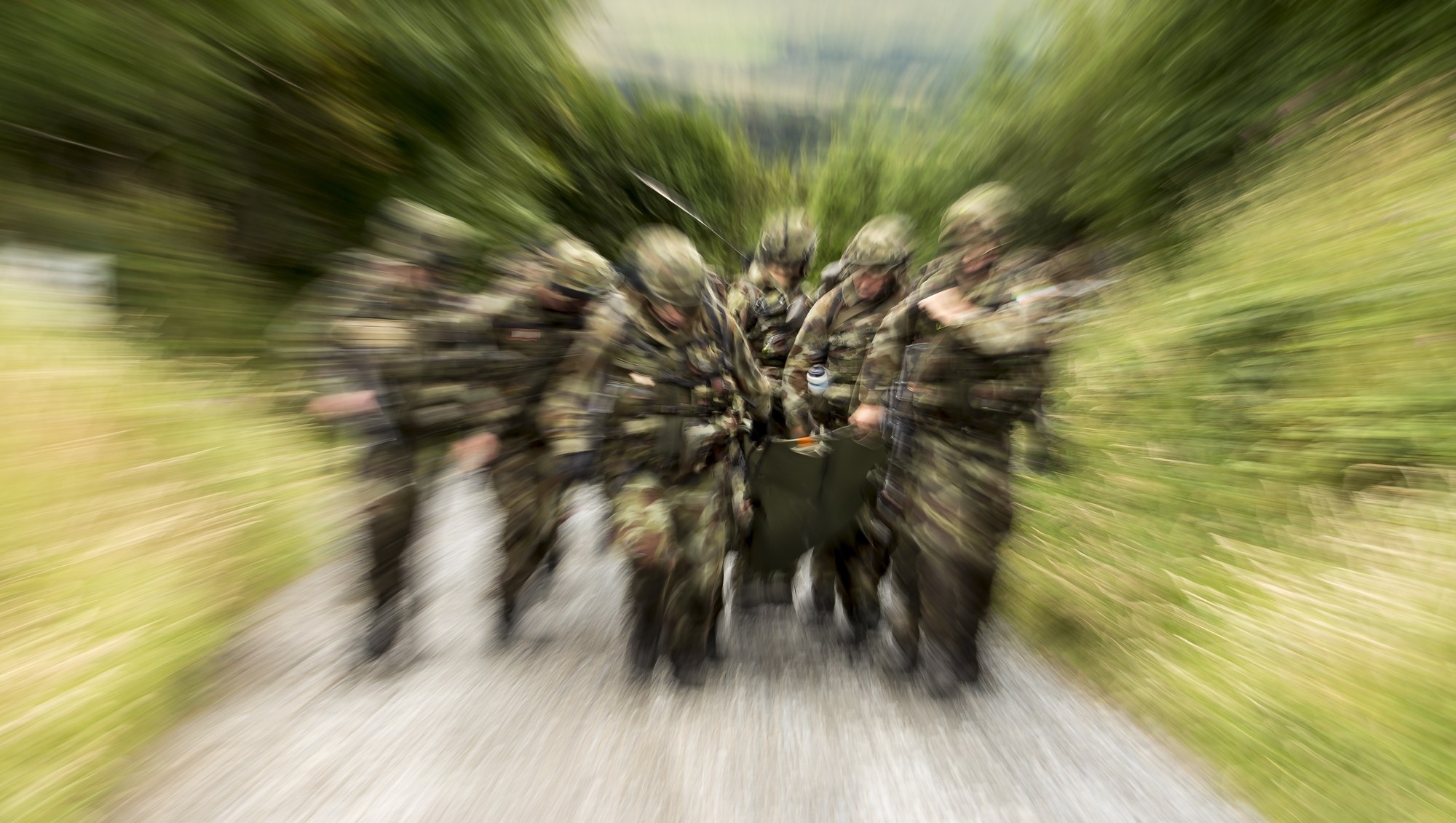
'With our naval service unable to put to sea, our air corps grounded after dark, and huge difficulties in staffing overseas, not to mention our technician strengths below 50% in most areas, which capabilities are we delivering on fully? And at what cost?'
Ireland’s continuing low level of defence expenditure — stuck at 0.2% of GDP — has been described as a “bad joke” just a day after EU partners in Nato agreed to boost their target spend from 2% to 3.5% of GDP.
The development comes as Tánaiste Simon Harris, minister for foreign affairs and defence, is on Friday expected to announce plans to join the EU’s new security procurement mechanism to accelerate the acquisition of defence equipment.
Ireland is not yet joining the loan part of the mechanism — with a total fund of up to €150bn available — but the Government is expected to consider this in the coming weeks, with Mr Harris believed to be keen to explore the prospect.
Figures provided to the by the Department of Defence show defence expenditure was 0.2% of GDP in 2024. It has remained at that rate since 2021, and is slightly lower than 2020 (0.3%).
Gross National Income (GNI) is considered a more accurate estimate of national wealth than GDP in Ireland, as it excludes global profits of international companies sent to Ireland for tax purposes.
The department figures show Ireland’s defence spend is 0.4% of GNI (twice as much as GDP), with the latest figure for 2023. It is the same rate as 2022, and slightly lower than previous years (0.5%).
The estimates are despite increased defence budgets since the report of the Commission on Defence Forces in February 2022.
This followed the Government's adoption of the commission’s ‘Level of Ambition 2’ (LOA2) investment. This involves increasing the budget from €1.1bn in 2022 to €1.5bn, in 2022 prices, by 2028.
The Irish Examiner reported last February that Ireland had the lowest defence spend of 38 European countries in 2024 — by far the lowest based on GDP, and joint lowest with fellow neutral Malta based on GNI. Our GNI-based spend was more than half that of another EU neutral state, Austria.
The Department of Defence said the international comparison of military expenditure was “made difficult” by the lack of publicly available data and the differences between nations' defence policies. As such, it said international perspective is “best used for context rather than comparison” between militaries.
Responding to the department figures, the association representing officers in the Defence Forces said the department "continually refers to the ‘record allocation’ in the defence budget”.
Lieutenant Colonel Conor King, general secretary of Raco, said: “With Ireland still far below the levels of investment of comparator EU countries, despite the increasingly unstable global security environment, and with the personnel levels so low, how can we be satisfied that this level of spend remotely addresses Ireland’s needs to defend our citizens? If we’re honest, we can’t.”
He added: “Look at the Nato commitment to 5% ([3.5% on national defence and 1.5% on critical national infrastructure and resilience]. Now look at us at 0.2% of GDP or 0.4% of GNI. We are so far away from reality it’s like a bad joke. And many of those countries are our EU partners so it’s not just a ‘Nato thing’.”
The Raco general secretary said the capabilities of the Defence Forces was in a very poor state: “With our naval service unable to put to sea, our air corps grounded after dark, and huge difficulties in staffing overseas, not to mention our technician strengths below 50% in most areas, which capabilities are we delivering on fully? And at what cost?”
The Tánaiste is expected on Friday to sign up to the EU Security Action for Europe (SAFE) in a bid to speed up, possibly by two years, the acquisition of key defence capabilities, such as: ammunition; artillery systems; critical infrastructure protection; air defence systems and maritime capabilities.
Mr Harris is focusing of using SAFE to address gaps in specific equipment, particularly through joint acquisitions with other member states.
CONNECT WITH US TODAY



Be the first to know the latest news and updates