Floods and storms put 400,000 Europeans at risk in world's fastest-warming continent last year
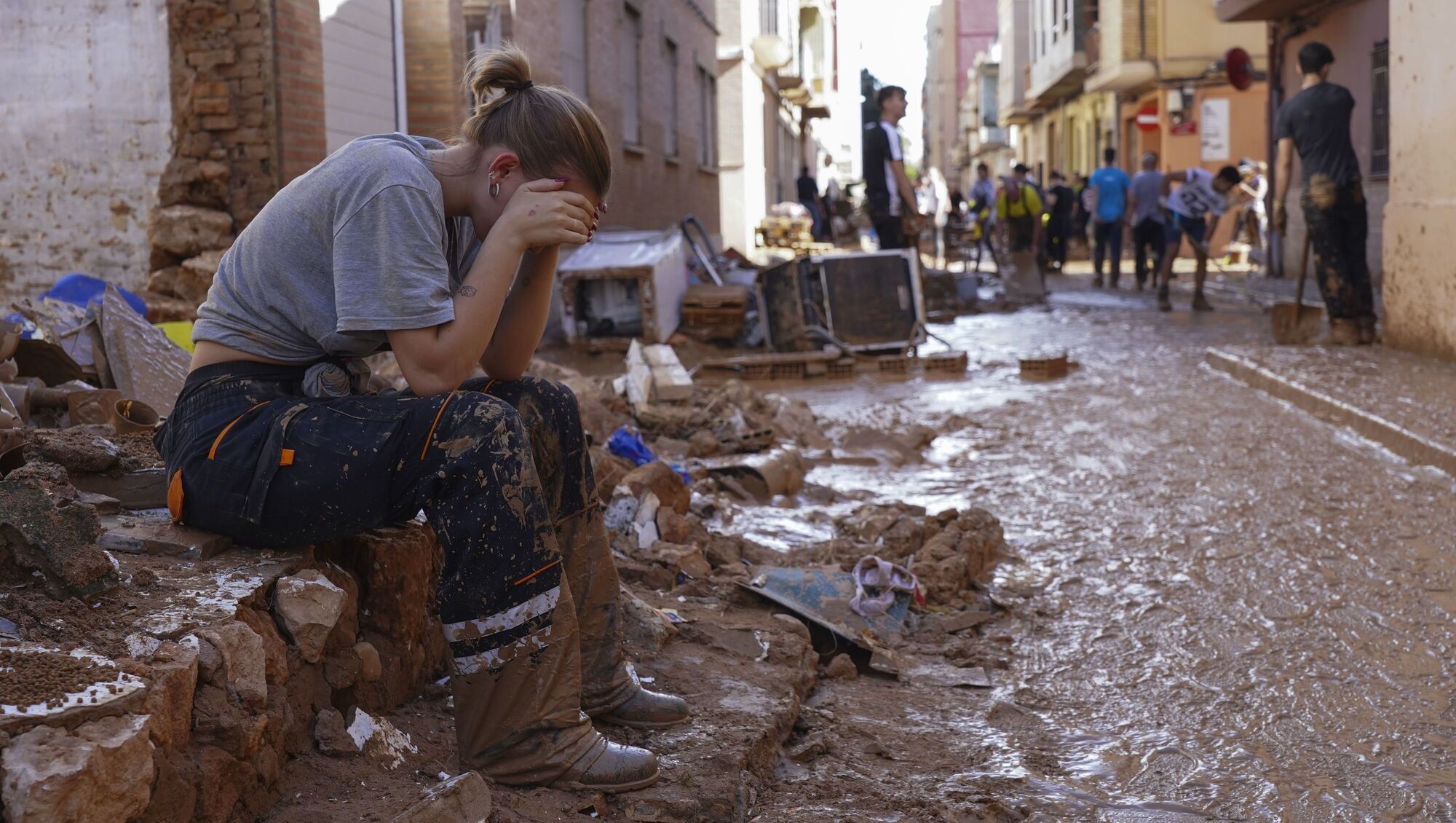
A woman rests as residents and volunteers clean up an area affected by floods in Paiporta, near Valencia, Spain, last November. The joint report from the EU's Copernicus Climate Change Service and the World Meteorological Organisation singled out the flooding in the region last summer. File photo: AP/Alberto Saiz

A woman rests as residents and volunteers clean up an area affected by floods in Paiporta, near Valencia, Spain, last November. The joint report from the EU's Copernicus Climate Change Service and the World Meteorological Organisation singled out the flooding in the region last summer. File photo: AP/Alberto Saiz

Storms and flooding put more than 400,000 Europeans in nature's firing line in 2024, with at least 335 deaths, as the fastest-warming continent grapples with the growing threat of climate change.

The latest data show that an east-west divide is opening up in Europe with “extremely dry and often record-warm conditions in the east, and warm but wet conditions in the west”. 

A joint report from the EU's Copernicus Climate Change Service and the World Meteorological Organisation (WMO) said that Europe has warmed twice as fast as the rest of the world on average since the 1980s with heatwaves becoming more frequent and severe.

On the other hand, storms were also often severe and caused widespread flooding.

Celeste Saulo, secretary-general of the World Meteorological Association, said: "Every additional fraction of a degree of temperature rise matters because it accentuates the risks to our lives, to economies and to the planet.

“Adaptation is a must. [We] are therefore intensifying efforts to strengthen early warning systems and climate services to help decision-makers and society at large to be more resilient. We are making progress but need to go further and need to go faster, and we need to go together.” 

The report said that the area of Europe experiencing days with temperatures below freezing is decreasing as 2024 saw the largest area on record with fewer than three months of frost days.

For the European region and for the Mediterranean Sea, the annual sea surface temperature was the highest on record. It was also the warmest year on record for European lakes.

It singled out devastating impacts from extreme weather such as wildfires in Portugal that burned around 1,100km2.

Flooding also wreaked havoc, such as in Valencia in Spain last summer. Almost one third (30%) of the European river network exceeded a “high” flood threshold last year while one in eight (12%) exceeded the “severe” flood threshold.

Meanwhile, glaciers in Scandinavia and Svalbard saw them decrease in mass at the highest annual rate ever recorded, with the largest loss in mass of any glacier region around the world.

To help mitigate against these damaging climate events, European cities must become more resilient and adapt to the changing weather, the report said.

Over half (51%) of European cities have adopted climate adaptation plans, compared to just a quarter (26%) in 2018. At home, cities such as Cork and Dublin have rolled out their own climate action plans in recent years.

“Extreme weather events present increasing risks to Europe’s built environment and infrastructure and the services they support,” the report said. “Urgent action is needed, particularly regarding flood risks.

“Damage to the built environment from extreme weather is projected to increase up to tenfold by the end of the century due to climate change alone. Aging structures and increasing demand add to the risks, with flooding identified as the climate risk most urgently needing action.” 

x

CLIMATE & SUSTAINABILITY HUB

More in this section

Lunchtime News

Newsletter

Get a lunch briefing straight to your inbox at noon daily. Also be the first to know with our occasional Breaking News emails.

Cookie Policy Privacy Policy Brand Safety FAQ Help Contact Us Terms and Conditions

© Examiner Echo Group Limited