Chambers Ireland warns State will miss green benefits without 'systemic' infrastructure change
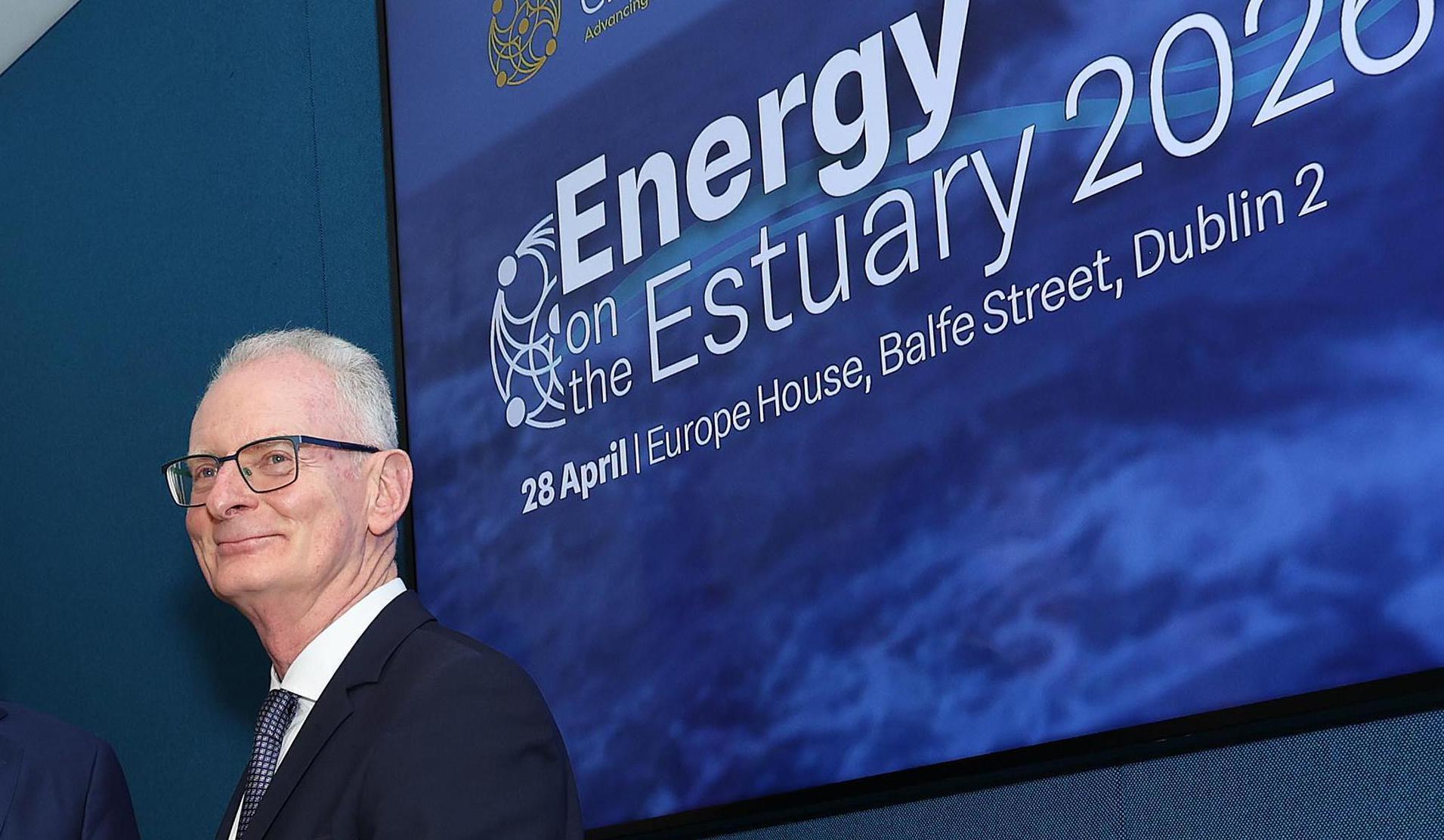
Chambers Ireland chief executive Ian Talbot at the Energy on the Estuary conference in April. Mr Talbot has called for faster infrastructure delivery if Ireland is to benefit economically from climate transition. Picture: Robbie Reynolds
The chief executive of Chambers Ireland has warned that the State requires "systemic change" around infrastructure or risk missing out on the economic benefits of climate transition.
Ian Talbot was speaking as Chambers Ireland published its submission on the update of the Climate Action Plan, warning that Ireland will suffer financially unless it accelerates delivery of infrastructure. He said constraints around energy, water and wastewater, and transport infrastructure continue to impede Ireland’s progress towards its climate targets.
Read More
"Climate action is intrinsic to our competitiveness. In the past there was a broad expectation that the carbon budget framework would help accelerate the infrastructure and investment needed to support the transition but many of those benefits have yet to materialise," said Mr Talbot.
"What we need is systemic change. Making sure this materialises will require multiannual funding for utilities while fixing the capacity issues and bottlenecks that exist in the planning system."
The Government's National Development Plan says that €102bn will be invested in infrastructure projects between 2026 and 2030, including €7.6bn to support the construction of essential water infrastructure, and €3.5bn towards the energy grid. Some €22.3bn in planned for transport infrastructure projects over the next five years.
Last month, the Government said in its progress report that 10 of 74 legacy climate actions in the Climate Action Plan were delivered in the first half of 2026. In its submission, Chambers Ireland said the next Climate Action Plan must prioritise delivery. "Policies, infrastructure and business supports must be put in place at the pace required to enable compliance with the State’s climate objectives while protecting competitiveness. Member feedback consistently identifies the principal constraints as infrastructure delivery, grid capacity, planning and consenting delays, transport connectivity, affordability and shortages in the skills required for the green transition.
"These constraints are interconnected and directly affect competitiveness across the economy. Unless they are addressed, the State will find it more difficult to meet its 2030 and longer-term climate targets and may lose mobile investment to competing jurisdictions."
Mr Talbot added: “Every delay postpones lower energy costs, greater energy independence and the significant economic opportunities that renewable energy projects can bring at both local and national level."


CLIMATE & SUSTAINABILITY HUB
CONNECT WITH US TODAY



Be the first to know the latest news and updates