Defence Forces ombudsman highlights poor communication and rising officer complaints in 2024 report
Defence Forces ombudsman highlights poor communication and rising officer complaints in 2024 report

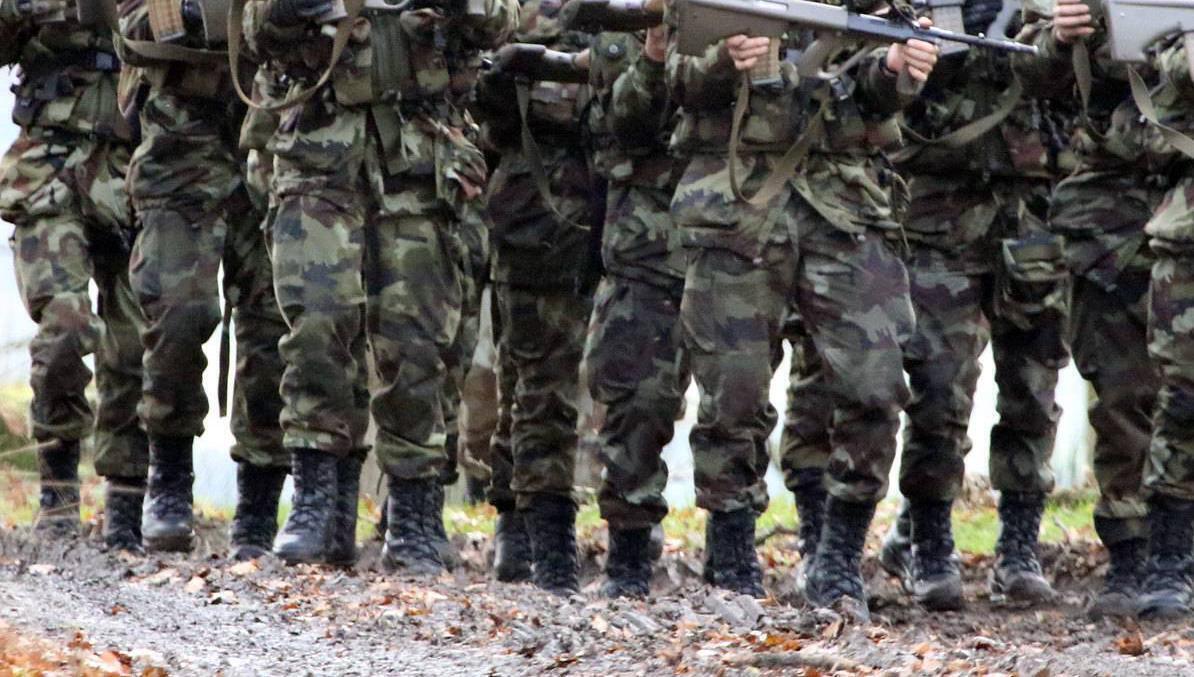
Figures show that 55% of the complaints came from the Army, 34% from the Air Corps and just 8% from the Naval Service. File photo.

Lack of communication from superiors is a common feature of complaints by members of the Defence Forces, the State’s military ombudsman has said.

Alan Mahon, a former judge, also said he has seen a significant increase in recent years in direct complaints from senior officers.


He said these officers “may have been reluctant” in the past to use internal complaint procedures as the investigating officer would be a fellow officer.

Mr Mahon said that he received “relatively few” complaints in 2024 of an “interpersonal” nature – such as allegedly offensive remarks or alleged harassment – and that this might suggest “increased awareness” within the Defence Forces (DF).

Publishing his annual report for 2024, the former Court of Appeal judge said that 80% of all complaints to the Ombudsman for the Defence Forces (ODF) last year were directly referred, compared to 50% in 2023, 20% in 2022 and 7% in 2021.

He said complaints from commissioned officers – those holding the ranks of lieutenant, captain, commandant, colonel, and up – accounted for 40% of all complaints in 2024, compared to “well below” 10% in previous years.

Mr Mahon said: “A possible explanation is that officers may have been reluctant to use internal Defence Forces statutory complaint process, the only option open to them up until recently, because the process involves the appointment of a fellow officer as the military investigation officer (MIO), to take charge of the investigation of the complaint.” 

Figures show that 55% of the complaints came from the Army, 34% from the Air Corps and just 8% from the Naval Service.

The ODF upheld just under half of the complaints in 2024, similar to the previous year.

The majority of complaints concerned promotion, course selection and assessment, leave issues, allowances, and overseas issues.

Mr Mahon said there were only three complaints that “might loosely be termed interpersonal type complaints”, one of an allegedly offensive remark, one of alleged harassment and disrespect and one of allegedly making false accusations.

Commenting on this, he said: “The fact that such complaints to my office are relatively few in number might suggest that there is, over the past couple of years, an increased awareness within the DF of the value in maintaining good working relationships with colleagues, and, particularly on the part of senior NCOs [non-commissioned officers] and Officers, coupled with a need to move quickly and effectively to resolve interpersonal difficulties where they do occur.” 

Mr Mahon, who is serving a second three-year term as ombudsman, said he is often asked if there were any common denominators to complaints.

“There is certainly one, namely, ‘communication’, or, more accurately, lack of communication,” he said. 

“I use the term ‘non-communication’ to describe a failure on the part of senior DF personnel (both senior NCOs and Officers) to adequately communicate and/or engage with personnel when those personnel raise issues of concern, or make complaints.

“Based on my experience as ODF, greater care needs to be taken to provide the reasons for a particular decision that impacts an individual, such as a negative decision in relation to course selection, overseas selection, promotion (including to Acting roles), allowances, leave or other administrative matters.” 

He added: “In a significant number of complaint investigations a failure to explain the basis for a decision, or to give reasons for a decision, or to otherwise engage with the affected individual, was a major contributing factor behind the submission of the complaint.” 

Case studies of complaints include:

Allegation from complainant of bias or lack of impartiality on the part of the MIO 

The ODF said it was “understandable” that ‘objective bias’ or ‘perceived bias’ would have been a suspicion from the complainant’s perspective because of the fact that the appointed MIO and the person against whom all complaints were directed were both of the same rank, namely Lt Cols, and were almost certainly known to each other. 

But the ODF said he was satisfied there was no evidence of any lack of impartiality or bias.

Refusal of commanding officer to accept sick leave 

In this case, a private in the DF was given 28 days’ sick leave by a civilian GP employed by the DF. 

This was rejected by the complainant’s CO (commanding officer), and he was advised to report for duty later that day, or he would be marked absent. 

He did, as instructed, later that day attend St Bricins Military Hospital for a scheduled appointment. He was examined by a Medical Officer (MO), and his grant of sick leave was approved. 

However, his CO was not prepared to sanction the sick Leave. 

The ODF found: “Comdt X, in his capacity as CO, does not have authority to refuse sick leave if it is recommended by a MO.” 

Direction by a senior NCO to remove certain LinkedIn posts of a complainant

The posts were of the complainant receiving a particular certificate or award from a private company, associated with a branch of the DF. 

The senior NCO was acting on the direction of a senior officer. The ODF considered the DF’s Social Media Policy document. 

The ODF said: “The material posted by the complainant, copies of which have been provided to me, are relatively benign in terms of their potential to compromise security. However, on the other hand, the photographs identify personnel (albeit not by name), equipment and surveillance activity, software and maps and it is understandable therefore, that from a security perspective, some of these images might be of concern to the DF authorities.” 

He added that the DF Social Media Policy, by its nature, was non-specific and couched in general terms, and its application to particular situations and circumstances will often err on the side of caution. The ODF said: “I believe this is what occurred in this case and which understandably resulted in a sense of anger and frustration on the part of the complainant.”

More in this section

Lunchtime News

Newsletter

Get a lunch briefing straight to your inbox at noon daily. Also be the first to know with our occasional Breaking News emails.

Cookie Policy Privacy Policy Brand Safety FAQ Help Contact Us Terms and Conditions

© Examiner Echo Group Limited