State Papers: Albert Reynolds gave Harry Whelehan High Court post due to 'custom and practice'
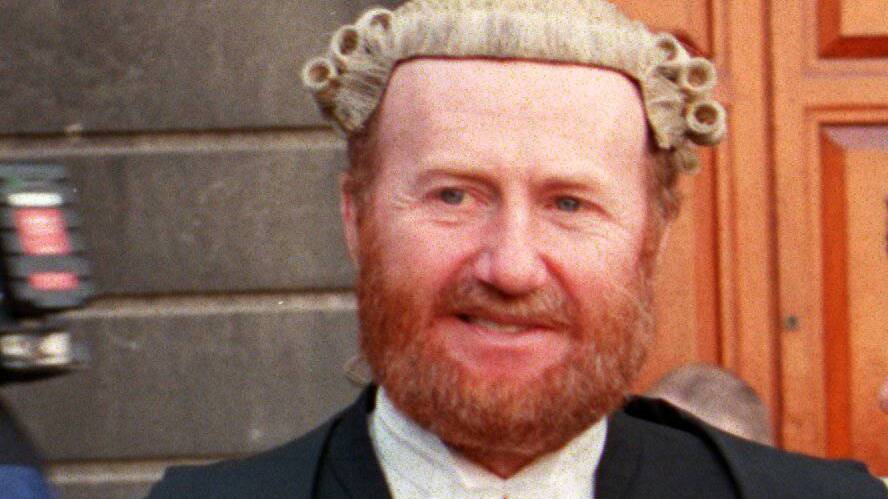
Harry Whelehan at the Four Courts for his appointment as a High Court judge. Albert Reynolds later accused Whelehan of seriously misleading the government when it was revealed he had previously dealt with a case akin to Fr Brendan Smyth case. Picture: Billy Higgins
Secret documents show that then taoiseach Albert Reynolds sought to rely on “custom and practice” to explain the controversial appointment of Attorney General Harry Whelehan as a High Court judge in 1994.
State papers released by the National Archives under the 30-year rule offer insight into the political controversy that would lead to the collapse of the Fianna Fáil-Labour coalition government after just two years in power.
They reveal how Mr Reynolds sought to justify pushing ahead with Whelehan’s appointment as a judge, despite the move being opposed by Labour leader, Dick Spring.
The government ratified his formal nomination at a Cabinet meeting on November 11, 1994, which was not attended by his coalition partner’s ministers.
The Attorney General had been under criticism at the time over his mishandling of the extradition of a notorious paedophile priest, Fr Brendan Smyth, to Northern Ireland to face child abuse charges.
Whelehan had claimed the delay in extraditing Smyth was due to the fact that it was the first case of its type that was covered by new legislation.
The former Attorney General had already been involved in a number of other controversies in his role as the government’s top legal advisor, including his intervention in the Beef Tribunal to prevent minister Ray Burke from being questioned about Cabinet discussions on the beef industry on grounds of breaching Cabinet confidentiality.
Whelehan had also sought an injunction in 1992 to prevent a teenager who was pregnant after being raped from travelling to Britain for an abortion in what became known as the X Case.
Following his appointment to the High Court, however, his replacement as Attorney General, Eoghan Fitzsimons, dropped a bombshell when he revealed that there had been a previous similar case to Fr Brendan Smyth in 1992 which had been personally dealt with by Whelehan.
Mr Reynolds accused Whelehan of seriously misleading the government and stated he would not have proposed or supported his appointment to the judiciary if he had been aware of the earlier case which related to Fr John Duggan.
Although the taoiseach expressed regret at the appointment in an attempt to repair relations with Labour, Mr Spring collapsed the coalition and formed a new government with Fine Gael and Democratic Left, while Whelehan resigned as a judge a few days later after coming under intense pressure to relinquish his post.
Newly-released State papers show that a senior civil servant advised the taoiseach that Whelehan’s appointment could be explained on the basis that it was “custom and practice” by referencing a long-standing tradition of appointing former attorney generals to the judiciary.
Records showed that 14 out of the 22 attorney generals in the history of the State had gone on to take up judicial roles.
They reveal that in preparation for a Dáil confidence debate on November 16 and 17, 1994, Mr Reynolds was advised to emphasise the historical precedent for such appointments.
Draft speech notes prepared for him included references to briefing materials dating back to the tenure of Éamon de Valera with regard to the promotion of an attorney general.
Mr Reynolds said he had relied on a briefing note prepared by the government secretary which had in fact first been drawn up when his predecessor was taoiseach and which had been “carried forward in that format and context for almost forty years”.
The Fianna Fáil leader said the real point what not what the briefing note said “but the custom and practice which has operated since the foundation of the State”.
The draft note concluded with the Latin phrase: “Res ipsa loquitur” which translates as “the thing speaks for itself”.
CONNECT WITH US TODAY



Be the first to know the latest news and updates