'Consumers weren't ready': Why have EV sales not taken off?
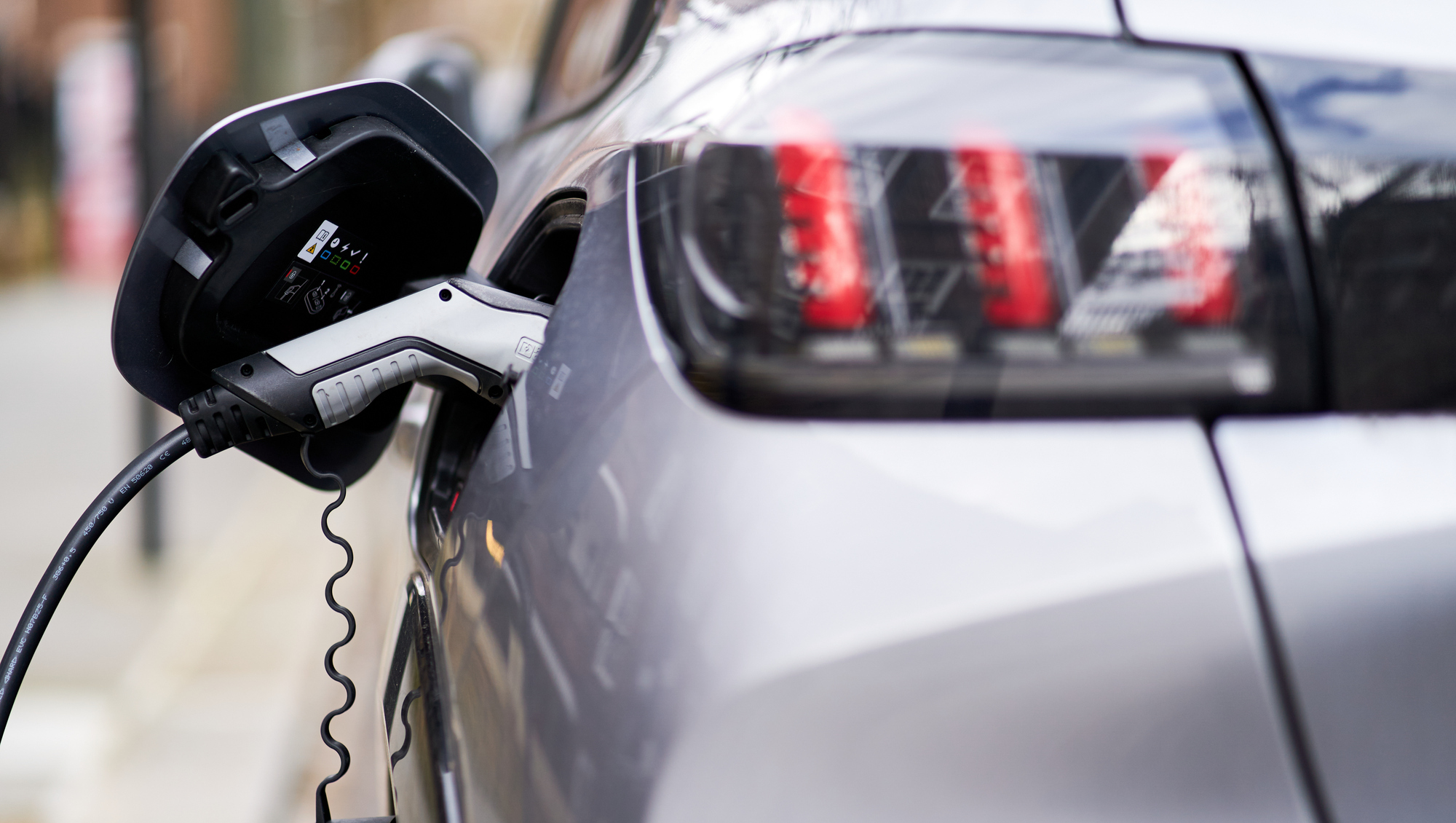
UCC expert Dr John Hayes has said a number of factors are behind the fall in sales of EVs, including issues around public charging, the cost of living and housing, and struggling manufacturers.
“They said they’d get nearly one million EVs on the roads by 2030. But now that’s conveniently and silently disappeared from the propaganda.”
Denis Murphy, the managing director of Blackwater Motors in Cork, referenced propaganda in a tongue-in-cheek manner as he stressed that he doesn’t just believe the Government is to blame for the sale of electric vehicles falling off a cliff in recent times.
Indeed, across Europe, he said, policymakers tried “too much, too soon” to push a “young technology” which, after strong sales initially, has seen them go downwards rather than upwards as they all may have expected in countries like Germany and France.
In the first 11 months of 2024, CSO figures tell us that the sales of electric vehicles in Ireland are down around a quarter on the same time last year. Targets set by the Government, which already seemed lofty, now appear further from reach after a bad year for the market in Ireland and many other European countries.
“They pushed it and pushed it,” Mr Murphy said. “Consumers weren’t ready. The cars were really expensive at the time and home charging wasn’t readily available.”
The need to switch to electric vehicles in huge numbers is one readily acknowledged by the governments around the bloc.
At home, the Government has said the “urgent transformation of Ireland’s transport system” and halving transport greenhouse gas emissions by 2030 is essential to “avoid precipitating potentially catastrophic levels of global temperature increase”.
And, repeatedly, the impact that large-scale switching to EVs will have for our emissions has been emphasised.
A recent study from Professor Hannah Daly, of UCC, on the impact of data centre demand on our electricity grid highlighted this.
“[This approach] finds that the GHG savings from EVs and Heat Pumps significant outweigh the additional emissions from their operations,” she wrote.
Professor Daly calculated that while the increased electricity generation from EVs would add an extra 0.86 million tonnes to our cumulative greenhouse gas emissions to 2030, savings from fossil fuel reductions could reach 5.81 million tonnes.
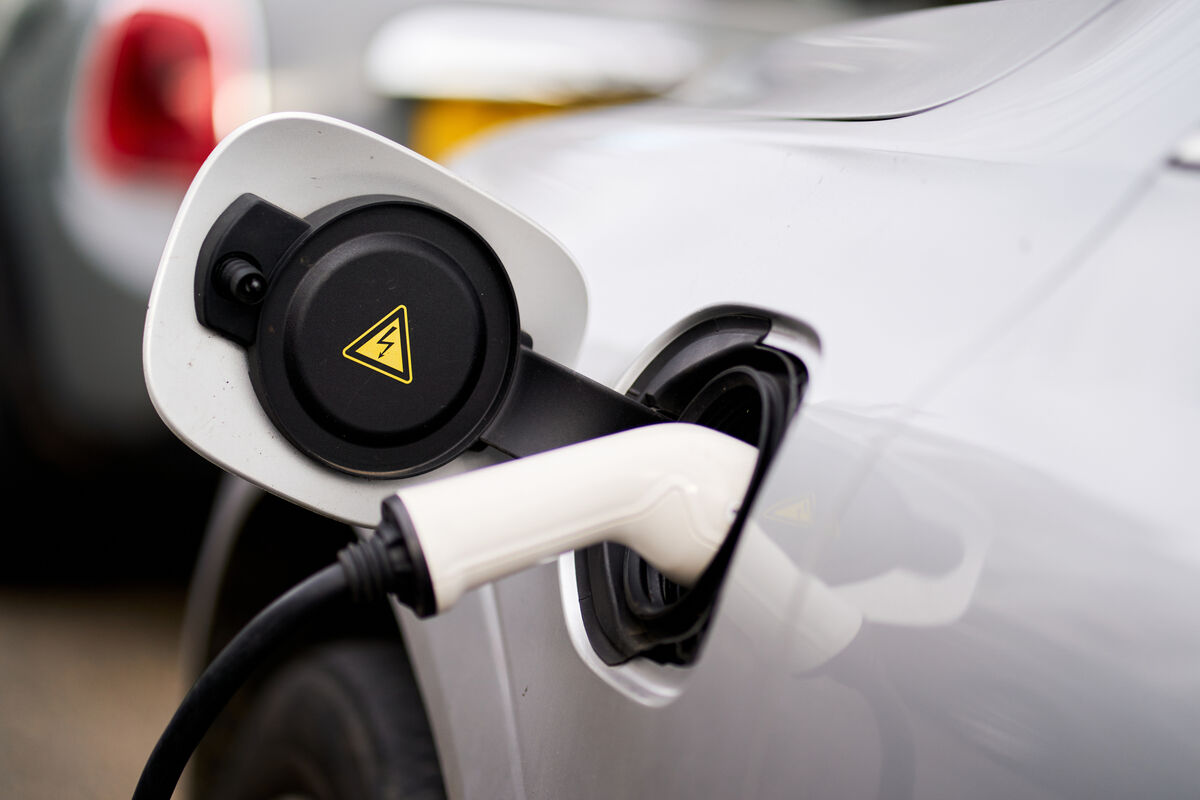
Unfortunately, transport emissions actually rose slightly in Ireland last year according to data from the Environmental Protection Agency, as the vehicle fleet rose 3%. While they are now below pre-covid levels, these emissions must fall much further to allow Ireland to meet its targets. And to do that, larger swathes of the vehicle fleet will need to switch to electric.
So, while there’s a general consensus of the need for a wholesale switch to EVs, the fall in sales will likely have policymakers across the bloc worried.
Minister for Transport and the Environment Eamon Ryan has been pressed on the progress, or the stalling of progress, on numerous occasions.
Answering a parliamentary question in May, which referred to an AA survey that found only 10% of customers plan to go fully electric with their next car, he hit out at “misinformation” around EVs.
“While there are, as the recent survey points out, challenges around EV sales including prices and concerns around misinformation, we are still working towards our climate action plan and international targets,” he said.
He said that a dedicated office in his department is actively working to address misinformation around EVs.
“It is expected that as manufacturers increasingly ramp up EV production, upfront costs will become more comparable to traditional combustion engine cars within the next number of years,” he said.
Mr Ryan was pressed on the issue a final time in the Oireachtas before the general election, when he appeared before the Transport Committee.
He insisted that the fall in sales wasn’t purely down to dropping grants — as the costs of electric vehicles fell substantially anyway in the last year — and that the whole thing was “complicated”.
“If one is uncertain at what the second-hand value is, that hinders the confidence in the purchase of new EVs,” he said, also pointing to “range anxiety” being one that’s in the minds of consumers where they’re worried about how far they can travel in these cars.
Mr Ryan said that local authorities to date have been “reasonably poor” in planning for EV charging infrastructure and that real investment taking place now is something “which took longer and was more protracted than it should or could have been”.
“The slowdown in EV sales is starting to taper off and we are beginning to see it rising again,” Mr Ryan added.
“When the issues of second-hand values, fleet and leasing are resolved, it will really accelerate further again.”
Mr Murphy, although critical of the Government in some aspects, did agree that sales of electric vehicles should boost significantly given the current state of the market.
“Speaking now at the end of December 2024, it's a situation where a lot of the problems are fixed, the charging network is getting rolled out, home charging is available — unless you’re in an apartment — and electric cars are now significantly cheaper than the equivalent petrol and diesel cars,” he said.
“The market conditions are as good as you need them to be. And that’s the first time we can say that. But there’s a lot of consumers needing to have confidence in the product.”
He said that consumer confidence in EVs had “collapsed” as they had been “turned off them” from negative commentary in recent years.
“People were hearing that the amount of positives were few and far between,” Mr Murphy said. “That’s what needs to change. People need to be given time to make the switch.
“Electric is the future, it’s not going anywhere. We represent brands that have committed to ending petrol and diesel manufacturing in the 2030s.”
UCC expert Dr John Hayes has said a number of factors are behind the fall, including issues around public charging, the cost of living and housing, and struggling manufacturers.
“The early buyers of EVs were the early adopters, the environmentalists and incentivised businesses,” he recently wrote. “While EV prices have dropped, they haven’t dropped enough for the middle-classes.”
Referring to the one million target, Dr Hayes said it was “wishful thinking” and was never possible given the required investment in public infrastructure, the price of EVs, electricity costs and supply and that “range anxiety” referred to by Mr Ryan.
But, he said, sales should recover given how inexpensive they have become relative to several years before — and relative to petrol and diesel cars.
As well as that, Dr Hayes said advancing technologies allowing such vehicles to go longer distances before needing a charge will help, as will consumers who realise it can suit their needs.
Brian Cooke, director general of the Society of the Irish Motor Industry (SIMI), said a priority for the next Government in this area must be to support the EV transition with ways to incentivise the market for both private and company car buyers.
“Reinstating supports and extending consumer incentives and Benefit-In-Kind support, along with investment in charging infrastructure now, will build consumer and business confidence to encourage uptake if we are to meet our 2025 target.”
Mr Murphy said the downward pressure on prices has certainly helped matters, along with the kinds of cars that can easily do daily trips repeatedly without needing to be charged that often.
“Thankfully our order take for 2025 is significantly higher than at this time last year,” he said. “That wouldn’t be hard as it collapsed then, and it’s still not as good as two years ago but it’s coming back.
“They all typically have ranges in the 450/500km range, and it costs you nothing to charge it. €8-10 a night. There’s some coming along that’ll have 1,000km range. For average driving, you charge once a fortnight or once every three weeks. But for long journeys you have to plan.”
But he disagreed that the way to incentivise take up was to simply increase the grant again, and making them cheaper than they’ve already become wouldn’t boost take up overnight. “I know I’ll be shot for saying it, but it’s not a price thing,” he said.
Mr Murphy also said that the lack of a good resale value “killed it last time” but that more advanced technology meant batteries no longer degrade to the same degree as before.
“The market conditions are as good as you need them to be now,” he said. “They’re the best conditions you would need to launch a product. When you see the prices of these cars, it’s a no brainer. Interest rates are falling again so they won’t be an issue.” Mr Cooke, head of SIMI, said that nevertheless the next coalition must take “decisive action to regain the lost momentum”.
“Increase investment in EVs and don’t increase taxes on other vehicles if we want to support consumers in trading up to a newer lower emitting vehicle,” he said, adding that the industry would help to achieve the Government’s climate targets with a greater range on the market in 2025.
“These goals can only be achieved using a joint, coherent approach,” he said.
With both Fianna Fáil and Fine Gael indicating more support for EV take-up in their manifestos if they got back into Government — which very much is set to be the case — this may well be forthcoming in the coming years.
Even if they almost certainly won’t reach the lofty heights the Government had said could be done, there will still be hundreds of thousands of electric vehicles on the road by 2030. Whether it can make enough of a contribution to cutting emissions remains to be seen.

CLIMATE & SUSTAINABILITY HUB
CONNECT WITH US TODAY



Be the first to know the latest news and updates