Climate change forcing bluefin tuna further north away from Irish coast, study finds
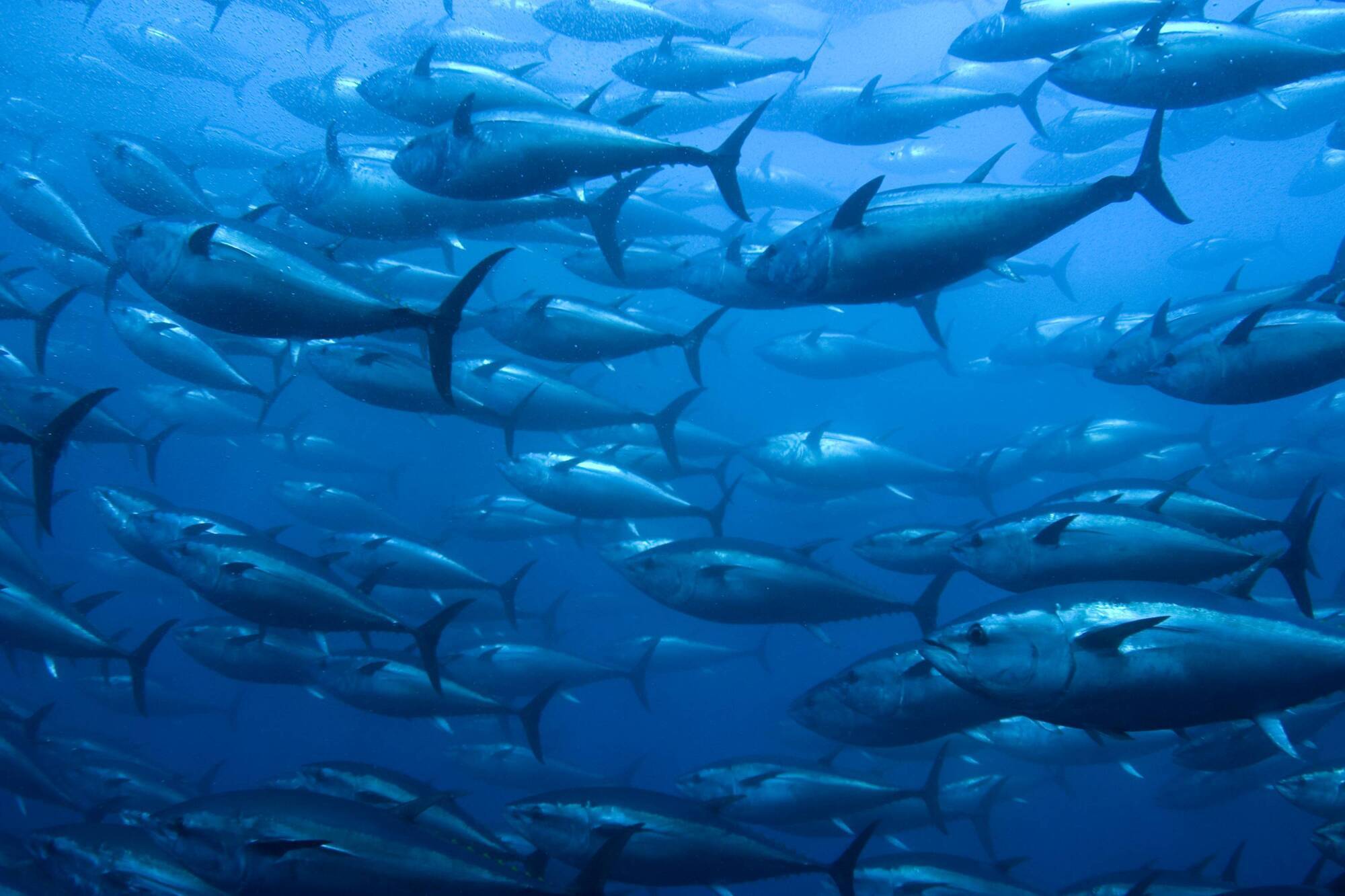
The study monitored the tagged fish for up to 12 months once they left Irish waters. Some fish travelled to the Mid-Atlantic while others travelled to the Mediterranean Sea, possibly to spawn, while several tagged tuna returned to Ireland the following year.
Climate change off the Irish coast is leading the giant Atlantic bluefin tuna to move north in search of cooler habitats, a new scientific study has found.
Electronic tags placed on the species, which normally live around Irish waters during the summer, showed they are spending more time toward higher latitudes as the region experiences ocean warming events.
An unprecedented marine heatwave off Ireland's west coast last June saw sea temperatures reaching up to 5C above normal. Such marine heatwaves can have a disastrous effect on biodiversity in the water for months afterward, scientists warned at the time.
Data collected from satellite tagging of more than 50 tuna fish by the Irish Marine Institute, who worked with Irish anglers, found they are swimming “thousands of kilometres” north because of warming seas.
The findings of the year-long study, which could have significant consequences for Ireland in the future, have been published in the international journal “Diversity and Distributions”.
CLIMATE & SUSTAINABILITY HUB
Grace McNicholas, PhD candidate in the School of Natural Sciences at Trinity College Dublin, who was lead author of the study said: “These fish swim thousands of kilometres on their annual migrations, visiting the coast of Ireland in the summer and autumn.
“Understanding how climate change may alter the conditions they encounter along their journey is really important as it helps us to predict future migration routes and ultimately guide management decisions for this ecologically and economically important species.
“Our results provide early indications that the fish are moving further north than would be expected, and we believe this is due to warming seas.”
The Irish-led study by the school of Natural Sciences at Trinity College said: “Although historically abundant in Irish waters, overexploitation of this species throughout the Atlantic led to global population crashes and their disappearance from Ireland in the 2000s."
However, due to improved management over the last decade, “fish have been re-establishing themselves in historic feeding grounds around Ireland".
The suitability of these areas for the visiting tuna however, “may be threatened as our climate continues to change".
The study monitored the tagged fish for up to 12 months once they left Irish waters. Some fish travelled to the Mid-Atlantic while others travelled to the Mediterranean Sea, possibly to spawn, while several tagged tuna returned to Ireland the following year.
TCD students worked with Stanford University and The University of California and Santa Cruz in the US on this study.
The team said it now plans to extend the research to other important marine species to gain a fuller picture of how the marine ecosystem surrounding the Irish coast is likely to change in the coming years.
CONNECT WITH US TODAY



Be the first to know the latest news and updates