Stephen Cadogan: Ireland's derogation has bucked the trend of EU dairy decline
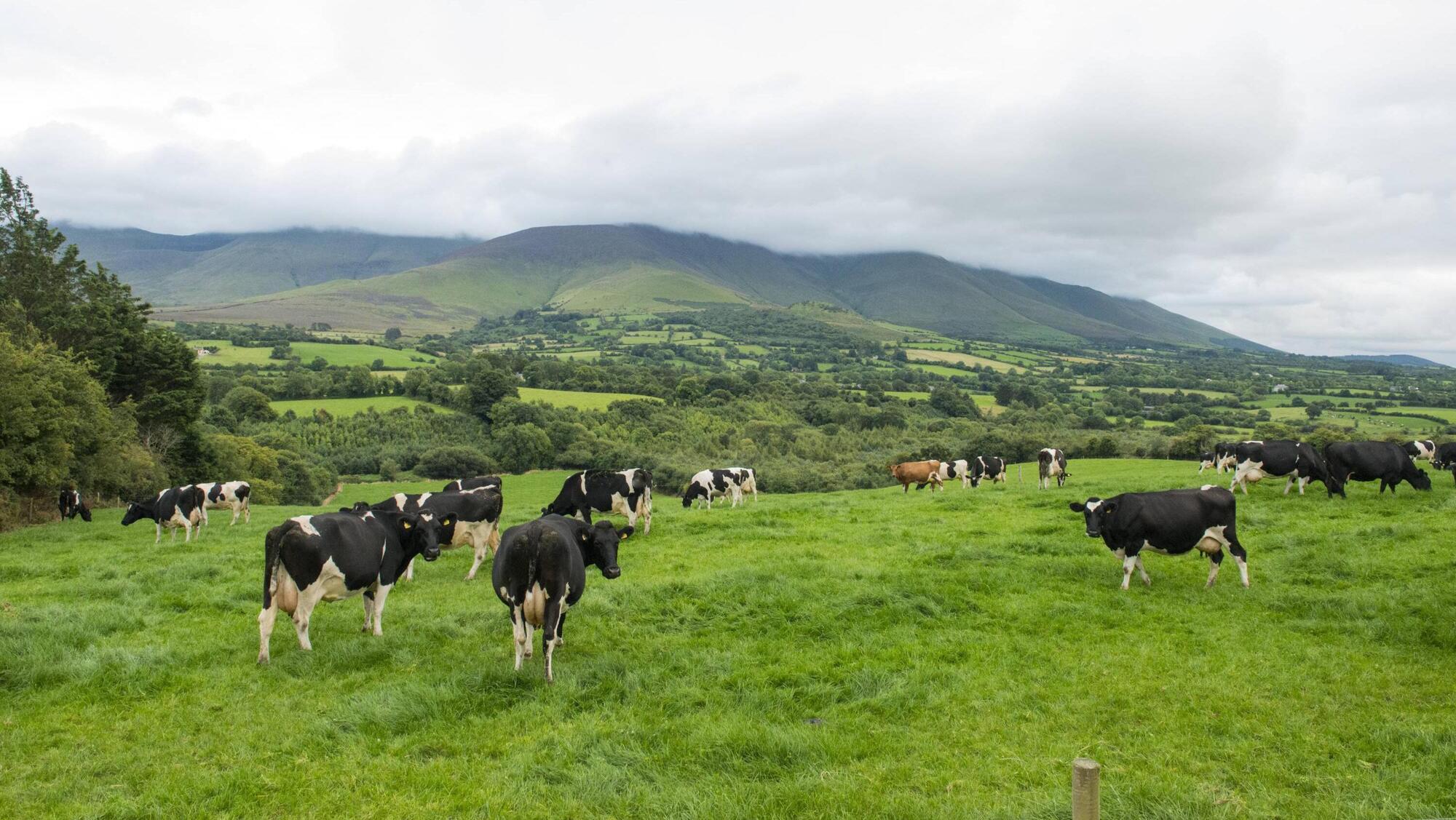
Perhaps the Irish nitrates situation has allowed the EU to show it too is concerned for the future of EU dairying, writes Stephen Cadogan
Stephen Cadogan: Ireland's derogation has bucked the trend of EU dairy decline

Across the EU, despite lower feed costs, smaller dairy farms are being pushed out of production by fluctuating farm-gate milk prices. Picture: iStock

In light of the current European Commission's stated mission to start boosting EU food production, it was perhaps not surprising that Ireland's nitrates derogation was approved for a further three years.

Last February, the Vision for Agriculture and Food for the 2024-2029 Von der Leyen II mandate became the basis of legislative proposals and other commission actions. It laid down the need for “a global level playing field” for EU farmers, and improved competitiveness.


On the other hand, with the commission pushing for a Mercosur trade deal to help its industrial sectors, even though the EU's meat-producing farmers and processors might suffer, it was probably time to throw a bone to Ireland's farmers and food industry in recognition of their ability to feed up to seven times Ireland's population.

Dairy farming

Ireland's dairy industry may have been in the right place at the right time to get a break.

CLIMATE & SUSTAINABILITY HUB

With the EU's 2026 milk production forecast to continue its decline, due to falling cow numbers, environmental regulations, and disease outbreaks, it would have contradicted the Vision for Agriculture and Food to further penalise a relatively efficient milk-producing member state.

Across the EU, despite lower feed costs, smaller dairy farms are being pushed out of production by fluctuating farmgate milk prices, continuing disease outbreaks, and restrictive environmental regulations. 

EU cow numbers are expected to fall 1% further in 2026, with milk deliveries dropping 0.5%. The declining deliveries had kept EU milk prices high for most of 2025, good for farmers but difficult for our dairy product exporters, who are less competitive than other major global exporters.

Hence the Vision for Agriculture and Food watering down or delaying the EU's most controversial environmental provisions which have pressured farmers. With Ireland's water quality still high relative to most member states, our dairy farmers got a break.

Even though large "professional" dairy farms continue to grow in the EU, leading to improved average milk yields, it is not expected to compensate for the overall cow shrinkage. Although Poland and Ireland had the best recent milk production increases, they were insufficient to offset declines in the other major producer member states.

Young farmers not continuing milk production due to the heavy workload and uncertain profits has been a significant factor in this trend. 

Europe's dairy farmers

Also, lack of water has negatively affected fodder production in southern France, Hungary, southern Romania, and Bulgaria.

In the Netherlands, the loss of their nitrates derogation prompted farmers to slaughter some of their dairy cow herds to comply with the environmental regulations, and a similar course of action in Ireland could have further weakened EU milk production.

With Denmark's €130 per cow tax and other climate measures coming in 2030 (including forestation of 15% of farmland), and stricter environmental protection in Germany requiring more space per animal, Ireland's derogation concession may be designed as a single ray of positivity for EU dairy farmers.

They must have thought even nature was turning against them, in the shape of the Bluetongue virus (which has now reached the island of Ireland), epizootic hemorrhagic disease in western France, and new lumpy skin disease in Italy and France. 

All three diseases often cause a temporary drop in milk yield, fertility problems, and elevated mortality on dairy farms.

Even foot-and-mouth disease re-emerged this year, in Germany, Hungary and Slovakia. Their loss of FMD-free recognition damaged dairy trading in Hungary and Slovakia.

It all adds up to continuing EU dairy market consolidation and farm closures in 2026, to which the Danish Arla Foods and the German dairy processor DMK responded with a planned merger, and the Dutch and Belgian processors, FrieslandCampina and Milcobel, also announced a merger plan.

With the EU slow to help, some member states stepped in to halt shrinkage of their dairy sectors. In 2024, the Croatian Government launched a €592.5 million plan to 2030 to boost production of cow milk 20% and sheep/goat milk 30%.

Belatedly, perhaps the Irish nitrates situation has allowed the EU to show it too is concerned for the future of EU dairying.

CLIMATE & SUSTAINABILITY HUB

More in this section

Farming

Newsletter

Keep up-to-date with all the latest developments in Farming with our weekly newsletter.

Cookie Policy Privacy Policy Brand Safety FAQ Help Contact Us Terms and Conditions

© Examiner Echo Group Limited