Gardaí could record dying individuals under new body camera legislation
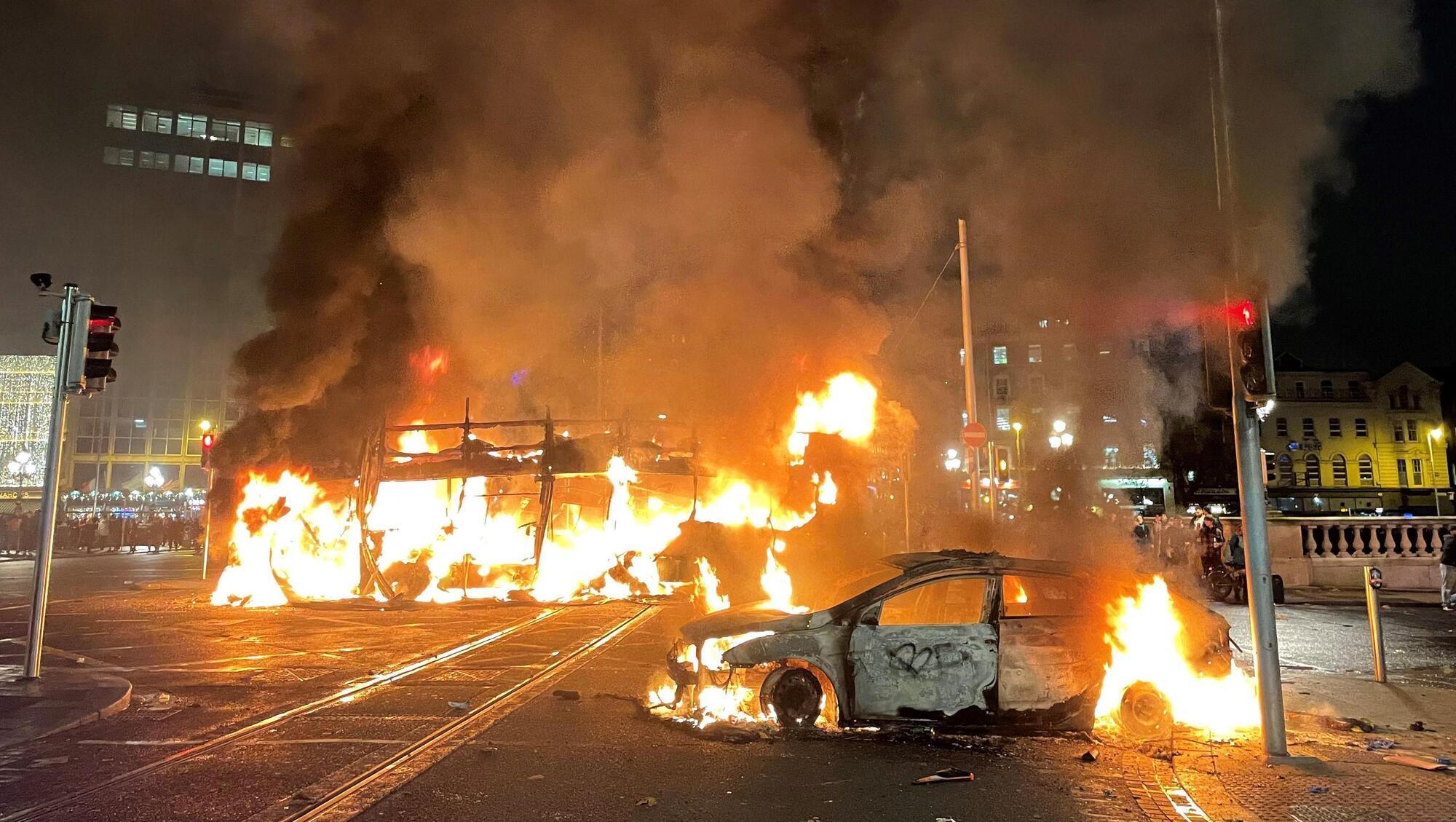
Assaults on gardaí surged last year with 409 incidents — a jump of almost 20% on the figures for 2022, inlcuding 12 injuries to garda personnel during the Dublin riots,
Gardaí will be able to use body-worn cameras to record a dying individual if they believe that he or she had been a victim of or has witnessed an offence.
New legislation published last week by the Oireachtas goes into specific details about the cameras, which are hoped to be in operation by the beginning of summer.
Justice Minister Helen McEntee signed off on the Garda Síochána (Recording Devices) Act 2023 (Code of Practice) Order 2024 which states that the use of body-worn cameras (BWCs) will be “incident specific”, with gardaí given a decision making model as to when they can be used.
The act notes that the cameras will only be used for overt recording, where it is practicable and that they must be visible on the clothing, uniform or headgear on which it is located — including on animals that may be used during incidents.
Furthermore, BWCs must have “a functioning and visible indicator showing when they are being operated".
The document stresses the cameras “will not be used for general surveillance” and “should never be used for the sole purpose of identifying a person".
They will “never be used” to restrict the right of peaceful protest, according to the publication.
Assaults on gardaí surged last year with 409 incidents — a jump of almost 20% on the figures for 2022.
These included 12 injuries to garda personnel during the Dublin riots, including one who had his toe amputated following an attack.
The act specifically lays out situations where body-worn cameras may be operated if gardaí believe they will be necessary.
These include:
- If an offence has been, is being, or will be committed
- If a garda believes they may be required to exercise force
- If a garda is exercising a court order or a warrant
- When recording damage to a property as a result of an offence.
However, the act also legislates and sets out situation where gardaí may record individuals with the body-worn cameras
Among them are if an officer:
- Believes on reasonable grounds that the immediate making of a record by the individual is necessary and the individual is unable to write
- Believes that the individual is dying and that he or she had been a victim of, or a witness to, an offence,
- Believes that domestic violence is occurring or may have occurred,
- Believes on reasonable grounds that a breach of the peace or a public order offence is occurring or may have occurred,
Gardaí say that they will ensure that data subjects can exercise their rights as outlined under data protection legislation.
They say BWCs will "will enhance public confidence and trust in the Garda organisation, and be a technological advancement in the infrastructure that is provided to deliver an enhanced police service for Ireland
Body-worn cameras will be issued to trained garda personnel as part of a proof of concept exercise, in five stations within the Dublin Metropolitan Region (DMR) North Central, DMR South Central, Limerick and Waterford Garda Divisions later this year.

CONNECT WITH US TODAY



Be the first to know the latest news and updates