Policing Authority will probe Garda policy on 'use of force'
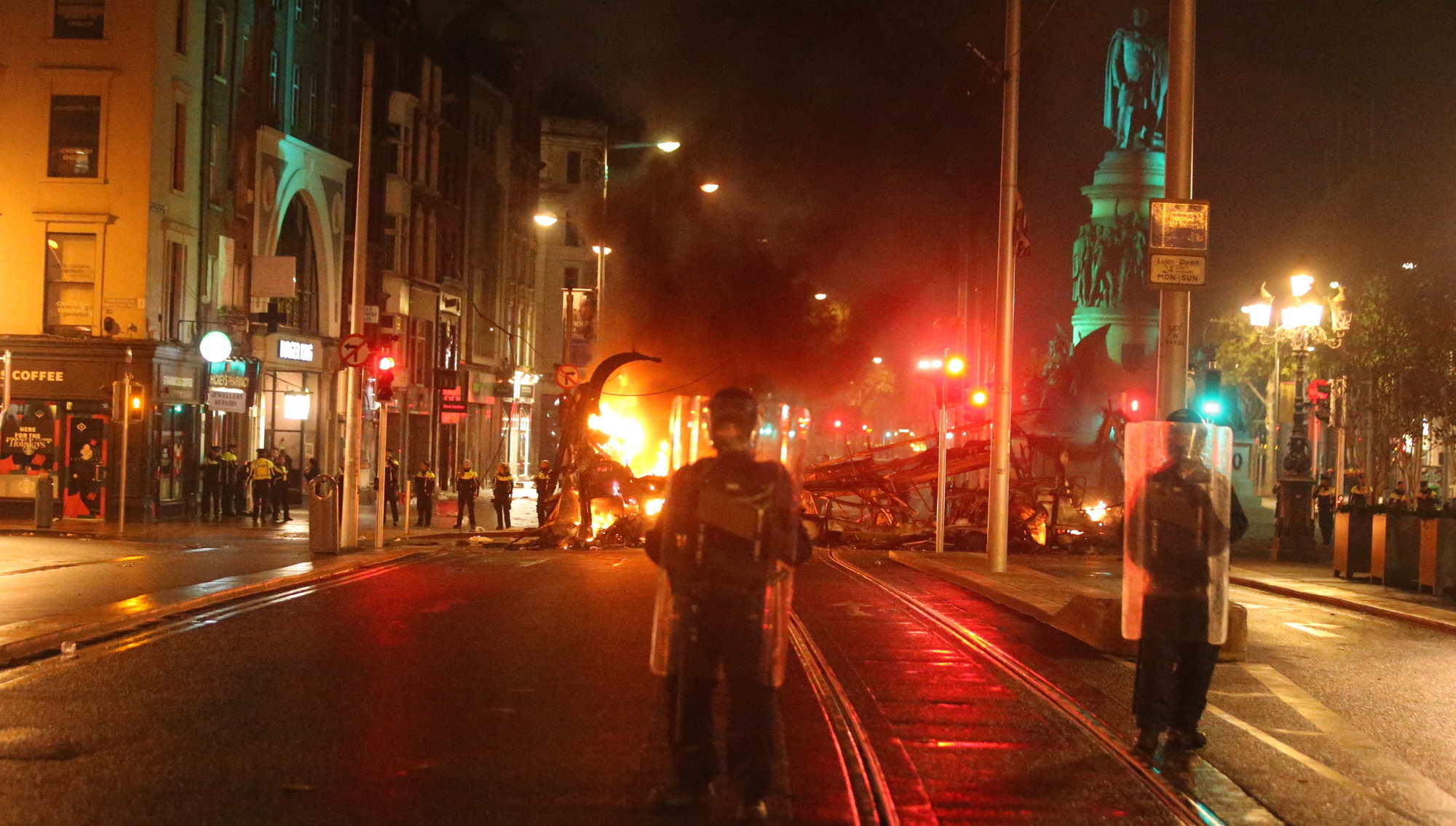
A probe by the Policing Authority will examine key issues raised after the Dublin riots, above, including garda equipment and resources, communications, intelligence, and training. File picture: Stephen Collins/Collins Dublin
The Policing Authority has agreed to examine the Garda policy on use of force including any reluctance among members about deploying force over fears of a possible Gsoc investigation.
The clarification is contained in a letter to Helen McEntee, the justice minister, and follows confusion, and apparent disagreement, between the minister and authority chair Bob Collins last December as to whether or not they were requested by the minister to examine use of force and if it came within the remit of the authority.
Ms McEntee wrote to the authority last November in the wake of the Dublin riots.
Both the Garda Representative Association and the Association of Garda Sergeants and Inspectors have told the Garda Commissioner that there was a fear among gardaí to use force, including their batons, because of alleged excessive oversight.
The authority’s letter promises a very detailed investigation into the policing of protests, which, this year, appears to involve a more robust stance by garda management and the provision of greater numbers of gardaí, as seen in Roscrea in January and, in particular, during the far-right rally in Dublin earlier this month.
The authority’s probe will examine key issues raised after the Dublin riots, including garda equipment and resources, communications, intelligence, and training.
It will also examine if the process between Garda HQ and social media platforms to take down content is “adequate”.
The investigation lists a comprehensive range of groups and organisations it will consult, including Gsoc, garda staff associations, public order gardaí, and Garda HQ.

In the letter, Mr Collins said they had a number of meetings in relation to the minister’s request.
He said many of the protests have a “far-right ideological flavour” and were mainly directly against immigration centres or policy.
He said the constitutional rights to freedom of expression and peaceful assembly “do not extend to threats, intimidation, or violence”.
He said the Dublin riots brought “disorder, disruption, and destruction” in the city and said the authority held a number of meetings with the commissioner.
He said specific matters that will be the subject of “immediate engagement” with the commissioner include Garda policy on public order policing and the “policy on the use of force”.
On the former, he said the authority has “strongly urged” that garda policies on this area, currently being examined internally, be “urgently and speedily reviewed” so there is “universal clarity and understanding” on all aspects of this area of policing.
“In regard to the latter, the authority will consider the extent to which the law, the Code of Ethics and the use of force policy, when finalised, are clearly presented to and fully understood by all Garda personnel,” he said.
He added: “The authority will also consider whether, and to what extent, there is any reluctance about the use of force due to an apprehension of the possibility of a subsequent complaint to Gsoc and what steps may be possible to respond to any such apprehension.”