'Heroic Irish crewmen saved my grandfather's life'
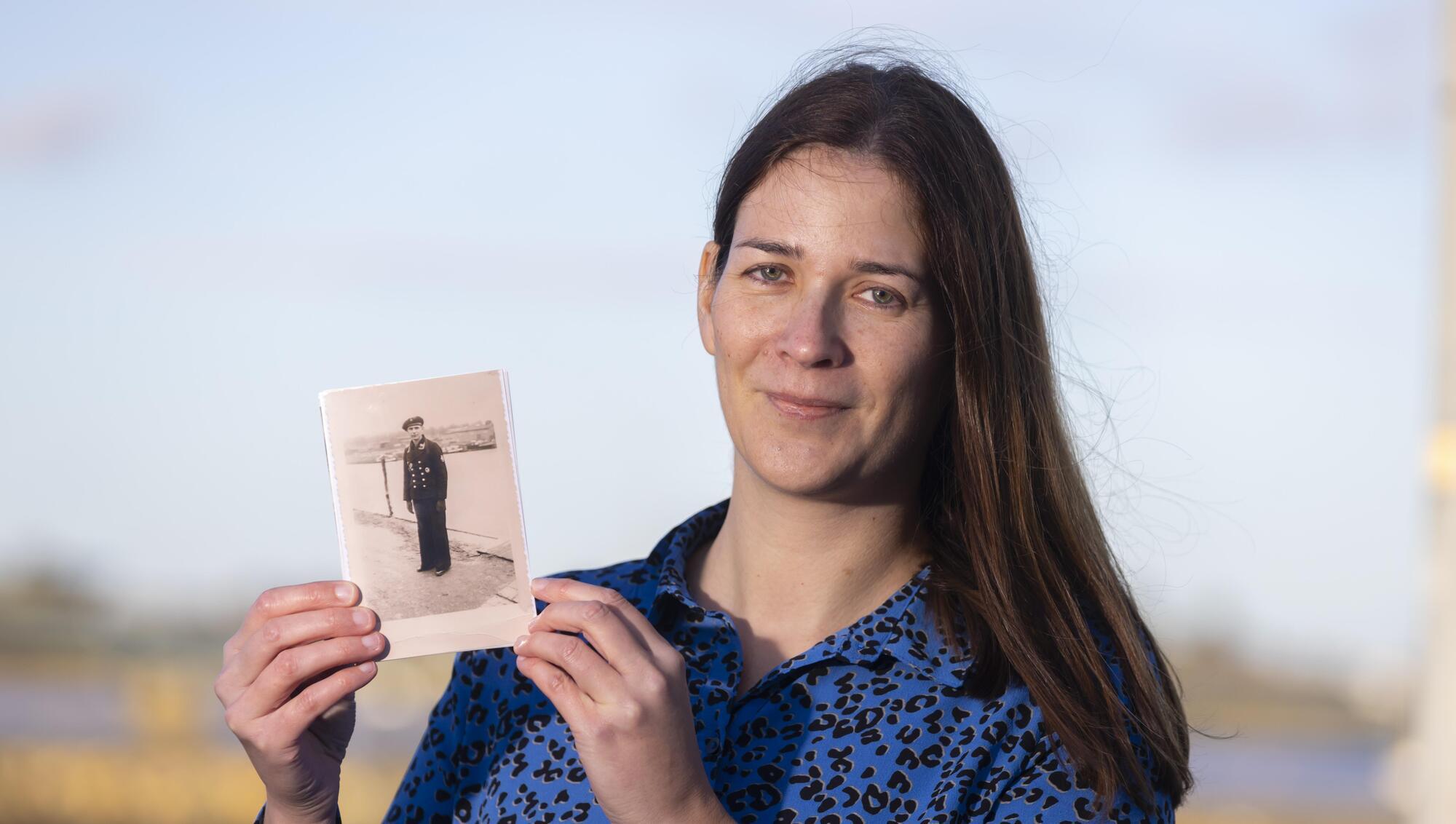
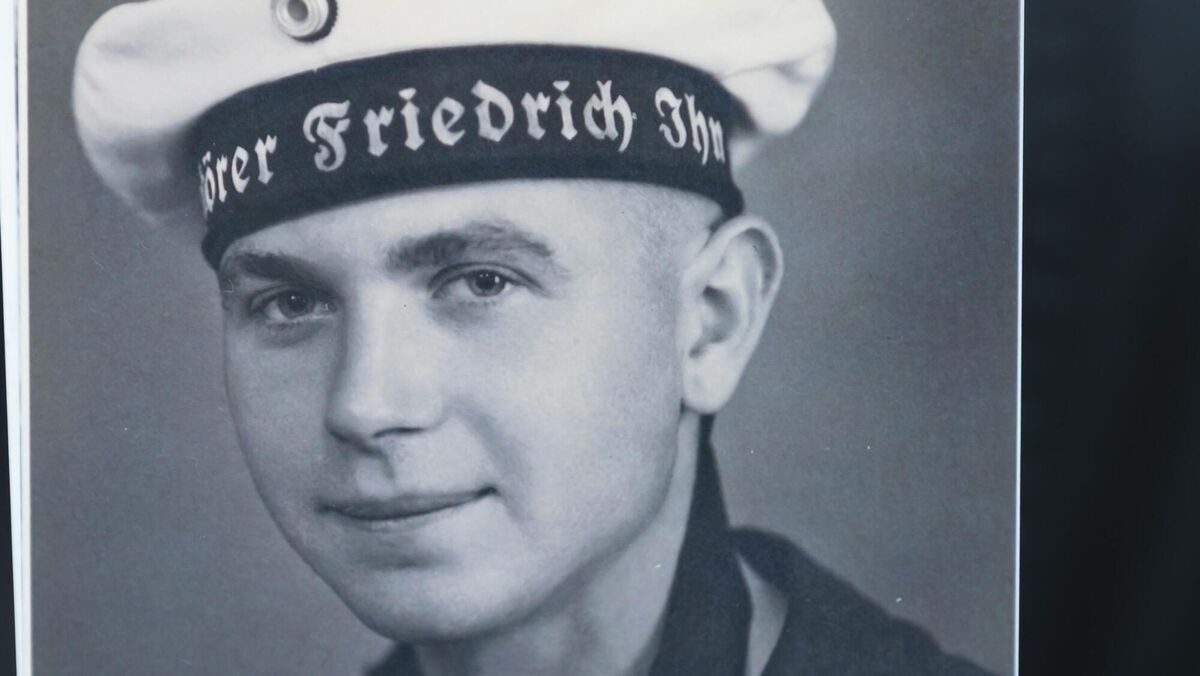
Wiebke Hochhaus with a photograph of her grandfather Richard Langer who was rescued in the Bay of Biscay by the crew of the MV Kerlogue on December 29, 1943. Picture: Patrick Browne
The granddaughter of one of the German sailors who was saved during Ireland’s most famous maritime rescue has said “I would not be here today only for the crewmen of the MV Kerlogue”.
Friday, December 29, marks the 80th anniversary of the incredible rescue from the Bay of Biscay when 10 Wexford-based seafarers pulled 168 German sailors from the sea.
The terrifying ordeal happened in 1943, when the crew were returning from Lisbon carrying a cargo of oranges.
The coaster’s captain Tom Donohue saw flares in the sky and led his men to a scene of carnage which saw 700 German sailors left to drown after being bombed by the RAF.
Despite Ireland’s neutrality at the time, for 10 hours, the crew of the Kerlogue saved as many as they could from drowning; however, as their boat was only 142ft, hundreds had to be left behind to die in the ocean.
HISTORY HUB
If you are interested in this article then no doubt you will enjoy exploring the various history collections and content in our history hub. Check it out HERE and happy reading
Wiebke Hochhaus 43, from Bochum in Germany, travelled to Ireland to pay tribute to the bravery of the Irish sailors at a ceremony in Wexford.
Her grandfather Richard Langer from Kiel was one of the survivors of the dramatic event.
The mother of two told the she was “honoured” to meet the families of the rescuers.
“It was very emotional,” she said. “Had my grandfather not been rescued I would not be here. He could have been one of the hundreds that died.
“At a time when the German people brought the most atrocious horrors over the world, those rescued Germans were on the receiving end of a tremendous and selfless act of human kindness.
“My grandfather, Richard Langer, was lucky enough to be one of those rescued. He was 28 at the time, married but not yet a father.
“So, his two children, three grandchildren, and six great-grandchildren, all of us owe our existence to Captain Donohue and his crew.
“In spite of grave danger for themselves they worked hard for hours and hours to save as many lives as possible. This enormous deed will not be forgotten in our family.”
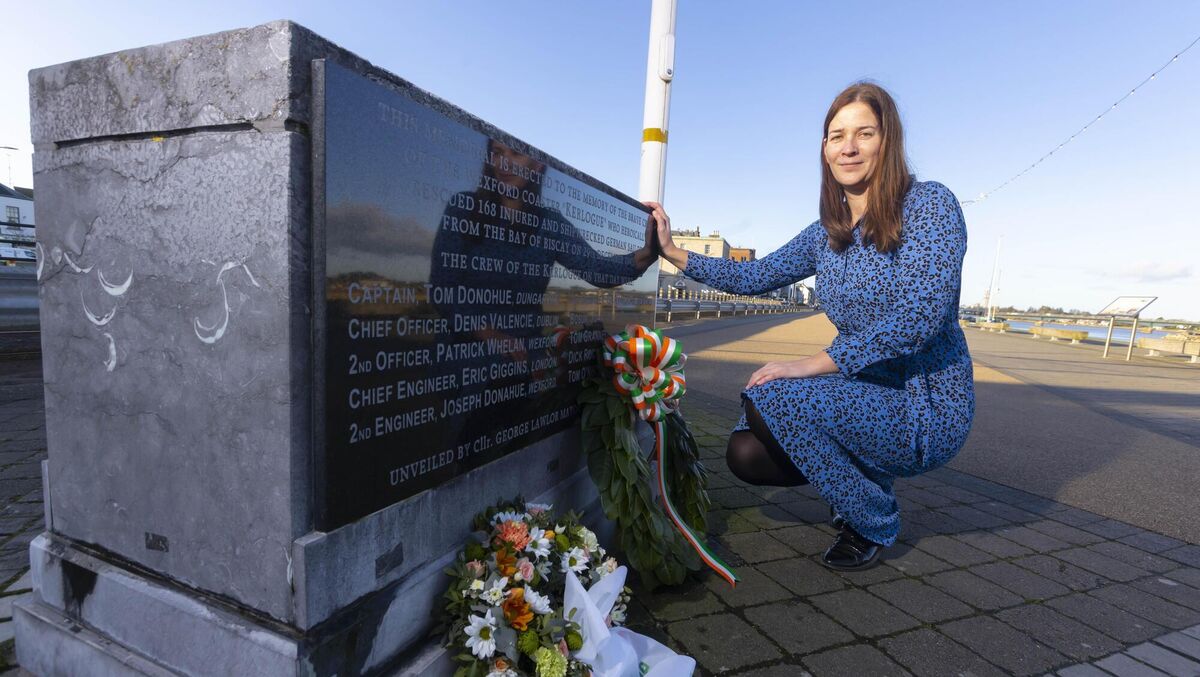
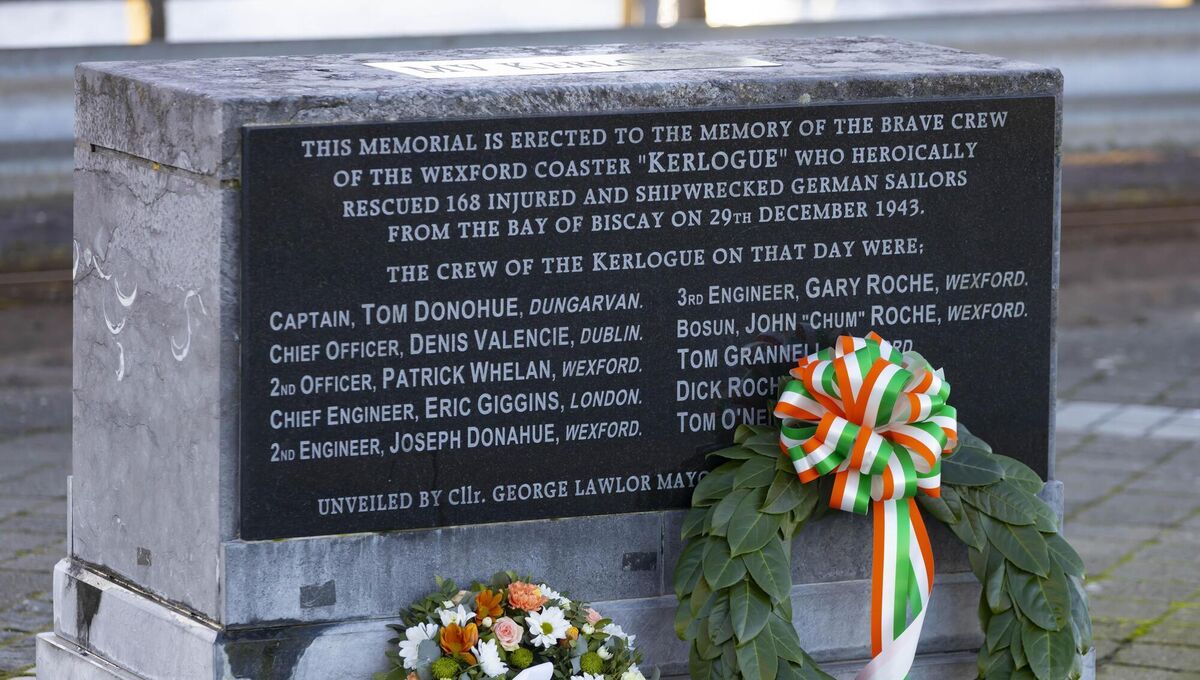
Marking the anniversary, Ms Hochhaus was joined by around 30 people at the memorial stone in the harbour which is dedicated to the 10 crewmen.
The crew on that day included Captain Tom Donohue, Denis Valencie, Patrick Whelan, Eric Giggins, Joseph Donahue, Gary Roche, John “Chum” Roche, Tom Grannell, Dick Roche, and Tom O’Neill.
Former government minister Dick Roche is the son of Gary Roche who was the third engineer during the rescue.
He also attended the service with his family and said his father “never got over” the incident.
“He had nightmares all his life,” he told the . “He never got over having to leave so many men behind, but they had no choice.
“They were on a tiny coaster, they didn’t have the room, so they took those they could, but had to leave others behind. He was never right after it.
“He was in his twenties when it happened. He told us about it, but he didn’t talk about it a lot, it was too painful.
“I was always interested, and we dragged it out of him; in later life, he did talk about it.
“I live in Bray and on one occasion I brought him to the German cemetery in Glencree and there’s two of them [Germans] buried there and that was an unhappy time for him.
“It was horrific for all the men, nowadays, we would have post-traumatic therapy, they were young men and they suffered for the rest of their lives.
“It was something they never, ever forgot. My father was in his early 70s when he died. He had this recurring dream about the men in the water. He would shout ‘comrade, comrade!’. All the men suffered”.
Tom Grannell was the last crewman on the Kerlogue to die and his son Denis said his father was confronted once in an aggressive manner over the incident one day.
“All the weapons were not thrown over the ship when they were brought on board,” said Mr Grannell. “The Germans could have taken over the ship, but they did not. They just allowed themselves to be rescued and maybe that changed the course of their lives.
“One man came up to him and wanted to fight over it, but another man put a stop to it, that was the only time one person had an issue, everyone else was very proud and thankful”.
Mayor of Wexford John Hegarty said: “There is a lot of warmth and good feeling that still exists around here for the men who were involved.
“There are grandchildren here and it’s wonderful to see. It was a disastrous situation and the pressure those men were under and then put their lives at risk, they could have kept going and ignored the bombing. Ireland was neutral at the time.
“The mindset was, the time is always right to do the right thing and I think that is a great message to the world today, especially with all that is going on in the world. They put others first.”

CONNECT WITH US TODAY



Be the first to know the latest news and updates