Chernobyl Archive: Adi Roche on the journey from muddy field to UCC home 
Chernobyl Archive: Adi Roche on the journey from muddy field to UCC home 

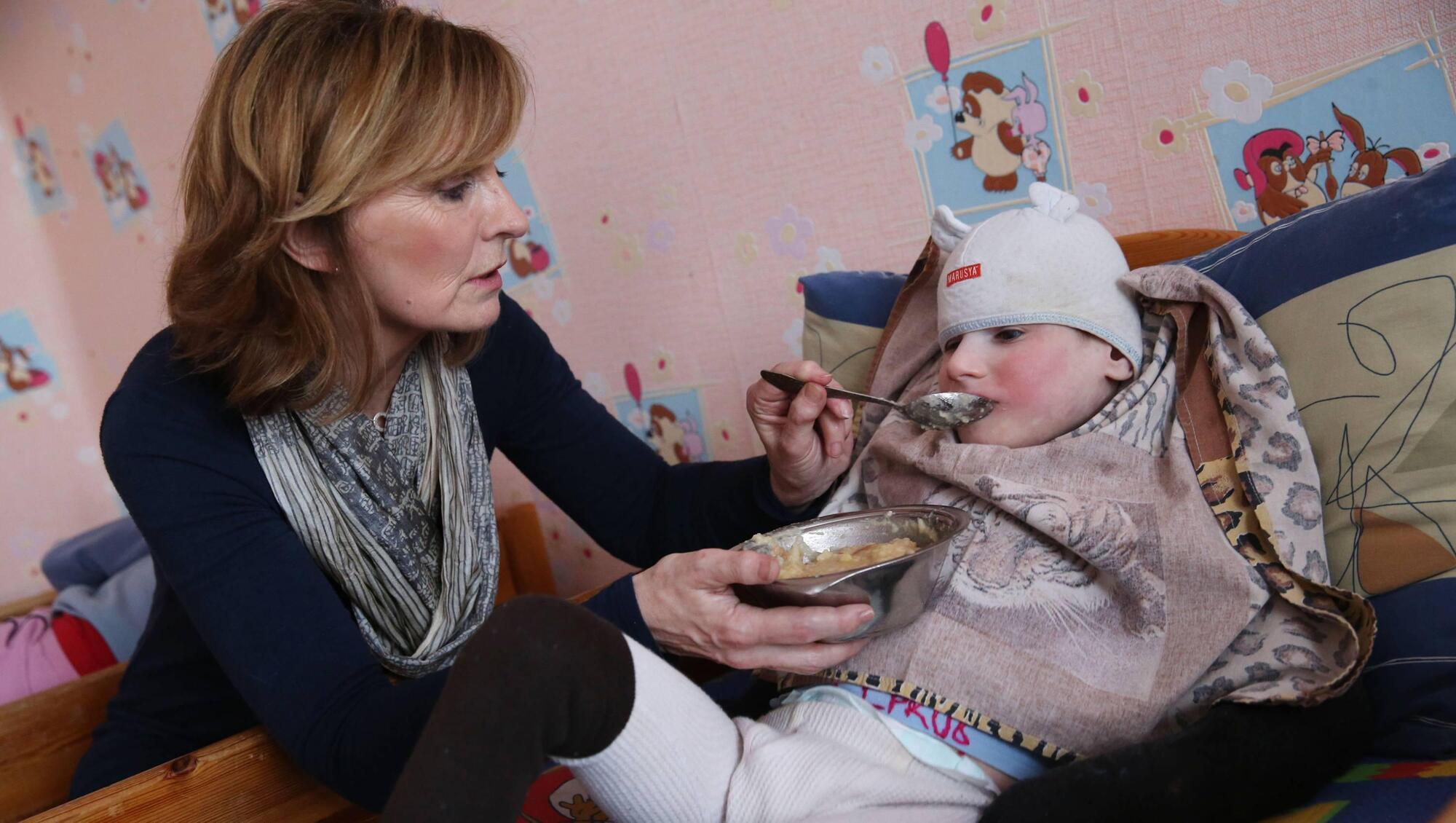
Adi Roche seen on April 3, 2016, in Vesnova village near Glusk, Belarus.

Climbing into a container in a muddy field in Kilkenny to retrieve a major UN exhibition on Chernobyl was one of the final archival retrievals Chernobyl Children International founder Adi Roche made last week.

She has now donated a ‘people’s archive’, which traces the grassroots peace movement that began in Cork but also helped to protect lives in Ukraine, Belarus, and Russia following the 1986 Chernobyl nuclear disaster, to University College Cork.


Adi holds a Geiger counter in the exclusion zone, close to the Chernobyl nuclear power plant in 2003. Picture:  Julien Behal

Ms Roche founded CCI after the 1986 Chernobyl nuclear disaster when a reactor exploded in the then Soviet Union.

Now 50 years of film footage, thousands of photos, campaign posters with slogans like ‘hell no we won’t glow’, and peace coins made from melted nuclear weapon casings have been collected from attics, spare rooms, and storage units for the archive.

A decontaminated firefighter’s hat, from a man who responded to the Chernobyl nuclear reactor and helped contain the fire, is also in the archive.

“This a record of 50 years of a grassroots mass movement, of ordinary people who rose up from the 70s with multiple voices for justice, for peace, for nuclear disarmament, and of course for the environment,” Ms Roche said.

In June 2018, a group of 145 children from orphanages and homes in the Chernobyl-affected regions of Belarus, flew into Shannon Airport ans were greeted by Adi Roche. Picture: Liam Burke 

“There were professors, housewives, the employed, unemployed …who all wanted to make the world a better and a safer place for future generations.” 

A photographic library will include some 40,000 unique images and a film library will include documentaries, including the Oscar-winning Chernobyl Heart.

“There's a piece of the Berlin Wall.

“There's a peace coin made from the outside casing of a nuclear weapon from the Soviet Union and from the Americans.

“They melted the outer casing of titanium into what was called a peace of coin.

“There are unique things like that.

“And then there are the banners, the posters, the T-shirts.

“There are unique radiation maps, the likes of which the world had never seen and will hopefully never see again.” 

To rescue one vital piece of the archive, Mr Roche had to climb a ladder to access a storage container in a muddy field in Kilkenny last week where a UN-commissioned exhibition on Chernobyl had been stored for some 20 years.

Adi Roche: 'In the future people can look back at what people were doing then in relation to people power.'

It includes photographs from acclaimed Magnum photographer, Paul Fusco, which brought worldwide attention to the cross-generational impact of the 1986 Chernobyl disaster.

“The United Nations exhibition was commissioned by Kofi Annan when he was the secretary general," Ms Roche said.

“The Irish government sponsored it, and we had the task of bringing it together.

“It was the biggest exhibition in the world on Chernobyl and we exhibited it in the UN.

“And it had been in storage in this container in a farm, in a field, in North Kilkenny for the last 20-plus years until last week.

“That will now eventually come back to life.” 

UCC custodians

Ms Roche thanked UCC for becoming custodians of this “unique archive.” 

“In the future people can look back at what people were doing then in relation to people power.

“Out of the paralysis of the Cold War era, when people were living really in fear and terror of nuclear war between the Soviet Union and the rest of the world, people rose up.

Adi Roche holding a young baby on a visit to Chernobyl.

“And the history of that would be lost if UCC weren't willing to preserve it.” 

On a recent trip to UCC to discuss the archives, Ms Roche saw professors and lecturers who she and her husband had driven in their hi-ace van to protests against contemporary government plans to build four nuclear reactors in Wexford.

“It's lovely to be able to look back and say we did play a role, we did make a difference. And this archive shows people how we did it.

“It shows how and why thousands of people did it before the advent of the mobile phone, the computer, before all modern technology and the ways of communicating.

“Because back then many people didn't even have landlines.

“It was this people power movement. We were doing this in the name of generations that had yet to be born.

“When we're looking at our world today, which is so full of agony, of despair, of suffering, particularly I'm thinking of Gaza.

Former Lord Mayor of Cork, Cllr Chris O Leary, and Adi Roche lay a wreath at the Monument in memory of the people who self-sacrificed their lives in order to bring the radioactive fire under control at the Chernobyl nuclear plant.

“With the injustice of all of that, it would be easy to say, ’our world is spiralling almost out of control.’ 

“But the power of the human spirit and the human heart of kindness refuses to be numbed into inaction.

“We're not going to feel helpless.

"We're not going to feel desperate, despite the chaos and the madness of what comes cascading into our lives every day, through radio, television, newspapers.

"Because the power of the spirit of hope is really, really strong.

“We have so much to contribute, there is power in our action.

“And in a way, the exhibition is the manifestation of that.” 

Ms Roche said that the archive also shows that you don’t need money to affect change.

“Our greatest richness never lay in the bank account, because that was always empty and still is. The richness is in the people.

“None of us are experts and none of us are financially in positions to fund a movement.

“But what we have is the richness of our commitment, body and soul, to stand up for the rights of others, the human rights of others, whether it's in Gaza, whether it's in Ukraine, or different parts of Africa. Or whether it's standing up for the rights of the planet itself.

“This movement was born and reared in Cork, so I think it's really apt and appropriate that the archive remains in Cork for future generations to dive into it.” 

Ms Roche will speak at a special event in UCC on Tuesday afternoon about the collection.

More in this section

Lunchtime News

Newsletter

Keep up with stories of the day with our lunchtime news wrap and important breaking news alerts.

Cookie Policy Privacy Policy Brand Safety FAQ Help Contact Us Terms and Conditions

© Examiner Echo Group Limited