Full moon will appear to have ‘bite’ taken out of it in rare partial eclipse on Saturday
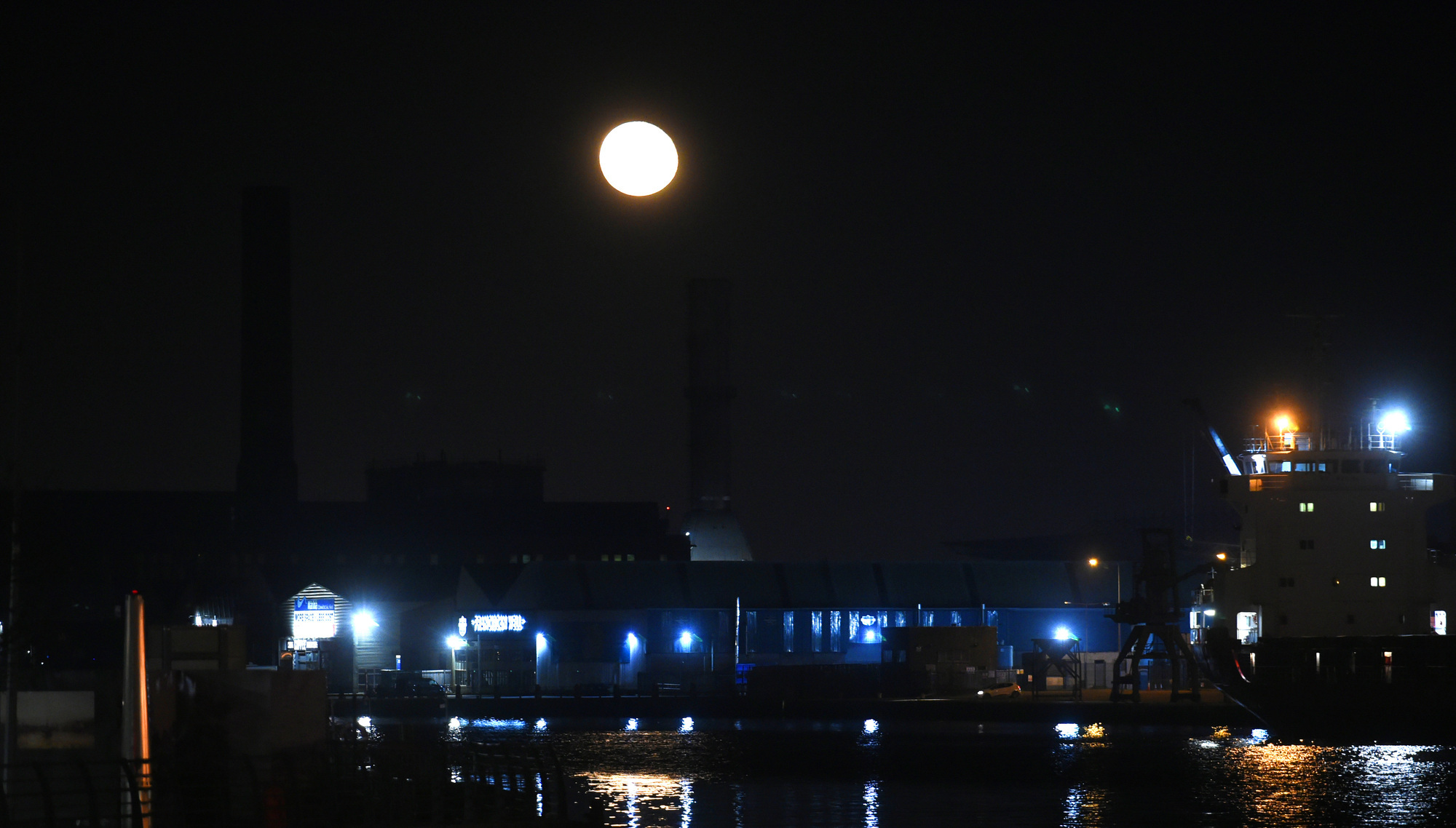
A full moon over the River Lee, Cork City. Picture: Larry Cummins
A rare partial lunar eclipse will be on display for around 80 minutes on Saturday, when the full moon will appear to have a “bite” taken out of its lower edge.
Weather permitting, this unusual spectacle will be visible all over the country from 8.35pm to 9.53pm on Saturday night, when the moon will be high in the east.
The optimal time to catch a glimpse will be during the middle of the eclipse at 9.15pm when the biggest “bite” will appear.
Lunar eclipses occur when the full moon passes through the earth’s shadow in space.
A lunar eclipse can be total or partial, and Saturday’s event will be a partial because only the edge of the moon will dip into the earth’s shadow.
The rest of the moon will be nearly as bright as a regular full moon.
During Saturday’s partial eclipse, 12% of the moon’s disc will be covered by earth’s shadow.
According to Astronomy Ireland CEO David Moore, lunar eclipses are only visible from Ireland every couple of years.
“But when you factor in the Irish weather, people should only expect to see one every decade,” he said.
However, despite the forecast, Mr Moore is encouraging everyone to persevere on Saturday.
He said he is hopeful someone, somewhere in the country, will have a clear sky to glimpse the eclipse.
“Someone could just get lucky, so, ignore the weather, and just keep checking every five minutes at least,” he said.
If the weather is perfect, Mr Moore says that 9.15pm is the best time for viewing.
“If you’ve got a good sky, that is definitely the one time to set your alarm for, that’s when the biggest 'bite' will be taken out of the moon,” he said.
According to Blackrock Castle Observatory's Education and Outreach Officer, Frances McCarthy, the moon may also look a little off-colour during the eclipse.
“Some sunlight will still manage to reach the moon, even though it is in the earth’s shadow because the earth has an atmosphere — so casts a 'fuzzy' shadow.
“This sunlight may have a reddish colour after passing through the atmosphere, so the moon may look grey or slightly tinged red,” she said.
Astronomy Ireland will be documenting this historic event in a special issue of its magazine and is calling on people to send in their best photographs.
Check out the Irish Examiner's WEATHER CENTRE for regularly updated short and long range forecasts wherever you are.