Wildlife trade could be altering natural evolution patterns
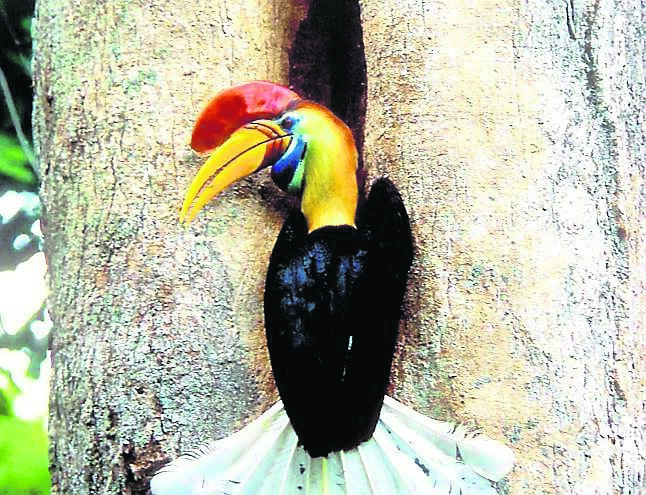
Hornbills are among the birds considered critically endangered due to trade.
Some of the most distinct and ancient species in the world are being caught up in the increasingly lucrative wildlife trade, potentially altering natural evolution patterns and ecology.
Researchers at the University of Sheffield found that traded birds and mammals are largely to be found in the tropics, which are some of the most richly biodiverse areas on the planet.
However, their capture and trade means that key evolutionary processes are being severed, while knock-on effects on ecosystems are also being felt.
Senior author Professor David Edwards said: “Thousands of species are traded globally and many of these are done so unsustainably. We urgently need to focus conservation resources towards trade hotspots, such as those in the tropics, to prevent extinctions.
According to Interpol and the UN Environment Programme (UNEP), wildlife crime is estimated to be worth up to $20bn a year.
A joint report from the organisations warned in 2016 that "this new area of criminality has diversified and skyrocketed to become the world’s fourth largest crime sector in a few decades, growing at two to three times the pace of the global economy".
One of the largest conservation charities in the world, the International Fund for Animal Welfare (IFAW) has warned that "wildlife crime is the fifth largest transnational criminal activity, putting at risk the survival of thousands of species".
Larger species tend to be disproportionately represented in trade, such as the evolutionary distinct African Forest Elephant, the University of Sheffield said.
It plays a vital role in ecosystems, creating openings in the Congo forests and dispersing the seeds of a wide-range of tree species, it said. Yet poaching for their ivory has led to widespread declines in recent decades, with long-term ramifications for forest health and carbon stores, it warned.
"Similarly, large birds such as hornbills are critical to dispersing large seeds over long distances, but trade of species such as Helmeted Hornbill—the unique casques (or ‘red ivory’) of which are highly-sought after—has contributed to this once abundant species being considered Critically Endangered," it added.

CONNECT WITH US TODAY



Be the first to know the latest news and updates