Bus Éireann to spend €30m installing electric chargers for buses in towns and cities
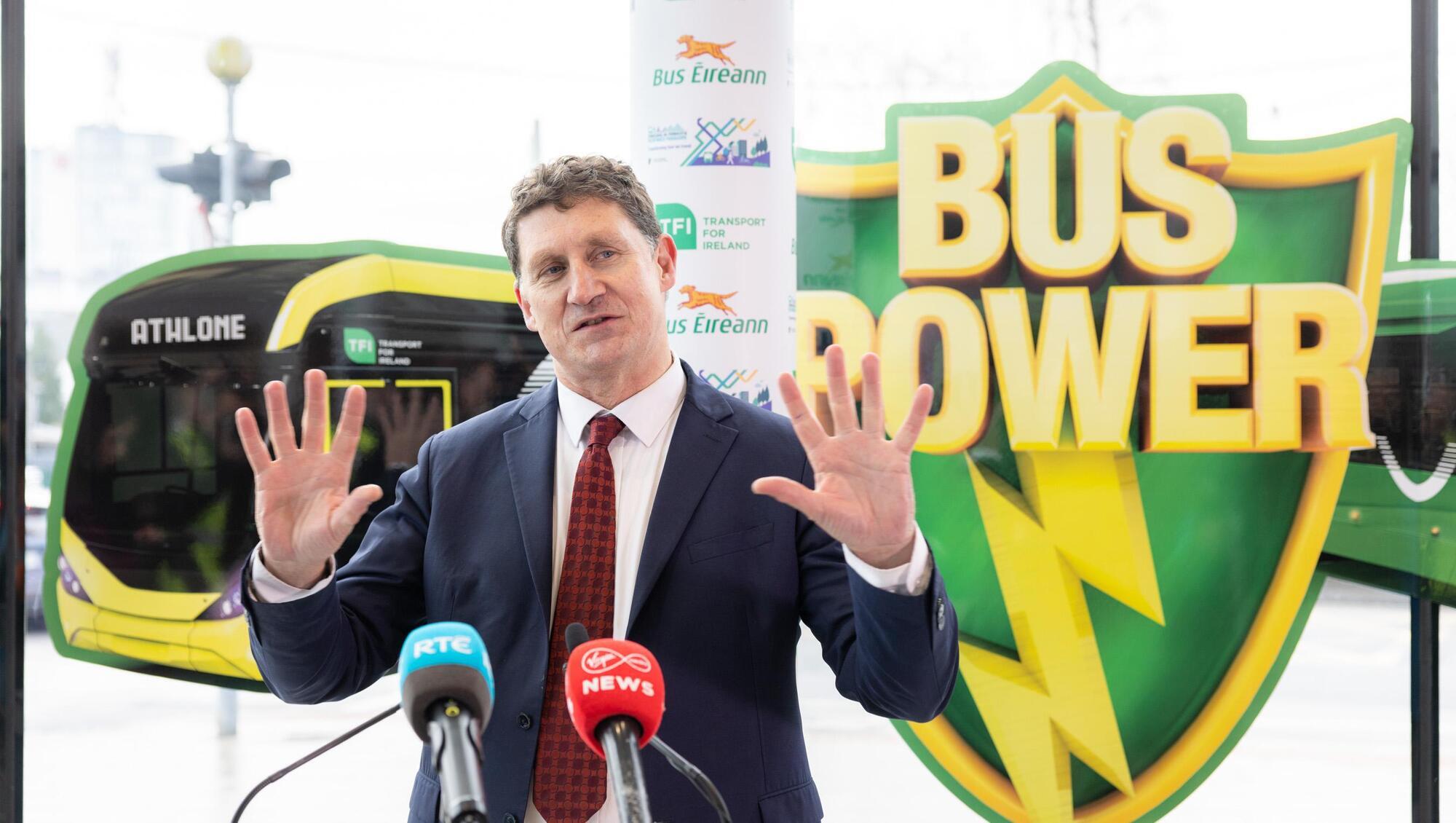
Environment Minister Eamon Ryan at the launch of Ireland’s first all-electric town bus service at Athlone bus station in January. The fleet of 11 EVs is operated by Bus Éireann, which is now planning to spend €30m installing electric chargers for buses in towns and cities across the country. Picture: Naoise Culhane
Bus Éireann is to spend €30m installing electric chargers for buses in regional towns and cities.
The transport body is seeking to assemble a panel of companies for the supply, installation, and maintenance of specialised electric vehicle chargers for buses by the year 2035.
At present, the state-owned company operates 11 EVs in Athlone, Co Westmeath, forming the entirety of the town’s service, and three hydrogen-fuelled vehicles on Dublin’s commuter routes.
Separately, the company’s Galway services consist entirely of hybrid buses, with 20 further hybrid vehicles operating in Limerick ahead of a €3m plan to fully electrify that city’s depot in advance of the delivery of 20 double-decker electric buses for the city’s routes.
Athlone’s service is run at present from nine double electric chargers at the town’s depot, with a further 12 such chargers in place in Limerick.
CLIMATE & SUSTAINABILITY HUB
It is unclear how many chargers the €30m tender budget will provide.
“We are currently at the planning stage for the electrification of our other depots and the total number of chargers in each site has yet to be determined,” a Bus Éireann spokesperson said.
“Bus Éireann is committed to reducing its energy consumption and emissions by 50% by 2030 in line with the 2021 climate action plan,” the spokesperson said, adding that as part of the move, the company is transitioning its entire urban public service obligation fleet to zero emissions.
The €30m EV charger plan will see the commissioning of out-of-the-box turnkey chargers and charging points, along with attendant training for Bus Éireann staff.
The scope will further allow for the provision of “suitable energy storage systems” or other sustainable backup systems in the event of a loss of grid power supply, according to the tender documents.
Meanwhile, the Coach Tourism and Transport Council of Ireland (CTTC) has called on the Government to extend Vat relief for the purchase of electric and alternatively fuelled buses as a means of accelerating transport decarbonisation.
The body is calling for Revenue’s Vat71 regulation to be amended to include electric and alternatively fuelled vehicles in order to “alleviate the financial burden of purchasing such vehicles”.
Such Vat relief is currently applicable for EVs in the North, but not here.
“As an industry, we are committed to adopting sustainable practices and to improving the environmental credentials of our fleets; however, the cost burden associated with purchasing these vehicles, coupled with the existing price gap between alternatively fuelled buses and conventional diesel buses, has indefinitely delayed the transition for many operators,” said CTTC chairman William Martin.