Public urged to otter a word on nature’s Scarlet Pimpernel
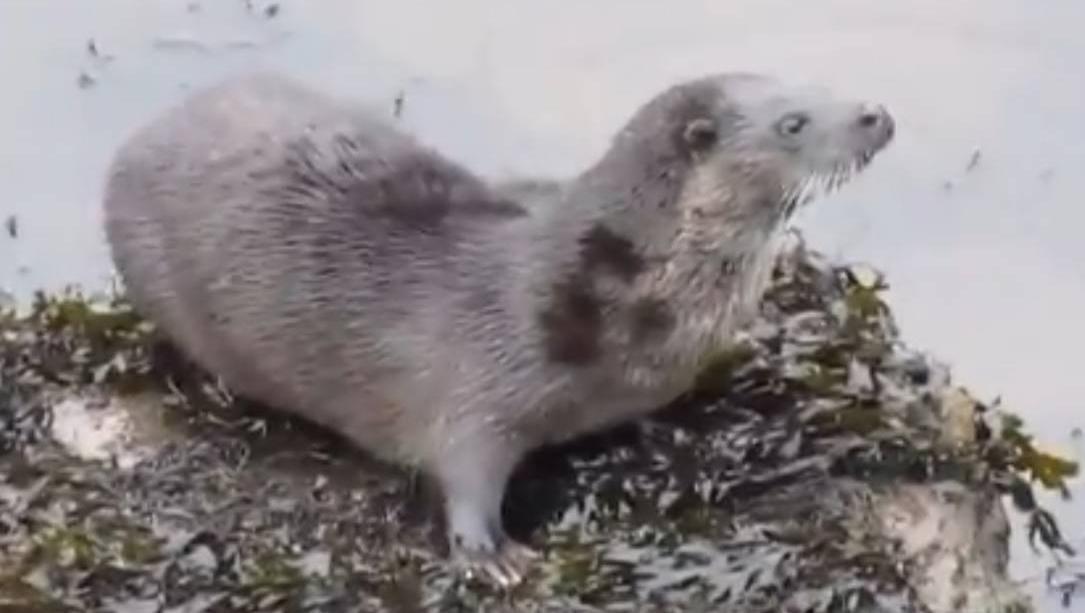
An otter on the hunt on the River Bride, Co Cork.
They seek them here, they seek them there — the public has been asked to get their detective hats on to spot one of Ireland’s most beloved but elusive creatures, the otter.
The National Parks and Wildlife Service (NPWS) has teamed up with researchers at Queen’s University Belfast and the National Biodiversity Data Centre in order to survey the number of otters in Ireland but needs help from people across the country to do so.
The last survey was carried out in 2010 and 2011, and NPWS teams said they will be looking for characteristic signs of otters at more than 900 sites throughout the country, including rivers, lakes, and the coast.
Ireland remains a bastion for otters in Europe, despite the global and domestic biodiversity crises that have engulfed the world in recent decades.
The NPWS said that the otter suffered significant declines across Britain and much of continental Europe during the 1970s, 1980s, and 1990s but remained widespread in Ireland.
The most recent Irish survey found signs of otters from all counties and from seashore to mountain streams, it said.
The otter is something of a ‘Scarlet Pimpernel’ of the animal kingdom.
Ferdia Marnell, mammal specialist with the NPWS, said: “The otter is one of Ireland’s most elusive animals so getting as many people involved in the survey as possible will be important if we are to get good coverage.
Giveaways to the otter’s presence can be found by observant eyes, Dr Marnell said.
“Otters have large webbed feet and leave distinctive footprints, but these can be hard to find,” she said. “Fortunately, otters mark their territory using droppings known as ‘spraints’.
Otters deposit spraints conspicuously on boulders along riverbanks, logs on lake shores, or the rocky high tide line.
“Spraints can be up to 10cm or 3in long, black through to white but commonly brown, tarry to powdery in consistency and straight or curved, making them tricky to identify. Luckily, they commonly contain fish bones and crayfish shells which are the otter's favoured diet, making them easy to tell apart from the droppings of birds and other mammals.”
According to the NPWS, otters are mostly active at night and most typically seen at dawn or dusk.
They may be spotted from bridges swimming in rivers or along the rocky seashore, it said. Otters are brown, about 80cm long, and can be seen gliding along the water surface before diving to show their distinctive long pointed tail which is almost as long again as their body, the NPWS added.
Sightings can be reported at the National Biodiversity Data Centre’s dedicated web page: biodiversityireland.ie/surveys/national-otter-survey/