Extreme weather events caused €158bn of damage in 2022
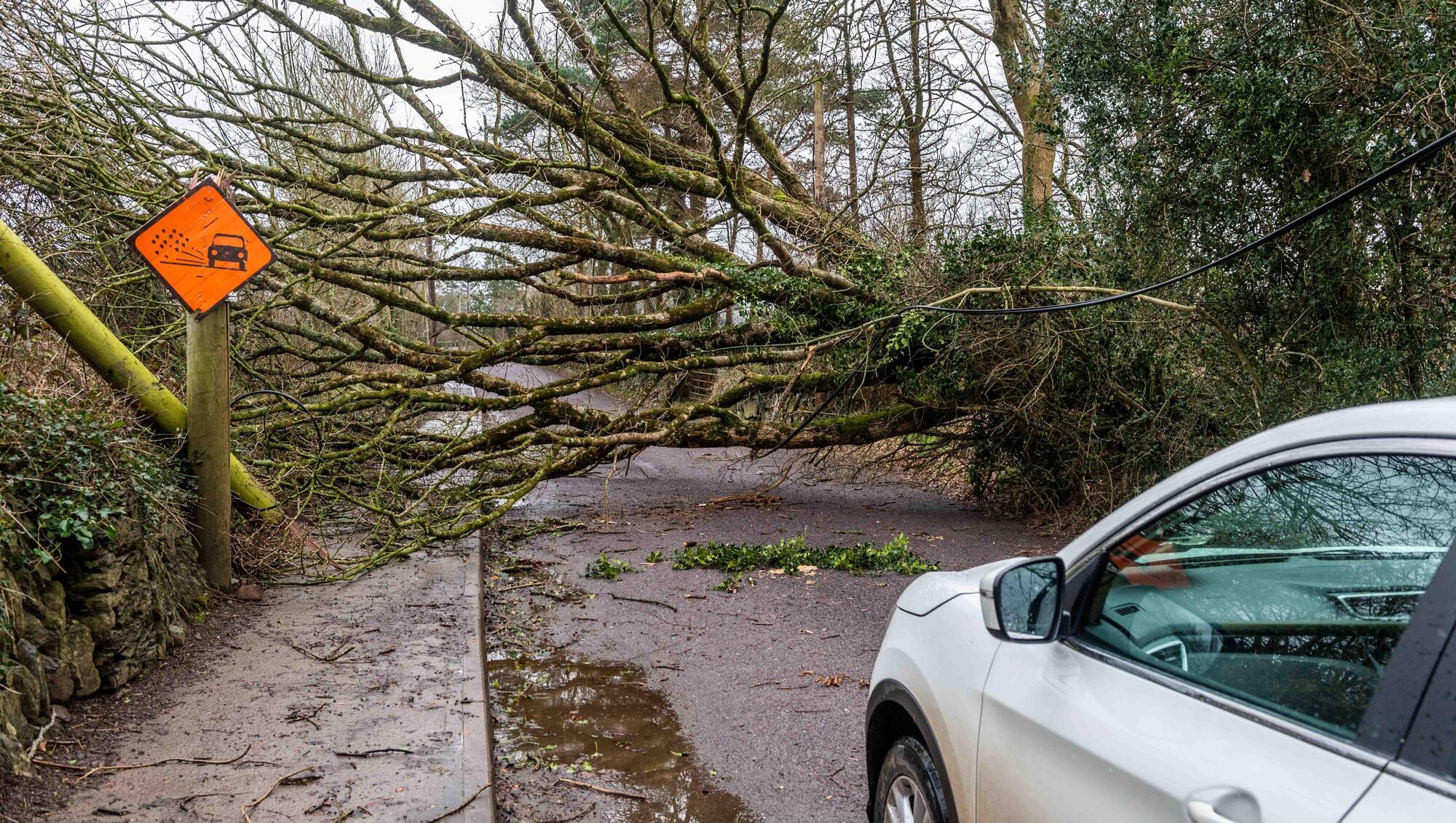
A tree knocked down near Dunmanway Hospital during Storm Eunice. Picture: Andy Gibson.
Extreme weather events caused upwards of €158bn in damages and thousands of lives across the world this year.
A study from development agency Christian Aid found that tangible global economic losses came to $168bn (€158bn) but warned that the true cost outside of insurance-based calculations was likely to be much higher.
The study was also carried out before the current bomb cyclone event in the US, which has brought much of the country to a standstill, destroying infrastructure and leaving millions vulnerable to extreme cold.
Christian Aid’s report said that the drought caused by the extreme heat across Europe during the summer was likely to have cost €20bn and 20,000 deaths in excess of normal, with wildfires and agricultural losses particularly acute.
Pakistan’s devastating floods killed 1,700, displaced another seven million people from their homes, and caused €30bn in damage, according to World Bank estimates. However, just €5.6bn of that damage was recoverable from insurance, Christian Aid warned.
Hurricane Ian in September caused around €100bn in damages to the US and Cuba, with more than 30,000 being evacuated. The fifth-strongest hurricane ever to hit the US led to 130 deaths, was the strongest to hit Florida in 87 years, and the costliest in the past 30.
The Caribbean was ravaged by Hurricane Fiona in the same month, leaving 90% of Puerto Rico without electricity and killing eight. In the Dominican Republic, some 13,000 people were displaced, 40,000 people were affected by power outages and nearly 1.2 million people experienced water supply issues, Christian Aid said.
It said that island nations are those suffering most from the fallout of climate change, despite being among the least responsible for the human-induced greenhouse gas emissions that are driving temperature rises in recent decades.
Brazil experienced its third dry year in a row, leaving one of the world’s biggest breadbaskets exposed to large agricultural losses, Christian Aid said. Coffee, soy, and corn crops were particularly badly affected.
The Horn of Africa, encompassing parts of Kenya, Somalia and Ethiopia, remains in the clutches of a four-year-long drought affecting 36 million people, according to the UN Office for the Coordination of Humanitarian Affairs (OCHA).
It has been described as “the worst in 40 years”, and the ongoing lack of rain has caused crop failures and the death of more than three million livestock, Christian Aid said.
Ireland did not escape the financial fallout of extreme weather in 2022. Storm Eunice, which battered parts of the country along with other Western European nations in February, caused around €3bn in damage in just a few days, the report said.
Based on available data, the 10 most financially costly events across the world this year each caused more than $3bn in damage, the development agency said.
At the Cop27 climate change summit in Egypt last month, a landmark agreement on so-called “loss and damage” was agreed after years of geopolitical tussling. The agreement is designed to ensure that wealthier nations pay a fairer share towards climate change, helping smaller nations who are facing the most severe consequences.
Christian Aid Ireland’s policy and advocacy officer Ross Fitzpatrick, who attended Cop27, said: “This report shows the devastation being wrought by the climate crisis around the world, but it is the world’s poorest countries who continue to be disproportionately impacted, despite having the least resources to adapt to worsening conditions or rebuild in the aftermath of climate-related disasters.
“Wealthy, high polluting countries must get their own emissions down, but also ensure that they pay their global fair share of pledged financial support and ensure that the loss and damage fund finally agreed at Cop27 operates effectively and urgently delivers finance to countries on the frontlines of the climate crisis.
“Ireland played an important role in getting the fund agreed in November, now we need to make sure that we and other wealthy countries are contributing enough to get it working.”

Check out the Irish Examiner's WEATHER CENTRE for regularly updated short and long range forecasts wherever you are.
CONNECT WITH US TODAY



Be the first to know the latest news and updates