Joyce Fegan: The climate activists gearing up for 2023

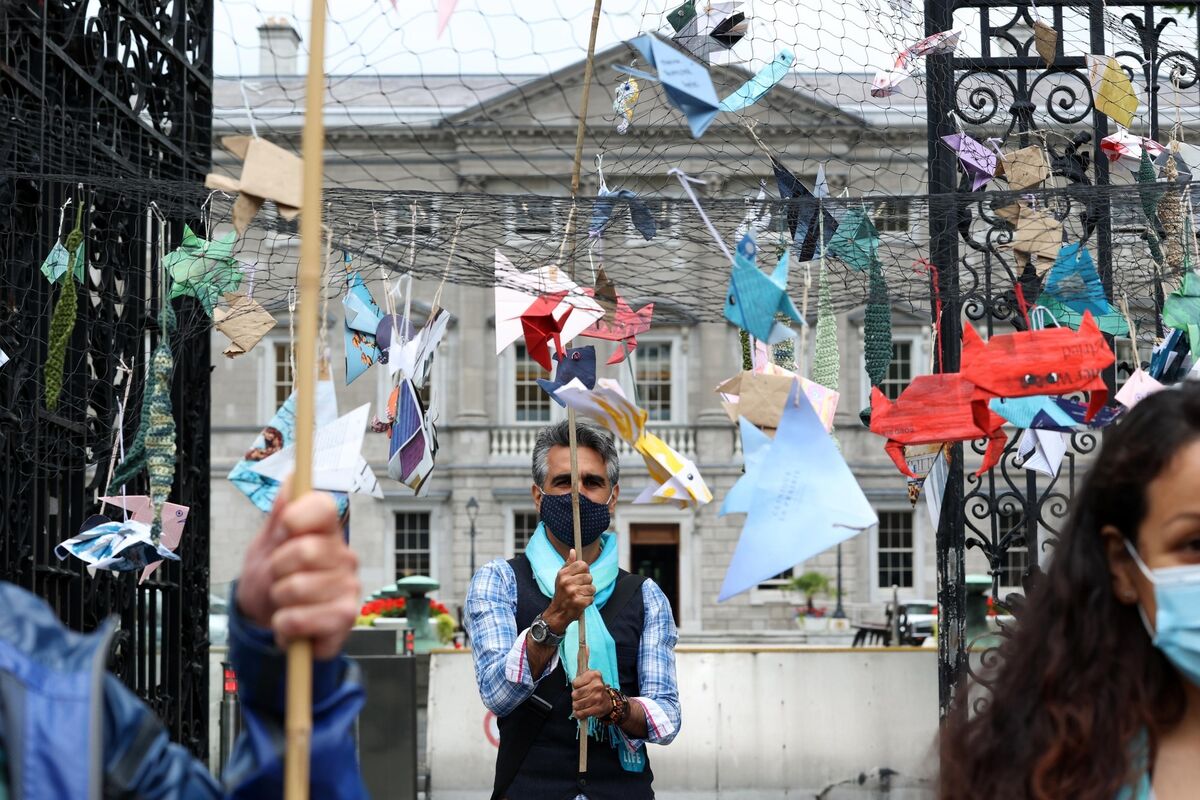
Manuel Salazar at an Extinction Rebellion protest outside Leinster House in Dublin about sea change last year. Photo: Sam Boal/Rollingnews.ie

"We have 12 years to limit climate change catastrophe, warns [the] UN", read a headline in The Guardian newspaper more than four years ago.
It was autumn of 2018 and the Intergovernmental Panel on Climate Change (IPCC) report had just been published - its major finding was that the world had just 12 years for global warming to be kept to a maximum of 1.5C. Even as much as half a degree more would significantly worsen the risks of drought, floods, extreme heat and poverty for hundreds of millions of human lives.
Extinction Rebellion (XR), a global climate movement, carrying out non-violent direct action was born shortly after, making international headlines in its wake. Fridays for Future, with its global school strikes, was founded in 2018 too, and names like Greta Thunberg and David Attenborough were on many front pages and even more people's lips.
Then in early 2020, the coronavirus happened and its all-encompassing effects dominated news headlines for two years, drowning out almost everything else.
Four years on from that alarm-bell report, where are we now? October 2022 data from the United Nations indicates that the world is on track for a temperature rise of between 2.4C and 2.6C by the end of this century.
So for 2023, that global climate movement, Extinction Rebellion (XR), made up of everyone from scientists to students and from parents to grandparents, will ramp up their actions, to make sure that addressing climate change is top of the agenda.
We talk with five climate change activists in Ireland, who will take part in 2023, some even willing to be arrested.
Manuel Salazar is a "proud Irish man" having taken citizenship and lived in Ireland since 2005. Before that he had lived in Israel, the UK and Italy, but climate activism was always a mainstay in his life.
"I'm from the global South, born in Colombia and raised in Venezuela - an oil state, where 95% of GDP comes from oil. Venezuela has the largest reserve of oil in the world," says Manuel.
"I saw first-hand growing up the damage to the country, I saw indigenous communities displaced, rivers destroyed, and then we were so surrounded by nature too and so connected to its beauty," he adds.
He describes his native country as one "completely taken over by the oil industry".
"You can be beaten for protesting in South America and put in jail, you put yourself more on the line there," he adds.
Would he be willing to be arrested in his climate activism?
He already has, in Milan, Italy, in 2021, at a pre-Cop26 meeting, before the actual conference was held in Glasgow.
Would he be willing to be arrested again, and in Ireland?
"Yes, I am willing to be arrested, I don't want to, but I have been committed to the environment for so many years," he says.
In fact, the technology strategist has already challenged his employer publicly, and it's a strategy that XR plans to roll out in 2023.
"I challenged my employer publicly. I put my job on the line and it went really well, they haven't done anything to me. I am doing something they may consider right," explains Manuel.
In 2023, XR will try to trigger walkouts from companies, small, medium and large.
Manuel says:
"These walkouts are not about making people angry but activating people to have conversations with their employers and families," he says.
In general, 2023 will be about resuming civil disobedience, but in a much "more targeted" way. The key point is keeping the public on side. It's the Government that will be targeted, individual politicians and parties will be called out for policies that they are not taking action on.
Actions, with headline-grabbing power, are to resume from January 2023. And there will be an action that involves "addressing the nation".
Also under target in 2023 will be data centres (high consumers of energy and water), liquefied natural gas (LNG) terminals, the banking and financial sectors (where investments are made in fossil fuels), the insurance sector and An Bord Pleanála.
Media organisations, for their role in climate reporting, will also be called out, as will advertisers.
Manuel cites the Environmental Protection Agency's (EPA) research that says 80% of Irish people are concerned about the climate, but then highlights the lack of action off this concern.
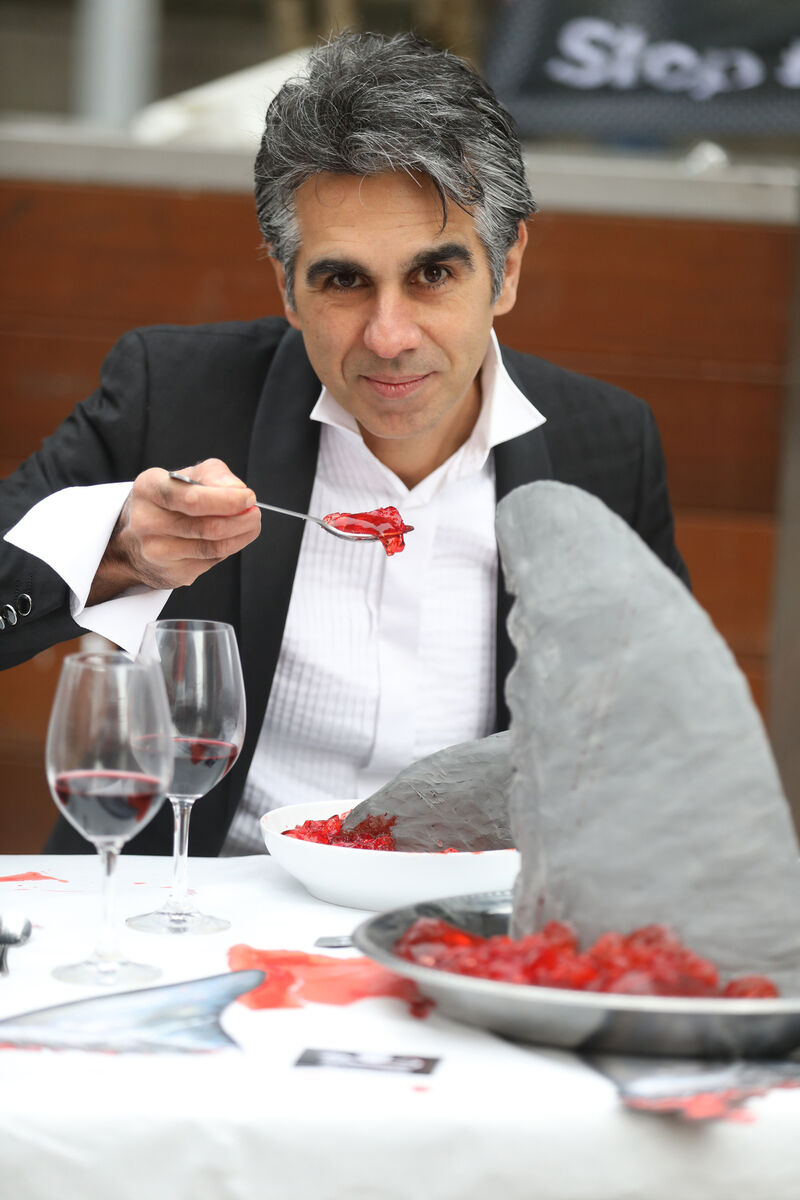
"The apathy around climate is quite dangerous," says Manuel?
But what if it's anxiety-induced apathy?
"We always said the best way to address climate anxiety is to take action.
"We see people coming in and their view is very bleak and once they come into action and see people taking action, they become empowered themselves," says Manuel.
As a member of Scientist Rebellion (SR), Ian Coleman says: "We will get people talking again".
The only prerequisite to joining SR in Ireland is that you hold a Bachelor of Science. As scientists they have even dissected protests, what's effective and what's not effective in terms of achieving their goal.
"It seems that standing around with signs does not work but non-violent direct action by people who are perceived as experts seems to work. It seems like the best course of action from looking at previous movements.
"Activism has a history of succeeding like Martin Luther King Junior, Mahatma Gandhi and the suffragettes," says Ian.
In 2023, SR Ireland will "ramp things up" out of "increasing desperation and continuing inaction from power holders leaving us with no choice".
There will be "very credible scientists on the streets" and headlines will be made.
"The metric that matters is the number of people who see serious scientists protesting on this issue. The media is the main channel to reach them.
"We will have a number of non-violent direct actions, I'd say there will be arrests at these events, but there has been a reluctance to arrest in the past," says Ian.
It is not just about getting arrests, but what those arrests lead to, including the national debates they trigger.
"What we want is to force our arrests, force it to courts, the court to say: 'No, these people are acting in rational self defence,' or for them to sacrifice all credibly and enact 'the justice' and quash scientists who are trying to stop climate genocide," states Ian.
Is he himself willing to be arrested?
"I always was," says Ian, who holds a Master's in bioinformatics, has worked in research science, and is now employed in the technology sector.
For Ian it came down to seeing his own professional peers talking about the climate in such bleak terms that spurred him into activism.
"Before my activism three years ago, I was just worrying and floating and buying ethically. I didn't see myself as a protester, most people feel that. There has to be a switch flicked in the head from: 'I'm not a protester' to 'I am'," says Ian.
And what if you're just not a protestor?
He cites the last IPCC report, before its final edit, where it was stated that if 10-30% of people made personal changes we should reach a "social tipping point" where it becomes shameful to not make lifestyle changes for climate.
"But the number one thing people can do is email their TD every month and ask why their tax is subsidising fossil fuels, then get out on the streets with us and the third thing is reduce your carbon footprint for the purpose of reaching that tipping point," says Ian.
"We will not give up on this, people please come and join us," he adds.
Louis Heath is 70 years of age. He is a marine engineer by profession, but undertook a Master's in mindfulness 15 years ago and went on to teach in this area. However, it was not until 2018, when the IPCC report came out that he "became an activist".
"In late 2018 this Extinction Rebellion (XR) thing popped up on Facebook, and that was the first time I had considered climate in terms of extinction.
"I've always regarded myself as being an inner activist (he had been making his own biodiesel for his jeep 20 years ago). The shift happened when I saw the crisis we were in, I decided to stop teaching mindfulness and became a full-time activist," says Louis from Dublin.
His focus for 2023, is on the middle class.
"The focus I want to try and do is getting participation from 70% of people, the middle class, they do their bit, their recycling, they might put up their solar panel, they're very sympathetic but largely switched off.
"But what we need is people to march with us on the streets," says Louis.
Marching and protesting are powerful, he argues, it's what makes politicians take note, and it's a lot different to just sitting at home and reading about climate change.
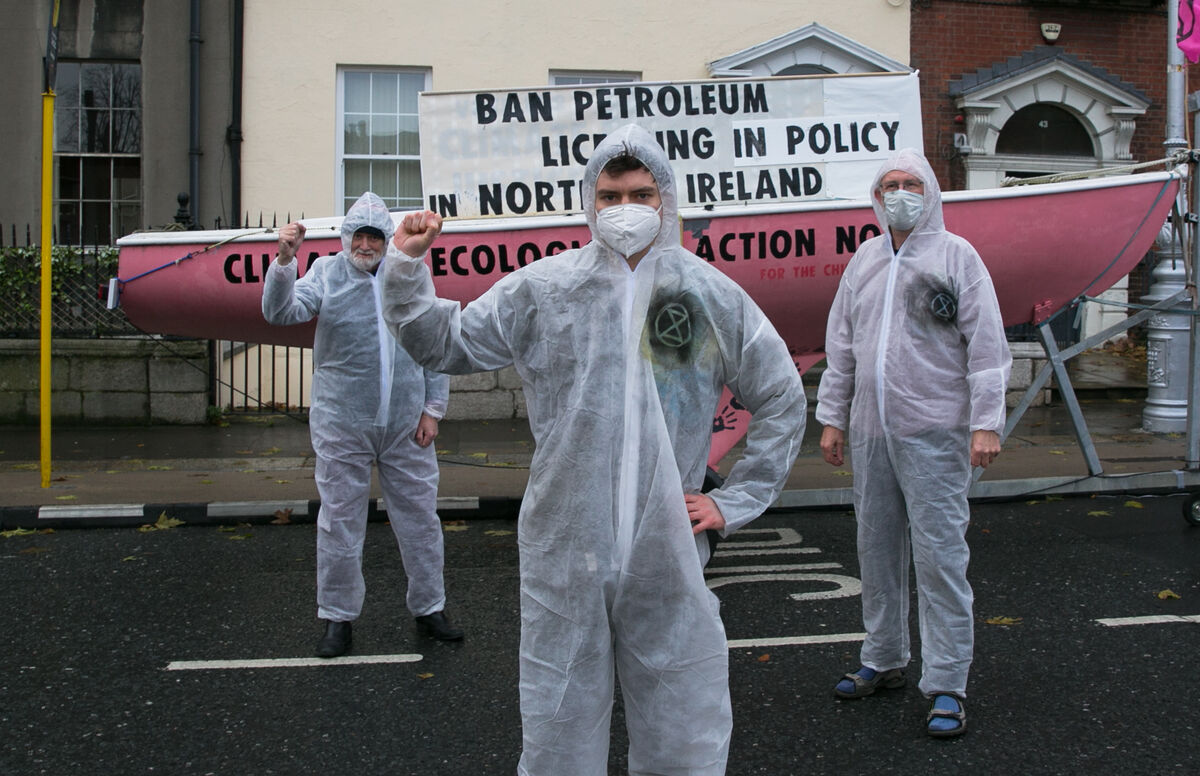
"In 2023, we are planning to do more marches, there's a lack of appreciation for the power of marches, we need public opinion shifted, that action is demanded.
"I want to start a campaign where all people have to do is come out and march, come out on the streets, they don't have to join anything or become an activist," says Louis.
"When politicians see people on the streets they sit up. It's about getting more and more numbers on the streets, not just being prepared to sit and read newspapers and watch TV programmes on climate and have grand discussions," he adds.
He's willing to be arrested.
"I did get involved in a couple of actions in 2019, arrest-able actions. But I'm much more willing now as the signs are much bleaker especially with the inaction from Cop27.
"I feel much more forcible about it now, it bothers me how little action is being done by people who are supposed to be responsible," says Louis.
He believes a shift needs to happen now, different to the shock of the 2018 IPCC report.
"We did a great job waking people up, people are woken up, but it's the next stage now — people need to be woken up on a greater level," he says.
Magdalena Sedlmayr is a 21-year-old student in Ireland involved in Fridays for Future - the global school strike movement started by Greta Thunberg.
The movement earned global headlines when it started in 2018, but with restrictions and school closures due to Covid-19, 2023 is important in terms of "putting pressure on politicians".
Magdalena is from Munich but studies in Dublin and has been involved in Fridays for Future for the last two-and-a-half years, meaning a lot of online activity, but not anymore.
"During and after Covid time, a lot has slowed down, we couldn't protest, then we'd meet up online, then as everything opened up again we started to protest again," explains Magdalena.
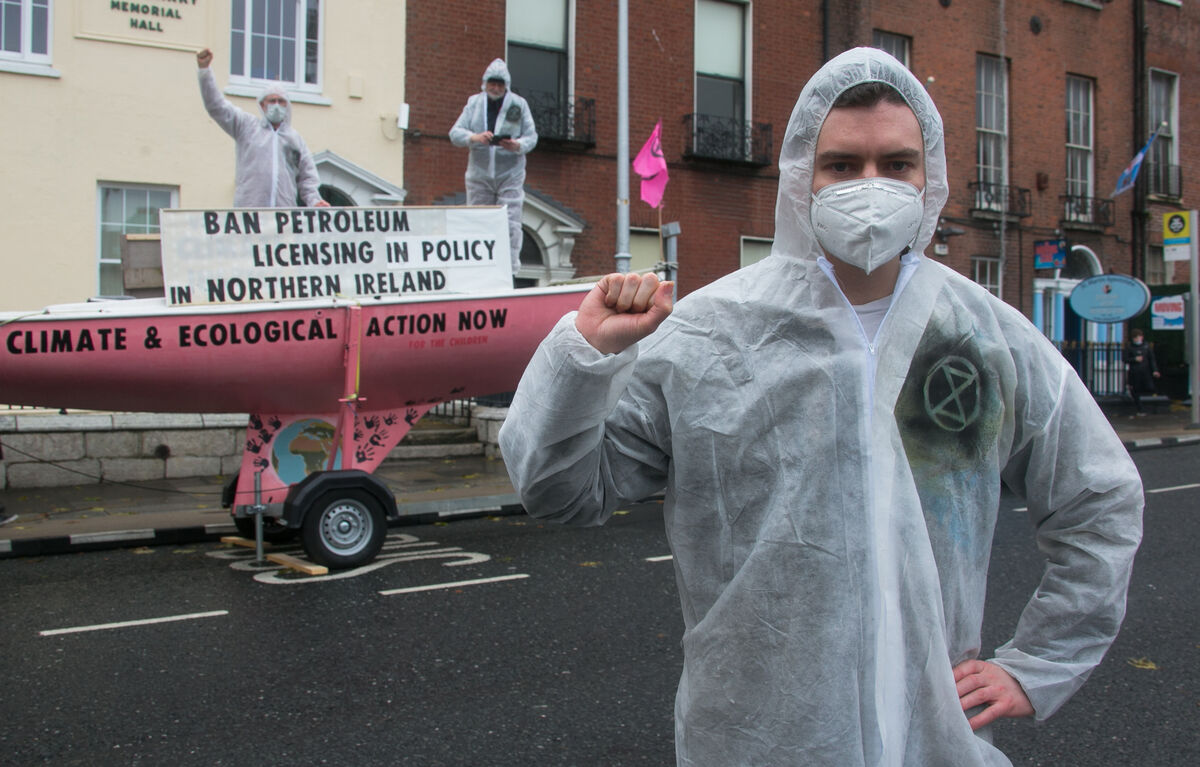
And in 2023, Fridays for Future will move beyond the school gates with their protests and into places of power.
"We will campaign against new fossil fuel infrastructure, LNG (liquefied natural gas) ports and data centres. Data centres in Ireland take up 14% of our national energy (metered electricity), whereas all rural communities only take up 12% (according to data held by the Central Statistics Office and Eirgrid)," says Magdalena.
Data centres will be a focal point, both in terms of raising public awareness of their effect on the climate and of pressuring politicians.
She says:
"There are also more and more data centres being built that increase energy demand and at the same time, we are told to reduce our energy consumption.
"For 2023, it's important to put pressure on the government and all parties. It's about making the politicians listen to the public," says Magdalena, who came to activism after her teen years.
"I wasn't so climate conscious growing up, I loved dancing, singing and meeting friends. It was a very normal upbringing, but then the topic of climate change got so big," she says.
"It doesn't seem to get the recognition it needs, it's our whole future, we will keep protesting, to pressurise politicians to act, to take more sudden action," adds Magdalena.
For psychotherapist Tom Adams, 36, fatherhood was the catalyst for him joining Extinction Rebellion (XR).
"I joined a few months ago. My daughter was born in January 2022, my first child.
"I had been concerned about the climate before then, yet my involvement had been limited to, like a lot of other people, cycling to work, recycling, a KeepCup, but I wasn't involved in any activism," says Tom.
"Then my daughter was born and those concerns exploded, it was like having a little time machine, it was immensely worrying.
He adds:
It is the thought of his daughter holding him to account some time in the future, that spurred Tom into activism.
"I do believe our children are going to hold us to account at some point in the future. Did we know and what did we do to make things better? It's really upsetting that my daughter might ask me that question in the future," he says.
He has made lifestyle changes such as reducing his meat consumption in the last year, and taking ferries as opposed to flying when visiting family abroad.
"I understand people's understanding about loss of lifestyle but that's not been my experience, maybe it's a displacement of fear, and it's natural to cling to what is known, cling to our normal lifestyles," says the psychotherapist.
"We are trying to take those personal actions we know are important but we know we have to get involved in direct action too," says Tom.
It is this involvement, like many other recently signed-up climate activists, that is the biggest change.
"I wouldn't have in the past identified as an activist, there was an ambivalence there," says Tom, who did attend anti-racist protests in university and some voluntary work more recently.
"We would have been engaged somewhat but not regularly involved in any movement," he says.
Tom admits that he had "reservations" about identifying as an activist, but his preconceptions, and those of others, have been thoroughly dispelled.
"I would have had reservations around whether I might belong in that kind of a group, and it's very important I challenge that preconception. People said: 'Watch out they could be extreme', but I have found the direct opposite, I have met nothing but empathetic, informed people," he says.
He now believes "we need everyone on board" in order to tackle climate change.
"Hopefully people will reach their own point, be it through having children, or through a love of nature, but we need everyone on board," says the psychotherapist.
- See @fridaysforfutureireland on Instagram and extinctionrebellionireland.com
CLIMATE & SUSTAINABILITY HUB
CONNECT WITH US TODAY



Be the first to know the latest news and updates